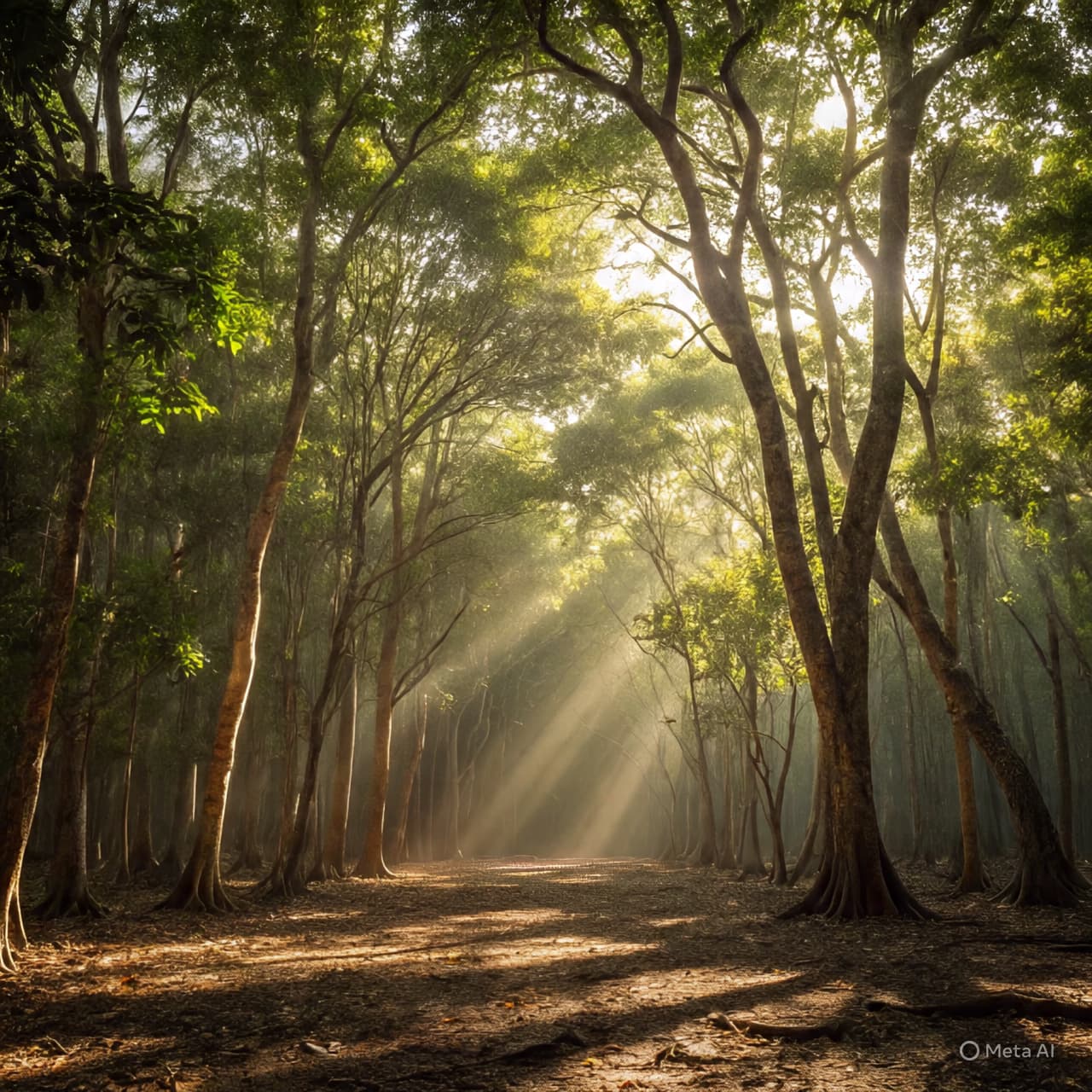
There are places on Earth where change whispers first — in the soil, in the roots, in the way leaves curl under a harsher sun. In the Amazon rainforest, that whisper has grown into something louder, something scientists now describe as a transition toward a “hypertropical” climate. It is a shift defined by deeper droughts, hotter days, and an emerging environment that many trees may not withstand.
Researchers observing tree systems across the basin warn that the old rhythms of wet and dry seasons no longer hold. Extended heat waves and increasingly frequent “hot droughts” have pushed the forest into stress levels once considered rare events. Now, these extremes are becoming baseline conditions.
Field studies show a troubling pattern: when soil moisture drops below critical thresholds, many trees begin closing their leaf pores to conserve water. It protects them briefly, but it also blocks their ability to absorb carbon dioxide — the fuel for their survival. Some trees starve; others suffer internal damage when water pathways inside their trunks collapse under heat pressure.
Fast-growing species, long seen as the rainforest’s recovery engine, appear especially vulnerable. Slower, denser trees show more resilience, yet even they face limits when temperatures climb and rain fails to arrive. If current trends continue, scientists estimate tree mortality rates could rise significantly by the end of the century.
The implications stretch far beyond the forest floor. The Amazon has long acted as a massive carbon sink, absorbing billions of tons of greenhouse gases. A weakening forest weakens that buffer — raising the risk that the region could eventually release more carbon than it captures.
Still, some optimism remains. Data from intact forest zones show that large, old-growth trees carry a remarkable resistance, provided the landscape around them remains unbroken. Conservationists argue that protecting these strongholds is essential to slowing the broader decline.
For now, the Amazon stands at a threshold, offering a stark message without panic: the climate is changing faster than the forest can adapt. Whether this becomes an irreversible transformation depends on decisions made far beyond the jungle canopy — choices about emissions, land protection, and the pace at which the world responds.
Published by Banx Network. This article is part of the Banx decentralized media programme, powered by the BXE token on the XRP Ledger.