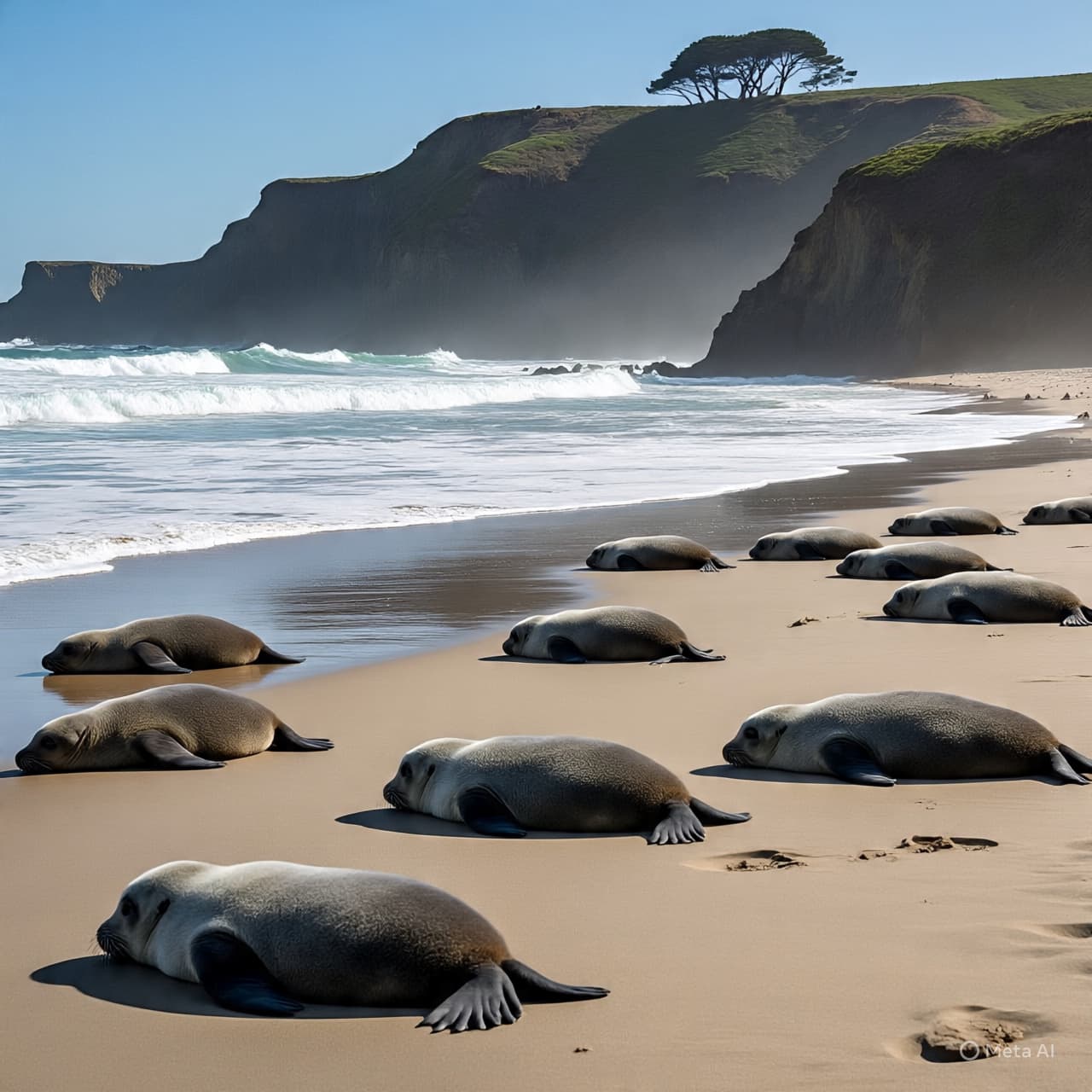
At the far edge of California’s coast, where cliffs lean into the Pacific and fog settles like a quiet curtain, Año Nuevo State Park has long been a sanctuary of beginnings. Each winter, northern elephant seal pups arrive in soft, uncertain steps, guided by instinct and the steady presence of their mothers. It is a place defined by renewal, by the patient return of life to familiar sand.
But this season, amid the low calls and rolling surf, a different current has been detected.
Seven northern elephant seal pups at Año Nuevo State Park have tested positive for highly pathogenic avian influenza, H5N1, marking what officials describe as the first confirmed detection of the virus in this species in California. reported that laboratory testing confirmed the presence of the deadly strain after wildlife responders observed neurological symptoms in several stranded animals.
According to , the infected pups displayed tremors, lethargy, and signs of disorientation. The cases prompted coordinated testing by state wildlife agencies and marine mammal rescue organizations. While avian influenza has circulated widely among wild birds in North America, its expansion into marine mammals has increasingly drawn scientific attention.
Coverage from noted that Año Nuevo is one of the most significant elephant seal rookeries along the West Coast. During pupping season, the beach becomes densely populated, with seals and seabirds often sharing close quarters. Experts believe exposure likely occurred through contact with infected birds or contaminated environments, though investigations into transmission patterns continue.
has previously documented the broader trajectory of H5N1, including its spread into sea lions, foxes, and other mammals in recent years. Scientists emphasize that while spillover events are concerning, there is no current evidence of sustained transmission among elephant seals themselves. Each confirmed case adds data to an evolving understanding of how the virus behaves beyond avian hosts.
Meanwhile, reported that public health officials consider the risk to beach visitors low. Authorities have urged the public not to approach stranded wildlife and to report sightings to trained response teams. Monitoring efforts at Año Nuevo and nearby coastal areas have been intensified as a precaution.
There is a certain fragility in early life along the shore. The pups, newly arrived into the vastness of ocean and sky, represent continuity stretching back centuries. The presence of H5N1 in their midst does not erase that history, but it does remind observers how closely connected ecosystems have become. A virus carried on migratory wings can settle in unexpected places, reshaping the quiet patterns of land and sea.
For now, officials continue testing, surveillance, and coordination among wildlife health agencies. Visitors are advised to maintain distance from marine mammals and respect posted guidance at Año Nuevo State Park. The tide moves in its steady rhythm, and the colony remains. Yet beneath the sound of surf, scientists are listening carefully, attentive to what this first detection may mean for the seasons ahead.
AI Image Disclaimer: Graphics are AI-generated and intended for representation, not reality.
Source Check:
Reuters
Associated Press
Los Angeles Times
The New York Times
CNN
Published by Banx Network. This article is part of the Banx decentralized media programme, powered by the BXE token on the XRP Ledger.