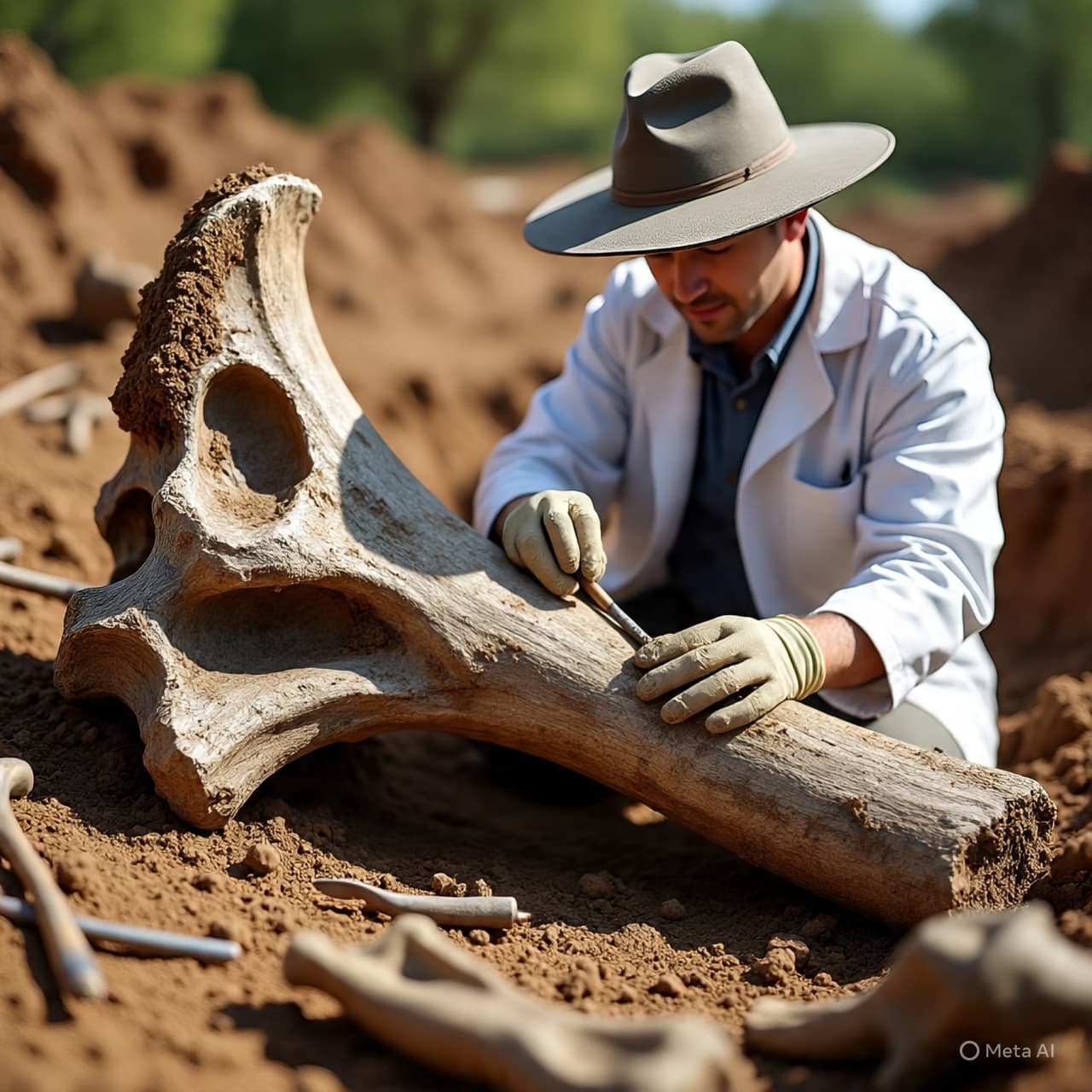
There are times when the earth keeps its memories quietly, folding them beneath layers of soil as if saving them for another century. A field may seem ordinary—grass bending in the wind, soil pressed flat by time—yet beneath it rests a fragment of an ancient world. In Missouri, that quiet memory surfaced once more, not with spectacle, but with patience, as a paleontologist uncovered a bone belonging to a creature that once walked across a frozen landscape.
The discovery, reported by regional authorities and covered by national media, involves a mammoth bone believed to date back to the last Ice Age. Missouri, often associated with river valleys and rolling plains, was once touched by the colder rhythms of the Pleistocene epoch. During that period, towering ice sheets shaped the landscape, and megafauna—including mammoths—moved across what is now the American Midwest.
The bone was identified by a professional paleontologist who recognized its size and structure as consistent with mammoth remains. Though further testing and analysis will determine its precise age and classification, experts suggest it likely belonged to a species such as the Woolly Mammoth, one of the most iconic mammals of the Ice Age. Mammoths, relatives of modern elephants, roamed North America until roughly 10,000 years ago, leaving behind fossils that continue to reshape our understanding of prehistoric ecosystems.
Missouri has yielded Ice Age fossils before, particularly along riverbanks where erosion reveals older sediment layers. Each discovery adds a new sentence to a long geological narrative. Fossils such as this help scientists reconstruct migration routes, climate conditions, and environmental changes that unfolded over thousands of years. They are not merely bones; they are data—quiet evidence of adaptation and extinction.
Paleontologists note that the Midwest once supported grasslands capable of sustaining large herbivores. Mammoths would have grazed on hardy vegetation, moving in herds across open terrain. The bone’s condition and location may offer clues about whether it was carried by natural processes, preserved in sediment, or part of a broader fossil deposit waiting to be uncovered.
In recent years, public interest in Ice Age discoveries has grown, reflecting a broader fascination with Earth’s ancient past. Each fossil unearthed serves as a tangible connection between modern communities and landscapes that existed long before recorded history. In Missouri, what began as routine fieldwork has become a reminder that history does not only reside in books—it rests beneath our feet.
Authorities and research teams are expected to continue examining the site to determine whether additional remains are present. For now, the mammoth bone will likely undergo preservation and scientific study. As analysis proceeds, experts aim to confirm its age and significance within the broader context of North American Ice Age research. The discovery stands as a measured but meaningful contribution to ongoing paleontological study in the region.
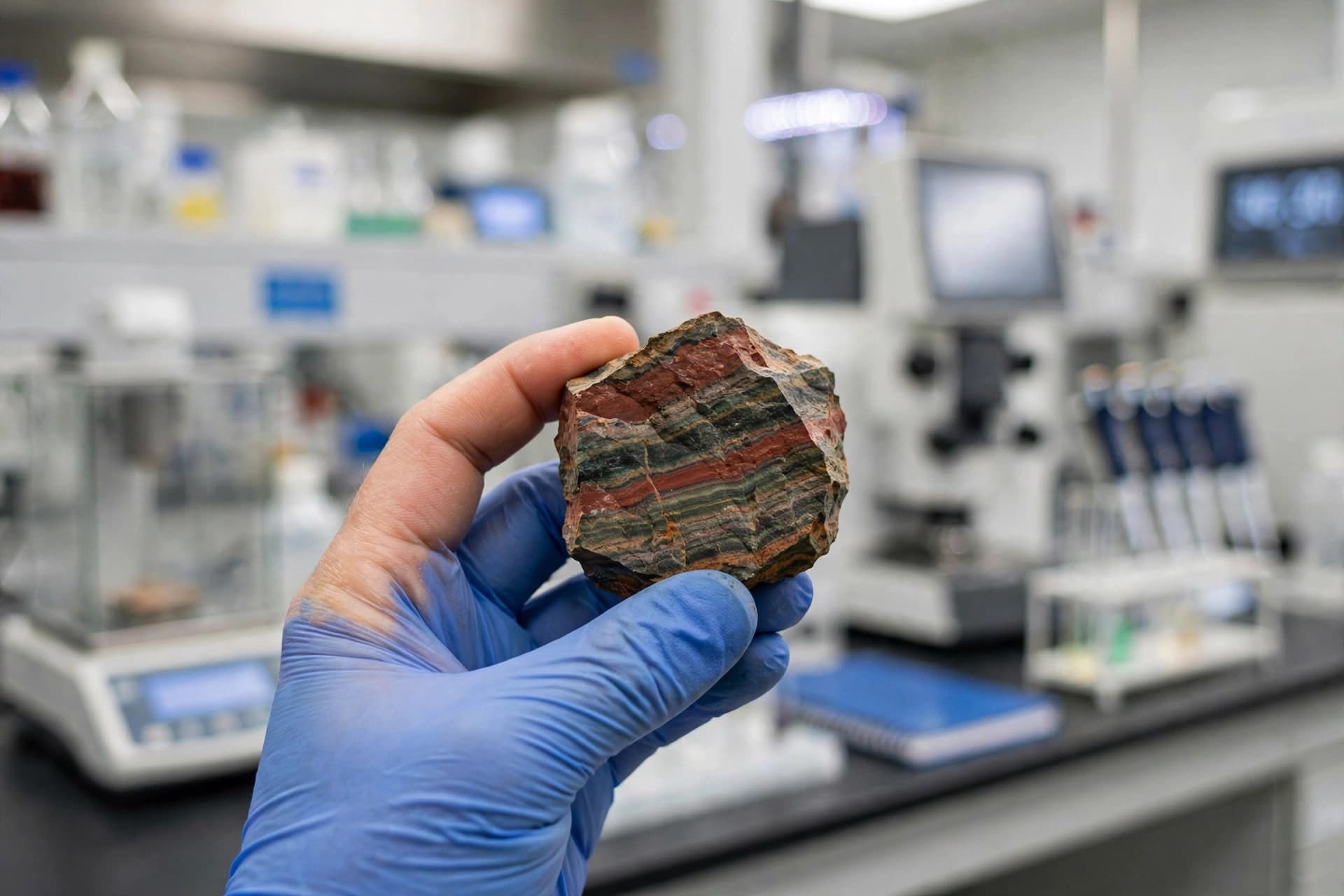
AI Image Disclaimer Images in this article are AI-generated illustrations, meant for concept only.
Source Check (Credible Media Coverage Found): Associated Press CNN BBC News Smithsonian Magazine USA Today
Published by Banx Network. This article is part of the Banx decentralized media programme, powered by the BXE token on the XRP Ledger.