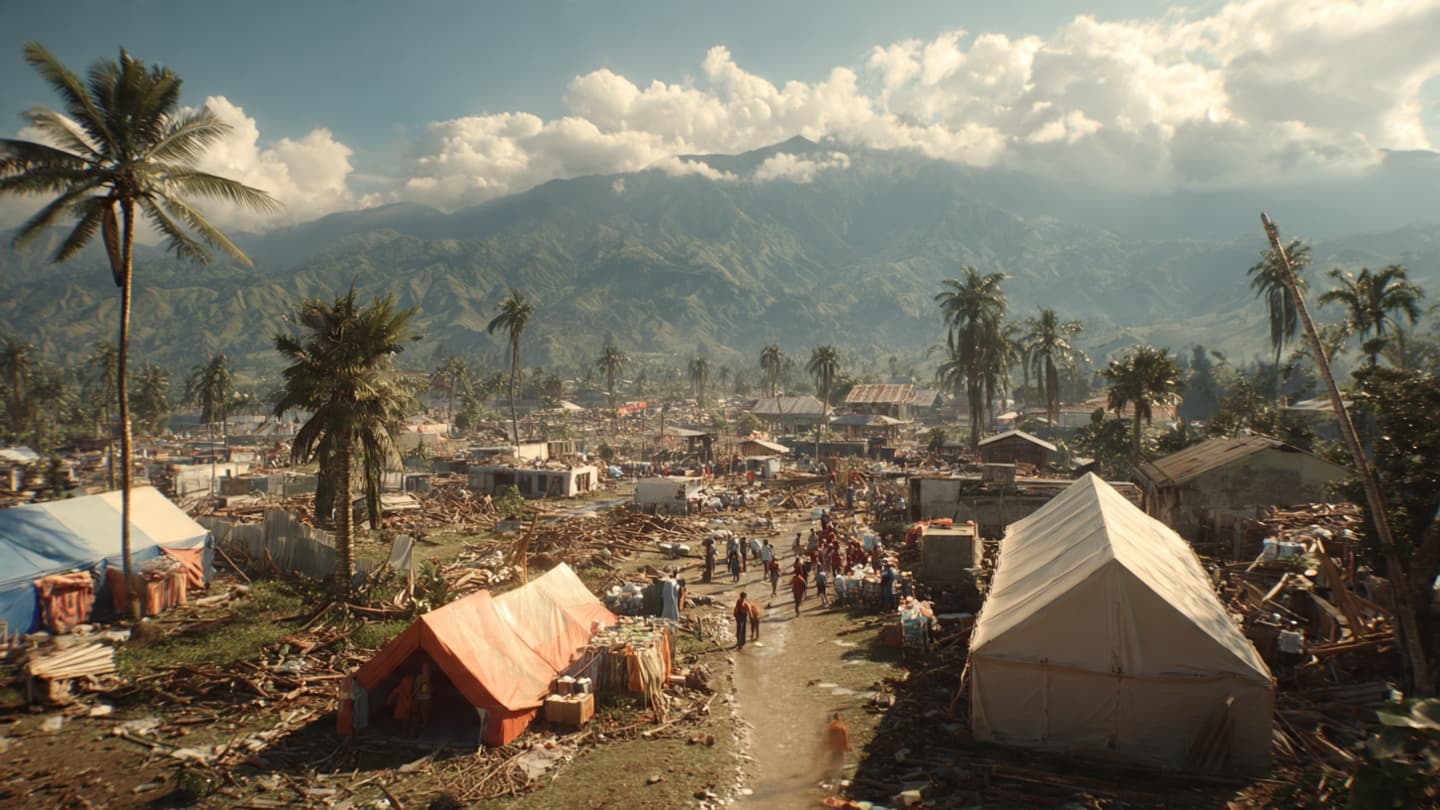
There are moments when a familiar landscape becomes unfamiliar in seconds. Roads can crack, walls can fall and homes that once carried the ordinary rhythm of daily life can suddenly become places of uncertainty. In eastern Indonesia, communities have been living through that transformation since a powerful earthquake struck on August 15.
The earthquake, measured at magnitude 7.7, struck East Nusa Tenggara and was followed by thousands of aftershocks. By August 24, Indonesia's disaster agency reported that the death toll had reached 100.
The physical scale of the disruption has been extensive. More than 73,000 homes were affected, while around 180,000 people were displaced, according to figures reported by Reuters. For families, those numbers translate into temporary shelters, damaged belongings and days spent away from familiar rooms.
Emergency response has continued as authorities work to provide food, water, shelter and other necessities. In the days immediately following a major earthquake, the work is often defined by urgency: reaching isolated areas, checking buildings and finding safer places for people to stay.
The thousands of aftershocks add another layer of uncertainty. Even after the strongest movement has passed, smaller tremors can remind communities that the ground beneath them remains active.
For those living in affected areas, recovery begins with basic needs. Temporary accommodation provides shelter, but rebuilding a home involves more than replacing walls and roofs. It means restoring a place where families can sleep, cook, work and eventually return to ordinary routines.
Infrastructure presents another challenge. Roads and bridges connect communities to markets, hospitals and emergency services, making their condition important for both relief operations and the longer recovery process.
The earthquake also illustrates the particular vulnerability of island communities. Geography can make access more complicated, while damaged transportation routes can slow the movement of supplies and equipment.
Recovery will therefore extend beyond the first weeks of emergency response. Homes will need assessment and reconstruction, infrastructure will require repair, and communities will gradually determine which damaged structures can be restored and which must be rebuilt differently.
The landscape will eventually become quieter again. But rebuilding after a major earthquake is measured not only in concrete and construction materials. It is also measured in the return of children to familiar routines, businesses reopening and families finding a way back to ordinary days.
For eastern Indonesia, that process is already beginning. Relief operations continue more than a week after the earthquake, while authorities and communities work through the immediate damage and the longer task of rebuilding what the earth changed on August 15.
AI Image Disclaimer These images are AI-generated conceptual representations of earthquake recovery and do not depict actual affected communities or emergency scenes.
Sources Reuters Badan Nasional Penanggulangan Bencana BMKG ANTARA News Ministry of Social Affairs of Indonesia
Published by Banx Network. This article is part of the Banx decentralized media programme, powered by the BXE token on the XRP Ledger.