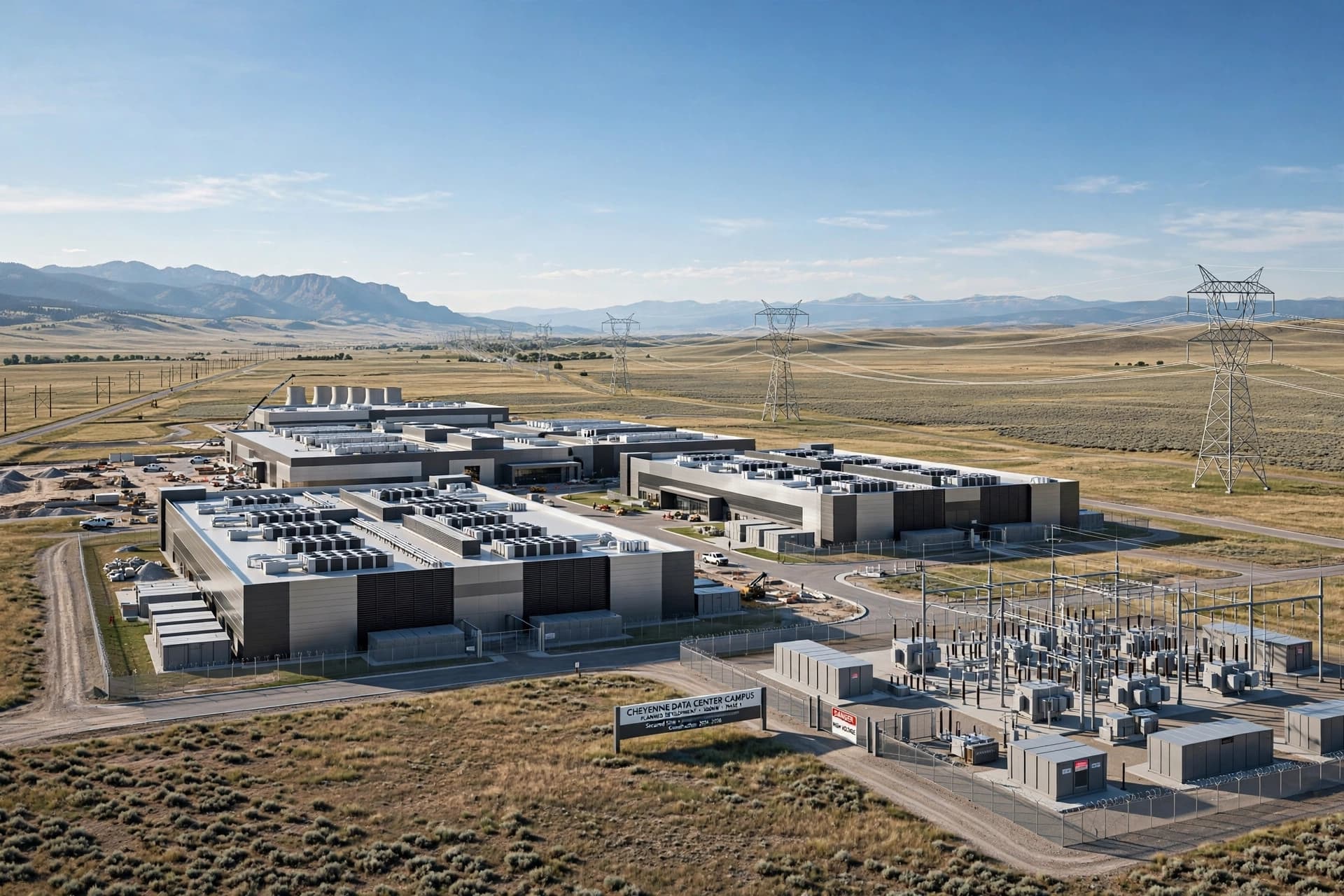
In the cool predawn hours before sunrise, the hum of machines begins in places most never see vast halls of servers overlaid with blinking lights and immaterial hopes. These are the cathedrals of artificial intelligence, where silicon and code converge in a tireless pursuit of answers. But beneath the rhythmic pulse of computing lies an equally vital current the flow of energy that sustains every calculation and every piece of learning. It is here, at the junction between idea and infrastructure, that the aged yet resilient role of gas quietly persists.
Though the world’s gaze often fixes on wind turbines spinning on distant plains or solar fields glinting under midday skies, those sources alone cannot fulfill the voracious appetite for power that AI demands. Data centers the engines of modern AI require a constant stream of electricity, not just sunlight at noon or wind at dusk, but a reliable, dispatchable flow that matches their 24/7 heartbeat. According to industry research, electricity demand from these facilities is projected to balloon significantly in the coming years, potentially doubling as AI applications proliferate across industries.
Into this landscape steps natural gas, often unfashionable in the rhetoric of clean energy transitions, yet equipped with certain practical virtues. Unlike intermittent renewables, gas-fired generation can be ramped up or down with precision, adapting to sudden shifts in computational load or grid demand. For operators and planners, that adaptability has a reassuring cadence a promise that when data centers stir to life at dusk, the lights will remain steadfast.
Tech companies and energy firms alike are recognizing this blend of necessity and opportunity. Some have signalled openness to pairing natural gas with carbon capture technologies, acknowledging environmental concerns while addressing the immediate challenges of reliability and scale. Elsewhere, the veins of our energy system the pipelines stretching across regions are quietly being recalibrated to meet a future where power needs shift as swiftly as software updates.
This is not a tale of fossil fuels triumphing over cleaner alternatives, but rather a reflection on pragmatism at an inflection point. The promise of wind and solar is vast and growing, yet AI’s round-the-clock demand can strain grids in ways that renewables alone without extensive storage struggle to satisfy. Within this context, gas plays a supporting role: it may not be the hero in every narrative about sustainable energy, but it is often the steady companion that helps carry us to the next chapter.
In the deeper currents of this unfolding story, there is room for evolution. As technologies mature whether in grid storage, carbon mitigation, or novel energy sources the role of gas will presumably be reimagined. For now, however, as data centers continue their ascent into the backbone of modern society, natural gas endures as a practical bridge, quietly powering the infrastructure of tomorrow’s intelligence.
AI Image Disclaimer Visuals are created with AI tools and are not real photographs.
Sources (Media Names Only) International Gas Union Chevron Newsroom CNBC / industry energy reporting Energy sector analysis outlets OilPrice.com / energy commentary
Published by Banx Network. This article is part of the Banx decentralized media programme, powered by the BXE token on the XRP Ledger.