The relationship between a pilot and the sky is built on a quiet covenant of trust. Passengers settle into their seats with the unspoken assumption that the person behind the cockpit door carries not only their luggage but also a steadfast allegiance to safety, a commitment that transcends the complexities of global politics. When that invisible thread of confidence is tugged, even gently, the resulting unease ripples far beyond the cabin.
A Los Angeles-based United Airlines pilot has found himself at the center of such a tug this week, following reports that Israel's Transportation Ministry has barred him from entering the country as a crew member. The pilot, identified as Sina Amjadian, reportedly drew scrutiny over social media activity that appeared to express sympathies for Iran and Hezbollah, an organization the United States designates as a terrorist group . The decision, communicated to United Airlines, was described by Israeli officials as a precautionary measure rooted in aviation security rather than personal judgment.
The context surrounding this restriction adds a layer of sobering gravity. According to reports, the review of the pilot's online presence was prompted in part by a heightened sense of vigilance following a recent attempted cockpit attack aboard a Flydubai flight bound for Tel Aviv . In the wake of that incident, Israeli authorities have been examining foreign aircrews with renewed intensity, searching for any signal that might suggest a breach of the trust that flying demands. The pilot's posts, which reportedly included imagery aligned with Iranian state symbols and critical commentary on Israeli military actions, were flagged by a government ministry tasked with monitoring antisemitism and incitement .
Yet the picture is not without its nuances. United Airlines has stated that the pilot has been on leave since 2024 and is not currently flying . Furthermore, his qualifications reportedly limit him to domestic routes within the United States and select flights to Canada, meaning he was not authorized to operate the wide-body aircraft typically used for international journeys to Israel . The restriction, in practical terms, may be largely symbolic—a formal boundary drawn around airspace rather than a barrier to a flight he was scheduled to command.
Still, symbols matter in the architecture of security. The Israeli Transportation Ministry's letter to United described the recommendation from professional bodies as clear: the pilot should not arrive in Israel as a member of an aircrew . Whether the social media posts attributed to him were direct statements or secondhand allegations remains a point of contention, with some reports noting that the material reviewed by authorities did not include posts published by the pilot himself . The gap between what is suspected and what is proven is a familiar terrain in the age of digital footprints.
For United Airlines, the situation presents a delicate balancing act. The carrier confirmed it received the directive while emphasizing the pilot's current status away from active duty . There is no public indication that the airline has taken disciplinary action beyond the external restriction, and the pilot's future with the company remains a matter for internal review. The broader aviation industry, meanwhile, watches with a quiet awareness that the screening of crews is no longer a formality but a continuously evolving exercise in reading the signals people leave behind.
In the end, the story is less about one pilot and more about the invisible boundaries that surround the act of flying. The sky has no borders, but the trust that allows people to move through it does. When that trust is questioned—whether by evidence, by association, or by the ambiguity of a social media feed—the response is often cautious, measured, and designed to err on the side of safety rather than certainty.
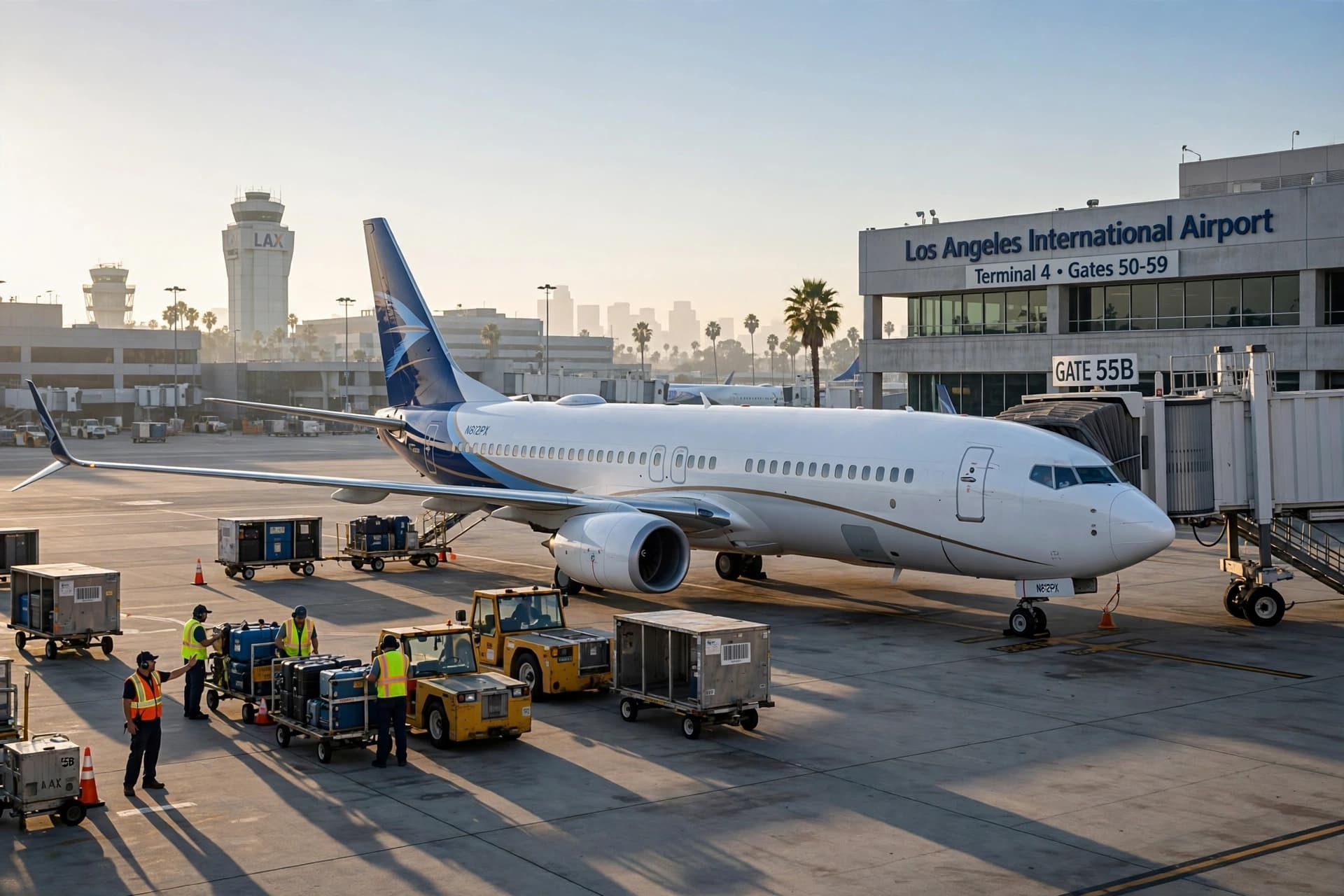
Images accompanying this article are AI-generated for illustrative purposes.
Sources: New York Post, The Times of Israel, Israel Hayom
Published by Banx Network. This article is part of the Banx decentralized media programme, powered by the BXE token on the XRP Ledger.