In the delicate cadence of everyday browsing the searching, the scrolling, the return to what’s familiar it’s easy to forget the unseen architecture that hums behind every open tab. Chrome has long been a quiet companion through the web’s sprawling corridors, bearing bookmarks, passwords, and promises of tomorrow’s click. This winter, as the browser continues its subtle evolution, it offers users a new kind of choice one that invites a pause, a moment to reflect on what we keep, and what we let go.
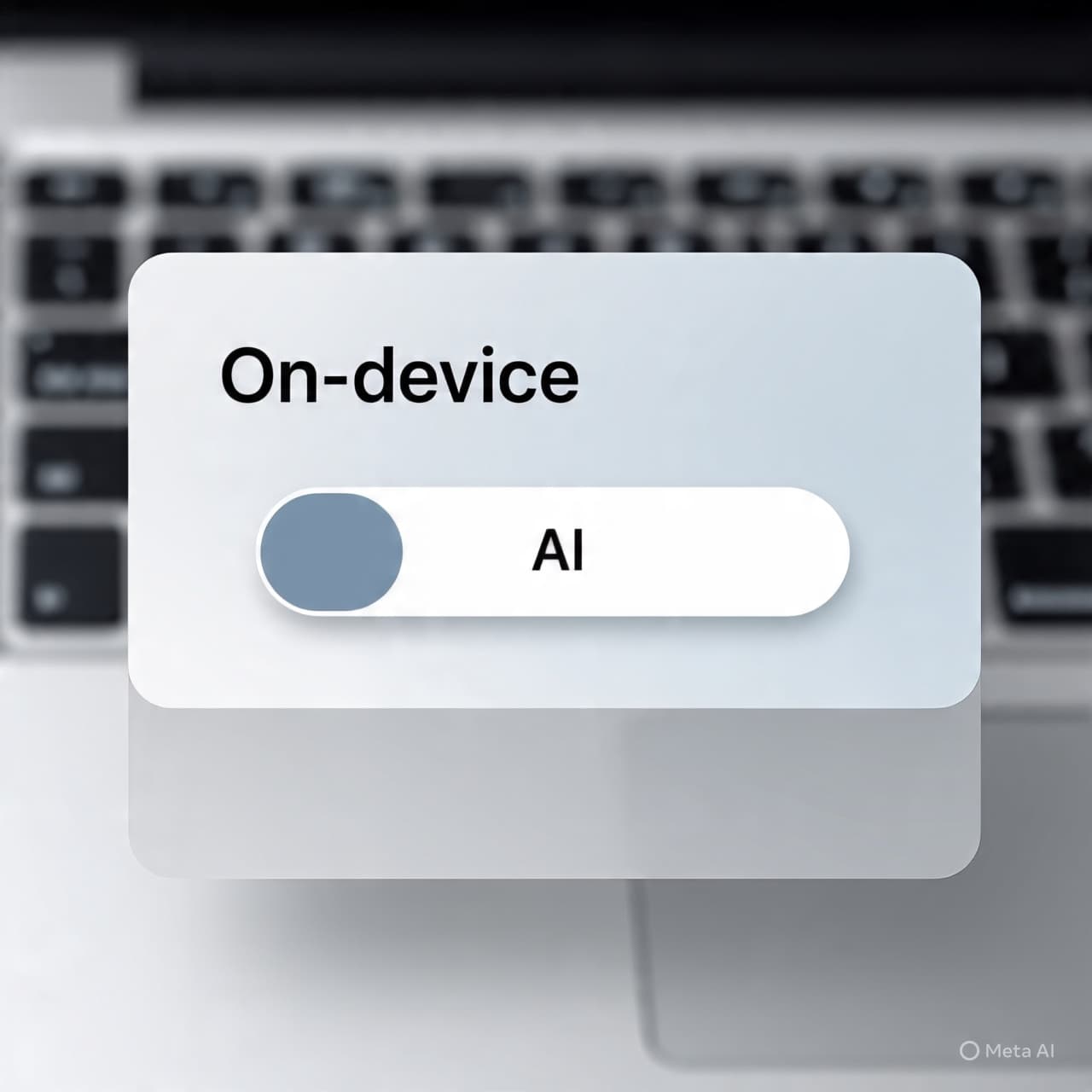
This change arrives not with a clamor, but rather with a whisper: in the latest pre-release versions of Google Chrome, there is a new toggle that allows users to turn off and delete the on-device AI models that power certain features. Previously, Chrome’s “Enhanced Protection” feature — designed to provide real-time scam detection and warnings about unsafe websites began quietly incorporating local AI models to make faster sense of complex threats. Now, a setting labeled “On-device GenAI” lets users remove these models entirely from their devices, effectively turning off the associated AI functions. For many, this translates to an added layer of agency over what lives on their machine, and what does not.
Some see this as a gentle reclaiming of control, akin to deleting an unused app or clearing out old data. Others may simply appreciate a setting that aligns with their preference for a leaner, less AI-augmented experience. The narratives around on-device AI are layered safety, privacy, convenience, and certainty all inhabit the same conversation. By offering a choice, Chrome acknowledges that one size does not fit all, and that the rhythm of individual preference should matter in the architecture of our tools.
Yet the news is not that Chrome has abandoned AI on the contrary. These models are deeply woven into how features such as scam detection work, scanning for patterns in real time and helping guard against deceptive content. What this update does is provide an opt-out pathway for those who desire it, a climbing down from the default to something more customized, something more intentional.
There’s a subtle grace in that: the confidence to offer control back to the user without removing the innovation entirely. As options unfold, the horizon of what we expect from browsers and from AI continues to expand. For now, the choice is there and in that choice, a gentle affirmation that technology, at its best, remains a serving companion rather than an unquestioned tenant in our digital lives.
AI Image Disclaimer
Illustrations were produced with AI and serve as conceptual depictions.
Source Check
1. Forbes 2. Bleeping Computer 3. Reddit (user-reported clarifications)
Published by Banx Network. This article is part of the Banx decentralized media programme, powered by the BXE token on the XRP Ledger.