There is a particular mystery that lives at the boundary between what we inherit and what we become—the question of how the experiences of one generation leave marks on the next, not through the letters of DNA but through something more subtle, more fluid, more easily erased and yet somehow persistent.
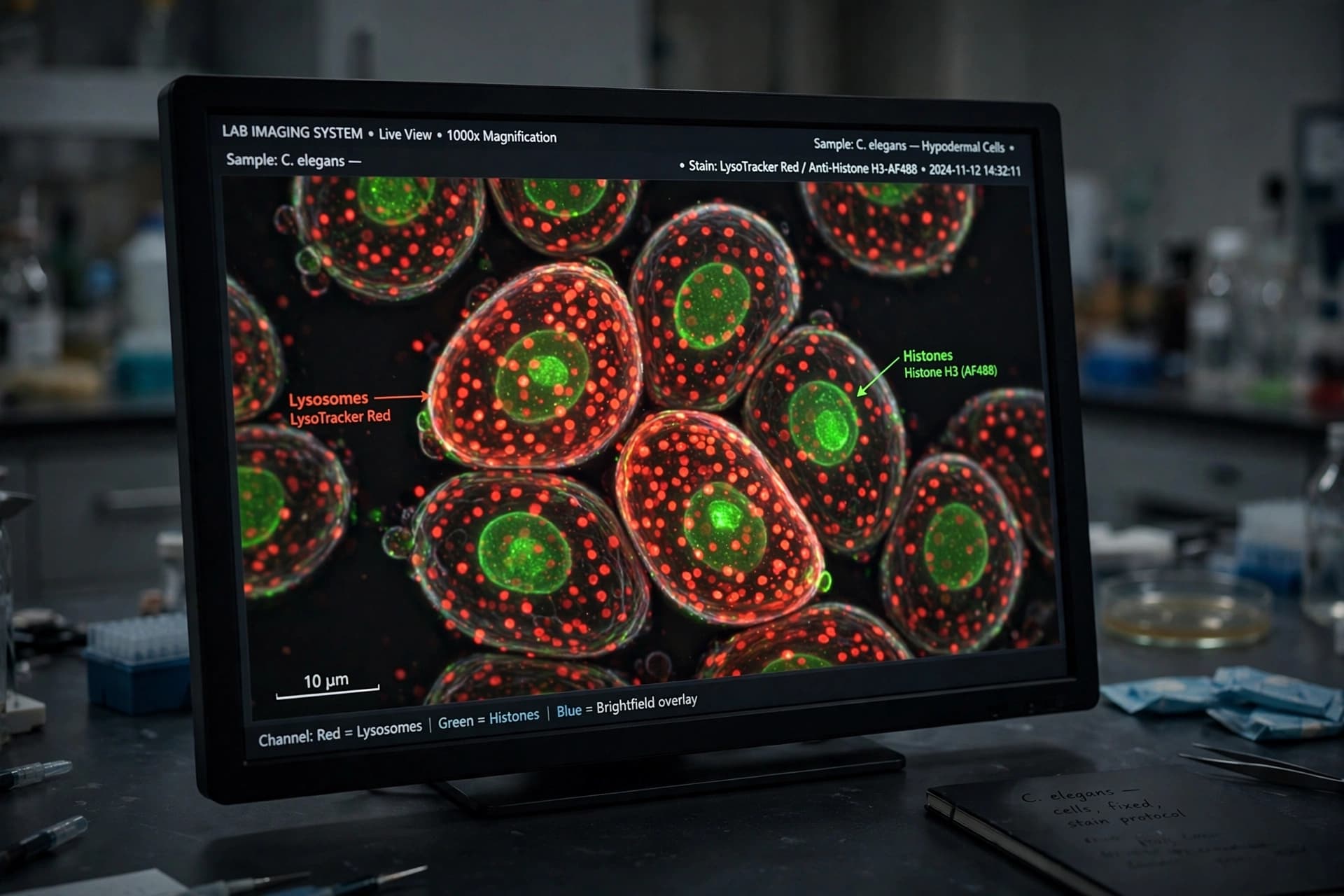
New research in the roundworm Caenorhabditis elegans has revealed a mechanism by which changes in a parent's cells can be transmitted to their offspring, affecting traits like longevity for multiple generations without altering the genetic code itself . The work, published in September 2025, describes a new link between lysosomes—cellular organelles once thought to be merely the cell's recycling centers—and the epigenome, the set of chemical marks that modify gene expression .
The discovery began with a surprise. Researchers at the Howard Hughes Medical Institute's Janelia Research Campus found that by overexpressing an enzyme in the lysosomes of roundworms, they could extend the worms' lives by up to 60 percent. But when they crossed these long-lived worms with wild-type worms that lacked the genetic modification, the offspring also lived longer than normal. The longevity markers were being transferred from generation to generation, even four generations later .
What the team uncovered was a pathway involving histones—proteins that organize and regulate DNA. Changes in lysosomal metabolism activate a series of processes inside the cell, triggering an increase in a specific histone variant. This histone is then transported from the worm's body tissues to its reproductive cells through proteins that deliver nutrients to developing eggs. In the germline, the histone is modified, allowing the information from the lysosome to enter the germline and be passed from parent to child .
"You always think that your inheritance is in the nucleus, within the cell, but now we show that the histone can go from one place to another place, and if that histone carries any modification, that means you are going to transfer the epigenetic information from one cell to another," said Meng Wang, the study's senior author. "It really provides a mechanism for understanding the transgenerational effect" .
The findings add to a growing body of evidence that epigenetic inheritance—the transmission of traits without changes to DNA—is more widespread and more mechanistically diverse than once believed. Previous research in C. elegans has shown that small RNAs can carry environmental information across generations, and that histone modifications inherited through sperm can influence gene expression in offspring .
The new work has implications beyond longevity. Epigenetic modifications help organisms cope with many types of environmental stressors—from diet changes to pollutant exposure to psychological stress—and the research shows how these advantages could be conferred from parents to offspring. "We now show that the soma and the germline can be connected by the histone and can carry memorable genetic information for generations," Wang said .
The study was published in the journal Science on September 25, 2025.
AI Image Disclaimer: The images accompanying this article are AI-created illustrations and are for illustrative purposes only.
Sources: EurekAlert!, Science, Cell, PNAS
Published by Banx Network. This article is part of the Banx decentralized media programme, powered by the BXE token on the XRP Ledger.