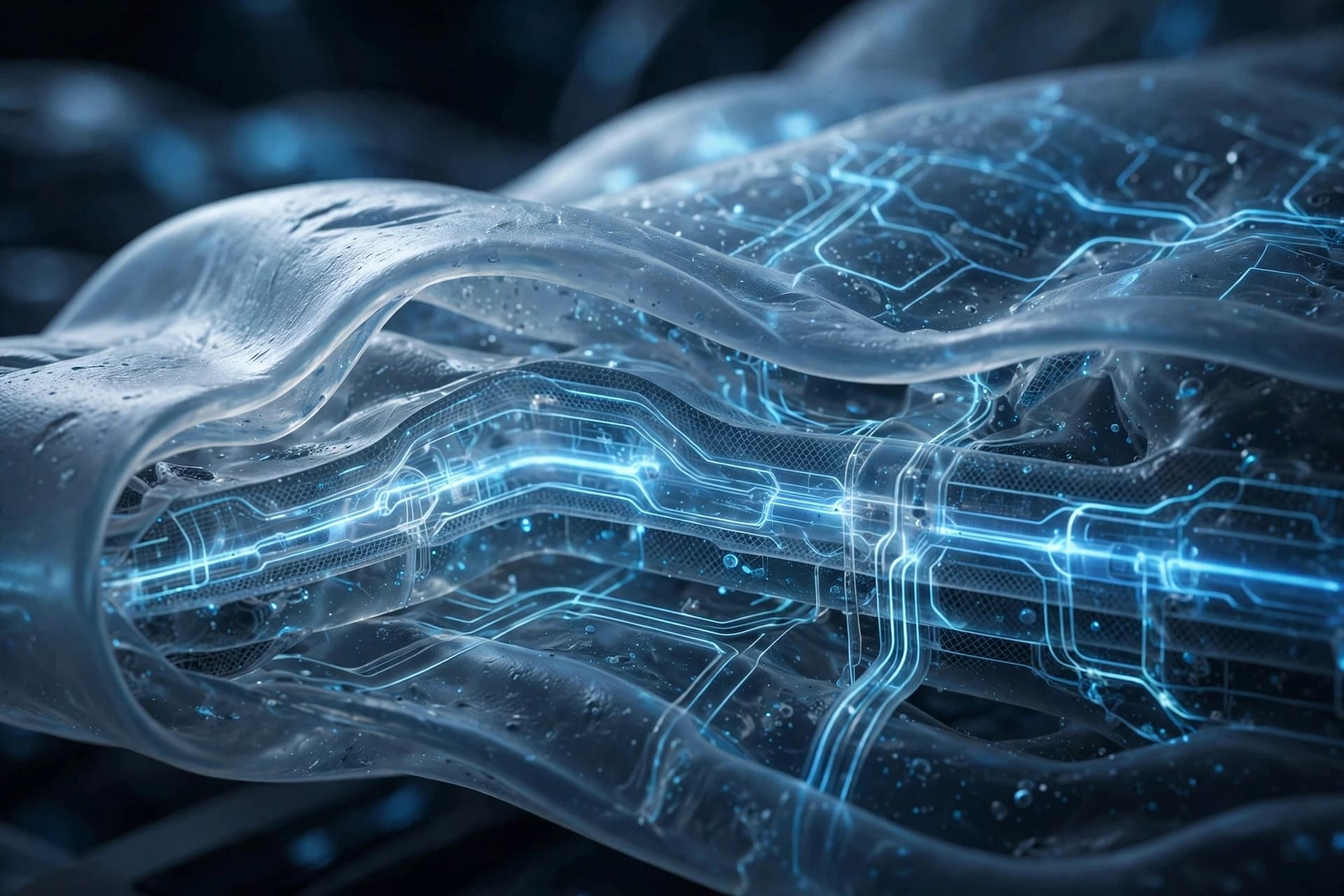
For decades, the concept of artificial intelligence has been largely confined to the abstract realm of software, a ghost in the machine processing data within silicon chips. We have imagined minds made of code, separate from the bodies they might one day inhabit. Yet, a quiet revolution is underway in laboratories and engineering firms, shifting the paradigm from purely digital cognition to "physical AI." In this emerging field, the distinction between the brain and the body begins to blur, as the very materials of a robot’s structure are designed to process information. It is a return to a more organic model of intelligence, where form and function are not just linked, but inseparable.
This evolution suggests that intelligence does not need to be centralized in a single processor but can be distributed throughout an object’s physical form. By embedding computational capabilities into the materials themselves, engineers are creating systems that react to their environment with a speed and efficiency that traditional architectures struggle to match. This approach mirrors the way biological organisms operate, where nerves and muscles work in concert without waiting for instructions from a distant brain. It is a poetic convergence of biology and engineering, inviting us to rethink what it means for a machine to "think."
The core of physical AI lies in the development of metamaterials and soft robotics that can sense, compute, and act simultaneously. Unlike rigid robots that rely on complex algorithms to interpret sensor data and then move motors, these new systems use the physical properties of their construction to perform calculations. For instance, a soft robotic arm might change its shape in response to pressure, with the deformation itself serving as a form of data processing. This reduces the latency and energy consumption associated with traditional digital computing, offering a more sustainable and responsive alternative.
Researchers are exploring various mechanisms to achieve this integration, including optical computing within transparent materials and mechanical logic gates embedded in flexible structures. These innovations allow for robust performance in unstructured environments, where unpredictability is the norm. A robot built with physical AI can adapt to uneven terrain or unexpected obstacles through its inherent design, rather than relying solely on pre-programmed responses. This resilience is crucial for applications in disaster relief, exploration, and healthcare, where reliability is paramount.
The implications for manufacturing and design are profound. If the hardware itself possesses intelligence, the need for extensive external control systems diminishes. This could lead to simpler, more durable devices that are easier to maintain and repair. Furthermore, it opens up possibilities for miniaturization, as complex computational tasks can be offloaded to the material level. Engineers are no longer just building shells for processors; they are crafting intelligent matter that embodies the logic of its task.
However, this shift also brings new challenges. Designing materials that can reliably perform computational tasks requires a deep understanding of physics, materials science, and computer science. The interdisciplinary nature of physical AI demands collaboration across fields that have traditionally operated in silos. Additionally, testing and validating these systems is complex, as their behavior emerges from the interaction of physical forces rather than linear code. Ensuring safety and predictability in such systems remains a critical area of research.
Despite these hurdles, the progress in physical AI is accelerating. Recent prototypes have demonstrated the ability to classify objects, navigate mazes, and even learn simple tasks through physical interaction. These successes validate the theoretical underpinnings of the field and suggest that practical applications are on the horizon. As the technology matures, we may see a new generation of machines that feel less like tools and more like extensions of the natural world, blending seamlessly into our environments.
The philosophical questions raised by physical AI are equally compelling. If intelligence is embedded in matter, where does the "self" of the machine reside? This decentralization challenges our anthropocentric views of consciousness and agency. While current systems are far from sentient, they invite us to consider a broader spectrum of cognitive processes, one that includes the physical world as an active participant in computation. It is a humble reminder that intelligence may be more ubiquitous than we previously imagined.
The journey toward physical AI represents a significant leap in how we conceive of and build intelligent systems. By merging hardware and neural networks, we are creating machines that are more adaptive, efficient, and integrated with their surroundings. As this field continues to evolve, it promises to transform not only technology but also our understanding of the relationship between mind and matter.
AI Image Disclaimer: The visual elements in this article are AI-generated illustrations intended to represent the concept of intelligent materials without depicting specific proprietary technologies.
Sources: Nature Machine Intelligence IEEE Spectrum MIT Technology Review Science Daily
Published by Banx Network. This article is part of the Banx decentralized media programme, powered by the BXE token on the XRP Ledger.