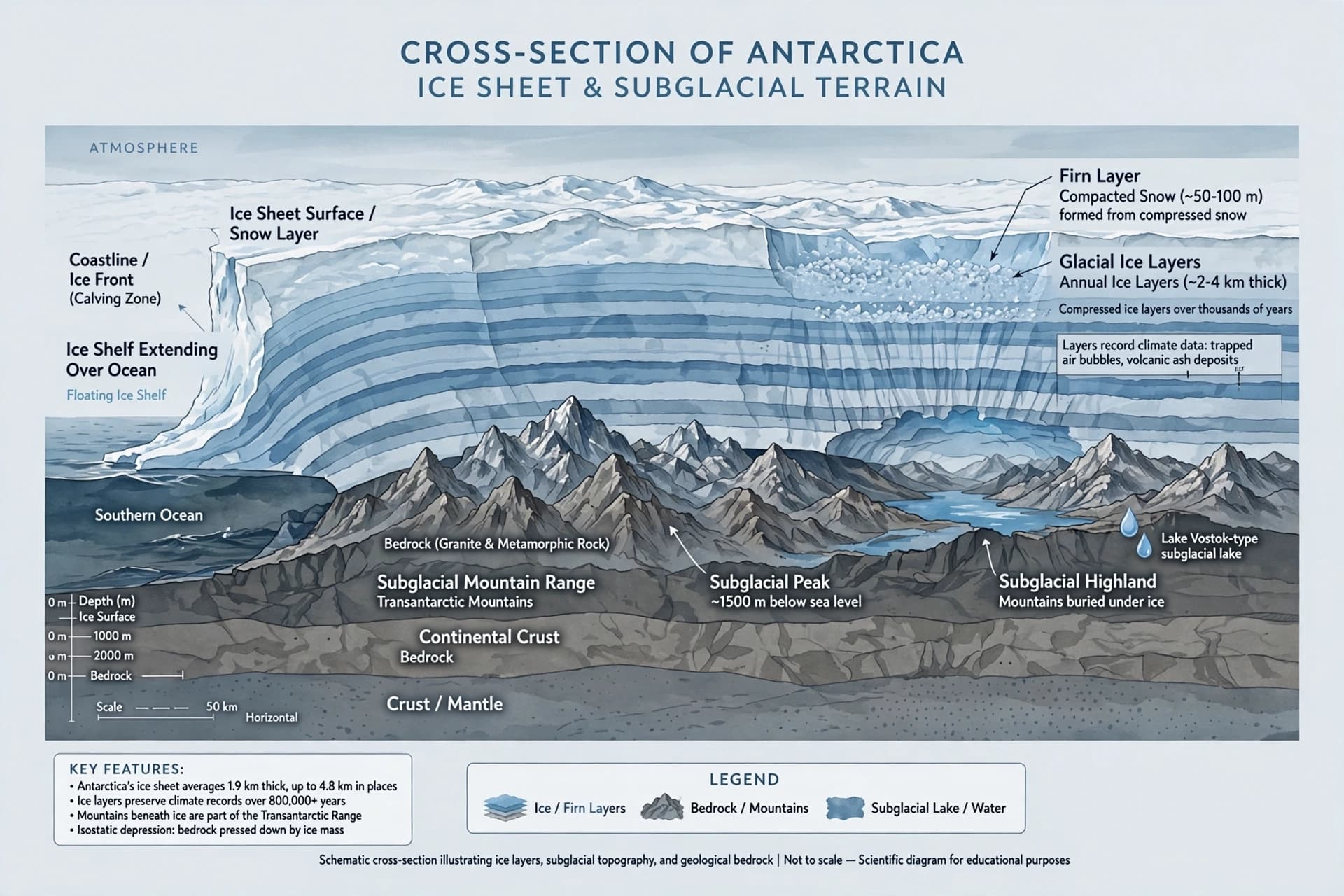
Beneath the vast, frozen expanse of Antarctica lies a landscape sculpted by time and hidden from view. Recent geological discoveries suggest that ancient mountains, once towering above the sea, may rest beneath kilometers of ice. These submerged peaks are not just features of a lost world; they may hold the key to understanding how complex life flourished on Earth millions of years ago. As scientists peer through the ice with radar and seismic tools, they are uncovering a narrative of transformation, where the rise and fall of landmasses played a crucial role in shaping the biosphere.
The idea that Antarctica was once a green, mountainous continent is not new, but the specific details of its topography are only now coming into focus. These hidden mountains, part of the Gamburtsev Subglacial Mountains, offer clues about the tectonic forces that drove atmospheric changes and ocean circulation. Their existence invites us to reflect on the dynamic nature of our planet, where even the most static-seeming landscapes are in constant motion. It is a reminder that the Earth’s history is written in stone, even when that stone is buried under ice.
Research indicates that these ancient mountains played a significant role in weathering processes that drew carbon dioxide out of the atmosphere. As rocks eroded, they released minerals that reacted with CO2, leading to a cooling effect on the global climate. This transition from a warm, greenhouse Earth to a cooler, icehouse world created the conditions necessary for the diversification of complex life forms. The mountains, therefore, were not just passive observers but active participants in the evolutionary drama of our planet.
The discovery of these subglacial features relies on advanced geophysical techniques that can penetrate the thick ice sheet. Radar imaging and gravity measurements allow scientists to map the bedrock below, revealing valleys, peaks, and river channels that existed before the ice formed. These maps provide a window into the past, showing how water flowed and how sediments accumulated. Each detail adds to our understanding of the environmental conditions that supported early ecosystems.
For paleontologists, the implications are profound. If these mountains influenced global climate, they may also have affected the habitats available for early animals. The cooling trend associated with their erosion coincides with periods of significant biological innovation, such as the Cambrian explosion. While direct fossil evidence in Antarctica is scarce due to the ice cover, the geological context supports the theory that environmental changes driven by tectonics were catalysts for life’s complexity.
The study of these hidden mountains also highlights the importance of interdisciplinary collaboration. Geologists, climatologists, and biologists are working together to connect the dots between rock formation, atmospheric chemistry, and biological evolution. This holistic approach allows for a more comprehensive understanding of Earth’s systems, recognizing that no single factor operates in isolation. It is a testament to the power of shared knowledge in solving complex scientific puzzles.
Moreover, the findings have relevance for contemporary climate science. Understanding how Earth responded to past changes in topography and atmosphere helps modelers predict future trends. As we face current challenges related to global warming, insights from the deep past can inform our strategies for mitigation and adaptation. The ancient mountains of Antarctica serve as a natural laboratory, offering lessons on resilience and change.
As research continues, new technologies will likely reveal even more details about this hidden landscape. Each discovery adds depth to our narrative of Earth’s history, reminding us of the intricate connections between geology and life. The mountains beneath the ice are no longer just silent giants but active characters in the story of our planet’s evolution.
The hidden mountains of Antarctica offer a glimpse into the forces that shaped our world and enabled the rise of complex life. As we uncover their secrets, we gain a deeper appreciation for the dynamic interplay between land, sea, and sky. In the silence of the ice, the echoes of the past speak loudly to our present understanding of life on Earth.
AI Image Disclaimer: Visuals used in this article are AI-generated illustrations intended to represent subglacial landscapes and geological concepts without depicting real-time data.
Sources: Nature Geoscience BBC News The Conversation
Published by Banx Network. This article is part of the Banx decentralized media programme, powered by the BXE token on the XRP Ledger.