Article
War often moves like a gathering storm over distant seas. At first there are only dark clouds along the horizon—shadows that hint at thunder yet to come. Nations watch the sky carefully during such moments, measuring every shift in wind and every flicker of lightning.
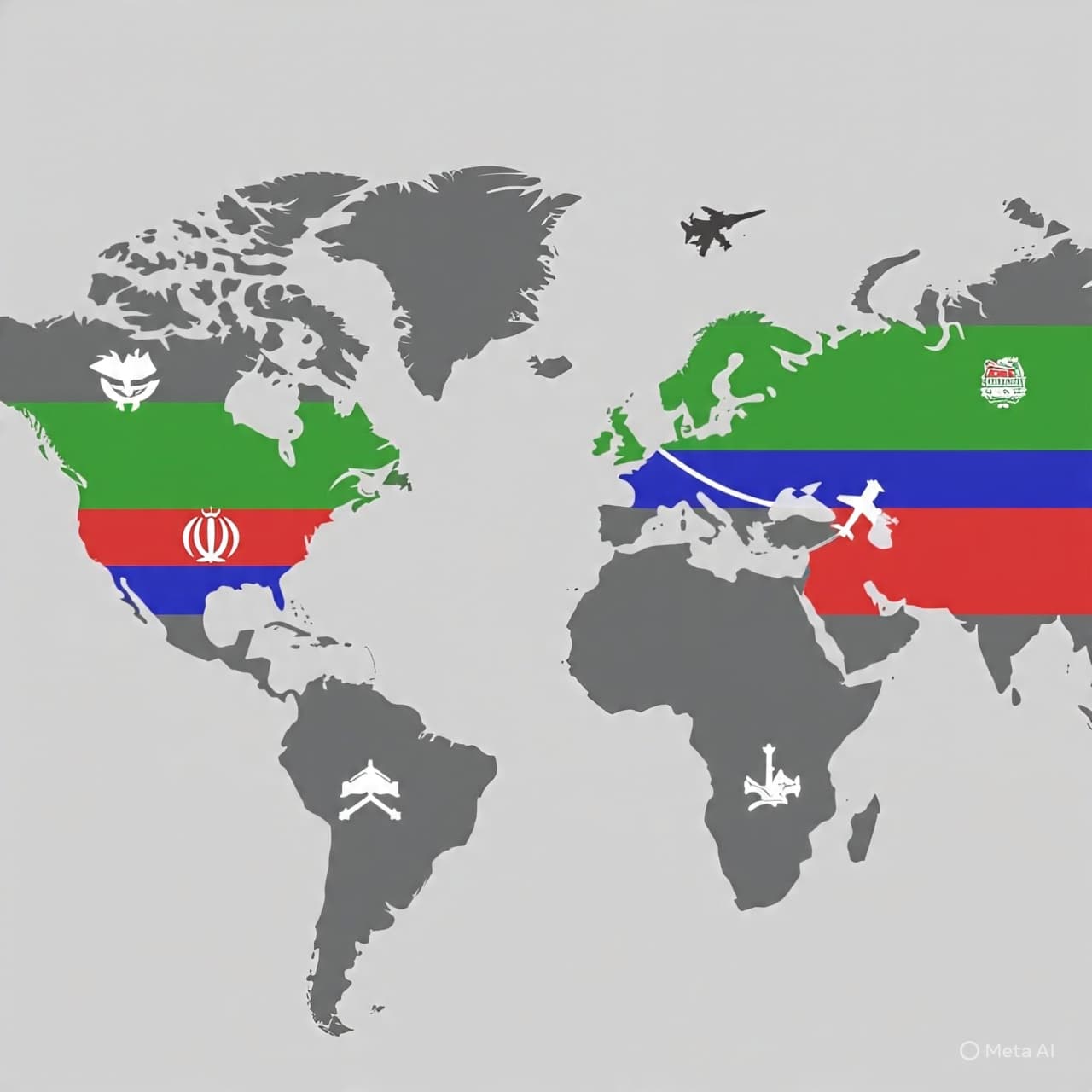
In the unfolding tensions surrounding Iran, another great power has quietly stepped closer to the edge of that storm. From Moscow, signals have emerged that suggest Russia is watching events with a careful but attentive gaze, prepared to respond should circumstances change.
Russia and Iran have, in recent years, grown closer through what both sides describe as a strategic partnership. The relationship is not built on a formal mutual defense treaty, yet it rests on overlapping interests and a shared skepticism toward Western pressure. When strikes and military confrontations intensified around Iran, Moscow was quick to condemn the attacks and call for restraint in international forums.
Officials in the Kremlin have also spoken carefully about the possibility of deeper involvement. Russian spokesperson Dmitry Peskov confirmed that Tehran had not formally asked Moscow for military assistance, including weapons or direct support.
Yet the tone from Moscow has suggested that dialogue between the two countries remains ongoing. Russian officials emphasize that communication with Iranian leadership continues, leaving open the possibility that circumstances could evolve if Tehran were to request help.
This delicate language reflects the complicated geometry of global politics. Russia maintains relations not only with Iran but also with several other countries across the Middle East, including those wary of Tehran’s ambitions. Balancing these ties requires a cautious approach, where words are measured and actions carefully weighed.
At the same time, analysts observe that the partnership between Moscow and Tehran has strengthened in recent years through cooperation in technology, energy, and military industries. Iran has supplied Russia with drones during the war in Ukraine, while both countries have explored broader defense and economic cooperation. In many ways, their relationship resembles a quiet alignment shaped by shared pressures rather than a formal alliance.
For now, Russia’s role appears largely diplomatic. Officials in Moscow continue to warn that expanding the conflict could destabilize the region and potentially trigger wider consequences, including an arms race in the Middle East.
Still, in the language of international politics, even a carefully phrased statement can carry weight. When Russia suggests it may respond if Iran asks for help, the message is less a declaration of immediate action and more a reminder that the map of alliances is never entirely still.
In times like these, global affairs often resemble a chessboard set beneath a gathering storm. Some pieces move quickly; others remain still but influential, waiting for the moment when their move may matter most.
For now, Russia remains in that quieter position—watching the horizon, speaking cautiously, and leaving the possibility of deeper involvement as a question that only future events may answer.
AI Image Disclaimer
Illustrations were produced with AI and serve as conceptual depictions.
---
Sources
Associated Press Al Jazeera CBS News The Moscow Times TASS
Published by Banx Network. This article is part of the Banx decentralized media programme, powered by the BXE token on the XRP Ledger.