The morning sky over Israel often carries a quiet clarity. From the hills outside Jerusalem to the coastal avenues of Tel Aviv, the early hours usually belong to routine: buses gathering commuters, cafés lifting their shutters, the slow rhythm of a country preparing for another day. Yet in recent weeks, that rhythm has been interrupted by a sound that now arrives without warning—the sharp echo of missile sirens spreading across neighborhoods.
On a recent Saturday, those alarms returned again. Residents across parts of the country paused their routines as warning systems activated, sending people toward shelters and stairwells while the threat passed overhead. In cities where the skyline meets the Mediterranean, and in communities farther inland, the sirens briefly reshaped the morning’s pace, replacing ordinary sounds with a tense silence that followed.
Despite the renewed alarms, Israeli military officials say the broader picture of the confrontation has shifted significantly. The Israel Defense Forces reported that approximately 75 percent of Iran’s missile launchers have been destroyed during the course of the ongoing conflict. According to the military’s assessment, a series of air and intelligence operations has steadily reduced Iran’s capacity to launch large-scale missile attacks toward Israeli territory.
The announcement reflects a strategic focus that has guided Israel’s operations throughout the conflict: targeting the infrastructure that allows missiles to be fired in the first place. Mobile launchers—often concealed, moved frequently, and protected by defensive systems—have long been among the most difficult assets to locate during wartime. Their destruction, Israeli officials argue, gradually narrows the scale and frequency of attacks that can be carried out.
Yet the sirens that echoed across the country on Saturday also reveal the complexity of such campaigns. Even with significant losses among its launcher network, Iran retains the ability to launch missiles, sometimes in smaller numbers or from locations that remain hidden. Each launch triggers the familiar sequence of detection, warning, and interception that has become part of Israel’s wartime routine.
Across Israel, defensive systems such as the Iron Dome and other air-defense networks continue to operate around the clock. These systems track incoming projectiles and intercept many of them before they reach populated areas. Their presence has become a defining feature of the country’s security architecture, forming a protective layer that allows cities to function even as conflict unfolds in the background.
For residents, however, the experience of a siren remains deeply personal. A few seconds of warning can send people searching for the nearest shelter—sometimes a reinforced room, sometimes a stairwell or underground space—until the alert passes and the city slowly resumes its motion. The rhythm of daily life adapts around these moments, compressing ordinary routines into the spaces between alarms.
Meanwhile, the broader military campaign continues to evolve. Israeli officials maintain that reducing Iran’s missile-launch capacity is essential to limiting the scale of future attacks. Analysts observing the conflict note that such campaigns rarely unfold in a straight line; advances in one phase of the conflict often coexist with sudden reminders that the threat has not fully disappeared.
Saturday’s spike in missile sirens illustrated this tension. Even as military reports pointed to a substantial decline in operational launchers, the alarms carried their own message: the conflict remains active, and the skies above the region are still contested space.
By evening, calm gradually returned to many of the areas that had heard the warnings earlier in the day. Traffic resumed along familiar routes, and the coastal horizon settled again into the warm colors of sunset. The sirens faded, leaving behind a quiet reflection of the day’s events.
Seventy-five percent of missile launchers destroyed, the military says—a statistic that signals a strategic shift in the balance of the conflict. Yet the brief echoes of Saturday’s alarms remind residents that even diminished threats can still travel far across the sky, arriving suddenly in the middle of an otherwise ordinary day.
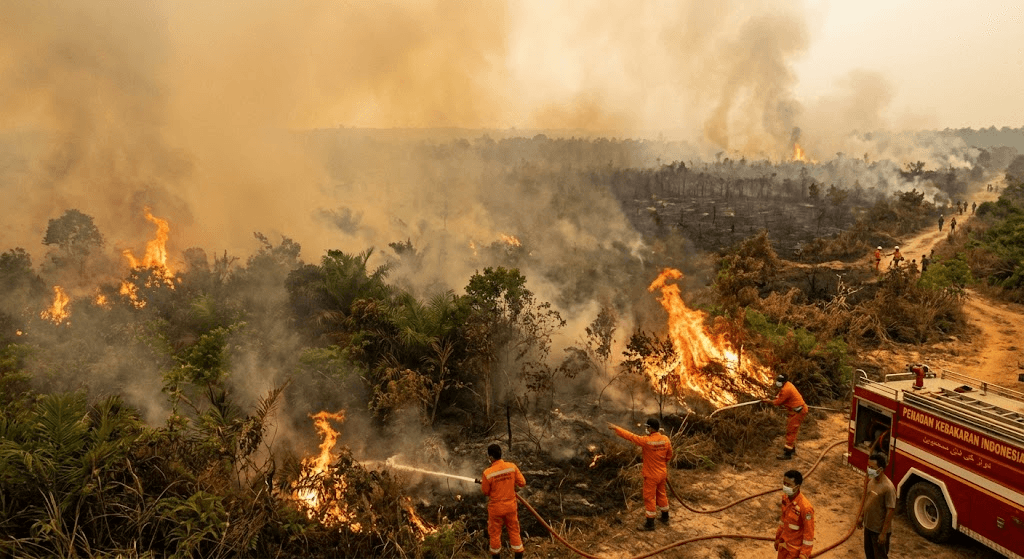
AI Image Disclaimer These illustrations were generated using artificial intelligence and are intended for visual reference rather than documentary imagery.
Sources Reuters Associated Press BBC News The Guardian Al Jazeera
Published by Banx Network. This article is part of the Banx decentralized media programme, powered by the BXE token on the XRP Ledger.