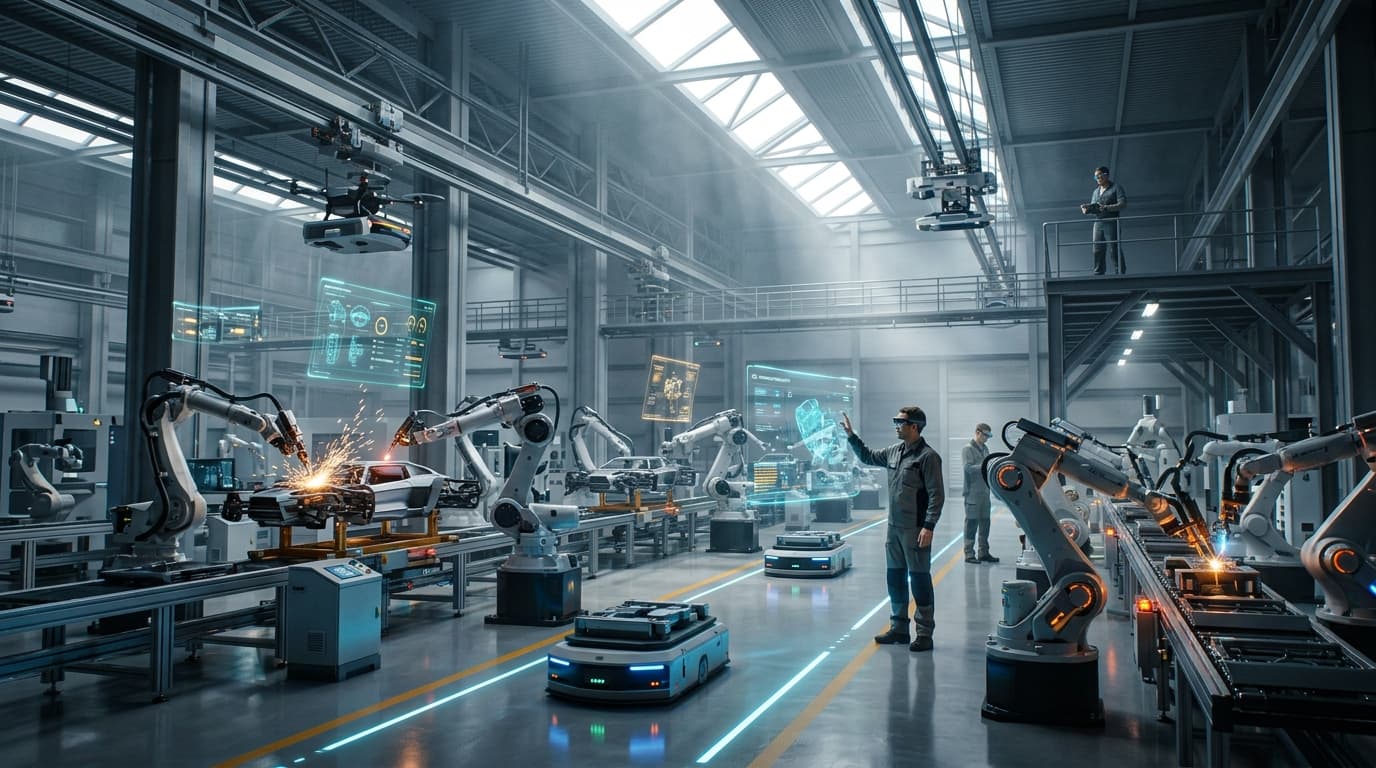
There’s a peculiar moment in learning to code that feels a lot like learning to ride a bicycle: those first awkward pedals, the wobbles, the sudden rush of wind when your effort finally clicks. It’s a rite of passage that teaches persistence, logic, and muscle memory. Yet, as with any tradition, a new companion has arrived: artificial intelligence — a guide, a shortcut, an assistant that whispers answers into the ear of the aspiring coder. As that companion becomes more common, many wonder, in soft tones and thoughtful pauses, what it means for the formation of coding skills themselves.
In classrooms and open IDEs alike, AI coding tools have gained prominence, offering real-time suggestions, code completion, and debugging help with an ease that feels almost like having a teacher beside you. These assistants can transform a wall of intimidating syntax into a series of gentle prompts, suggesting solutions and illuminating patterns in ways that once took years of practice to grasp. Research shows that AI tools can accelerate task completion and help learners tackle new problems with confidence by breaking down barriers that used to slow even the most earnest beginner.
And yet, like a mirror reflecting not just what we want to see but also what we might overlook, deeper investigations reveal a more complex picture. Recent research by developers at Anthropic suggests that while AI assistance speeds coding tasks slightly, it may come with trade-offs in the depth of learning. In a controlled study, participants using AI scored lower on mastery quizzes about recently used concepts compared to those who wrote code by hand, suggesting that offloading too much cognitive work to AI can blunt the formation of underlying understanding.
This isn’t a simple verdict against AI, but a reminder of nuance. Learning to code is more than seeing solutions — it is wrestling with logic, stumbling into errors, and forming mental models that let a programmer anticipate what comes next. Tools that generate code rapidly can sometimes mask that struggle, creating a feeling of progress that may not yet be rooted in robust comprehension. Studies in educational settings report that while instant feedback and suggestions boost engagement and efficiency, they can also lead to over-reliance if not balanced with intentional learning practices.
Some educators and researchers describe this as a landscape of opportunities and challenges. On the one hand, AI can democratize access to coding education, providing personalized support that scales beyond the limitations of traditional instruction. Learners from diverse backgrounds can explore programming concepts at their own pace with an AI tutor that answers questions instantly. On the other hand, exponential convenience may inadvertently hollow out the very mechanisms that build deep analytical skills — the internal feedback loop that comes from debugging one’s own mistakes or understanding why a structure didn’t work until it does.
The situation is not static. Thoughtful integration of AI, where learners engage AI not just as a code generator but as a reflective partner — asking for explanations, reasoning through alternatives, and using suggestions as prompts for deeper thought — appears to foster better outcomes. Research points to patterns of use where those who interact with AI in conceptually engaged ways retain more understanding and avoid the pitfalls of simple code automation.
Ultimately, AI’s role in coding education and practice may be best viewed not as a replacement for the bicycle ride, but as training wheels — useful when aligned with intention, but most beneficial when paired with the learner’s own efforts. The challenge for educators, learners, and industry alike is to nurture environments where AI amplifies understanding without displacing the hard-won strides that define true skill formation.
In recent developments, academic and educational institutions are exploring frameworks to integrate AI in coding curricula that emphasize concept mastery, problem-solving depth, and human-AI collaboration, underscoring a balanced path forward in the age of intelligent coding assistance.
AI Image Disclaimer (Rotated Wording)
Visuals are created with AI tools and are not real photographs.
---
Sources Based on Credible Reporting
Anthropic research
MDPI systematic review
GeeksforGeeks
arXiv research on AI skill formation
GoCodeo analysis
Published by Banx Network. This article is part of the Banx decentralized media programme, powered by the BXE token on the XRP Ledger.