
Economic transformation rarely arrives as one dramatic moment. It gathers gradually, through factories that adopt new machines, companies that move services into the cloud, and investments that begin changing the infrastructure beneath everyday life. Thailand's latest technology figures suggest that such a transformation is now becoming increasingly visible.
During the first half of 2026, Thailand received 1.473 trillion baht in investment applications, according to the Board of Investment. Digital industries led the expansion with 1.115 trillion baht from 90 projects, while electronics and electrical appliances generated another 120.23 billion baht. (nationthailand.com)
The numbers are significant because they reveal how closely several technology sectors have begun to connect. Data centers require electronics, energy, telecommunications, cooling systems, and skilled workers. Electronics manufacturers, meanwhile, increasingly serve data centers, cloud companies, automotive producers, and other advanced industries.
Artificial intelligence is one of the forces linking these sectors. AI requires computing infrastructure, but its influence reaches further into manufacturing, financial services, logistics, retail, and professional work.
Thai businesses are already adopting the technology. Research from Amazon Web Services and Strand Partners found that 43% of Thai businesses were using AI consistently, up from 32% a year earlier. Yet the majority of those adopters remained at a basic level, suggesting that the deeper transformation is still developing. (nationthailand.com)
That distinction matters. Digital transformation is not simply the installation of new software. It requires changes in business processes, workforce skills, cybersecurity, data management, and organizational culture.
The country's data-center expansion demonstrates the same principle on a larger physical scale. Thailand is attracting substantial investment into computing infrastructure, but authorities are increasingly considering electricity, water, environmental impact, and local economic benefits when evaluating new projects. (nationthailand.com)
Electronics manufacturing provides another foundation. Thailand already has capabilities in storage devices, optical equipment, printed circuit boards, power systems, and other components supporting modern digital infrastructure. New investment can potentially move the sector toward more advanced activities.
The transformation also depends on people. Engineers, technicians, software specialists, cybersecurity professionals, researchers, and workers with digital skills are needed across the expanding ecosystem. Without sufficient talent, investment in machines and infrastructure cannot reach its full potential.
Energy and sustainability will remain part of the equation as well. Data centers and advanced manufacturing facilities require reliable electricity, while the expansion of digital infrastructure creates new demand for renewable energy and more efficient resource management.
Taken together, these developments suggest that Thailand's technology economy is no longer a collection of separate projects. AI, cloud computing, electronics, manufacturing, energy, telecommunications, and workforce development are becoming parts of a connected industrial system. The transformation remains unfinished, but the direction is increasingly visible: Thailand is building an economy in which digital technology is moving from the margins toward the center of industrial growth.
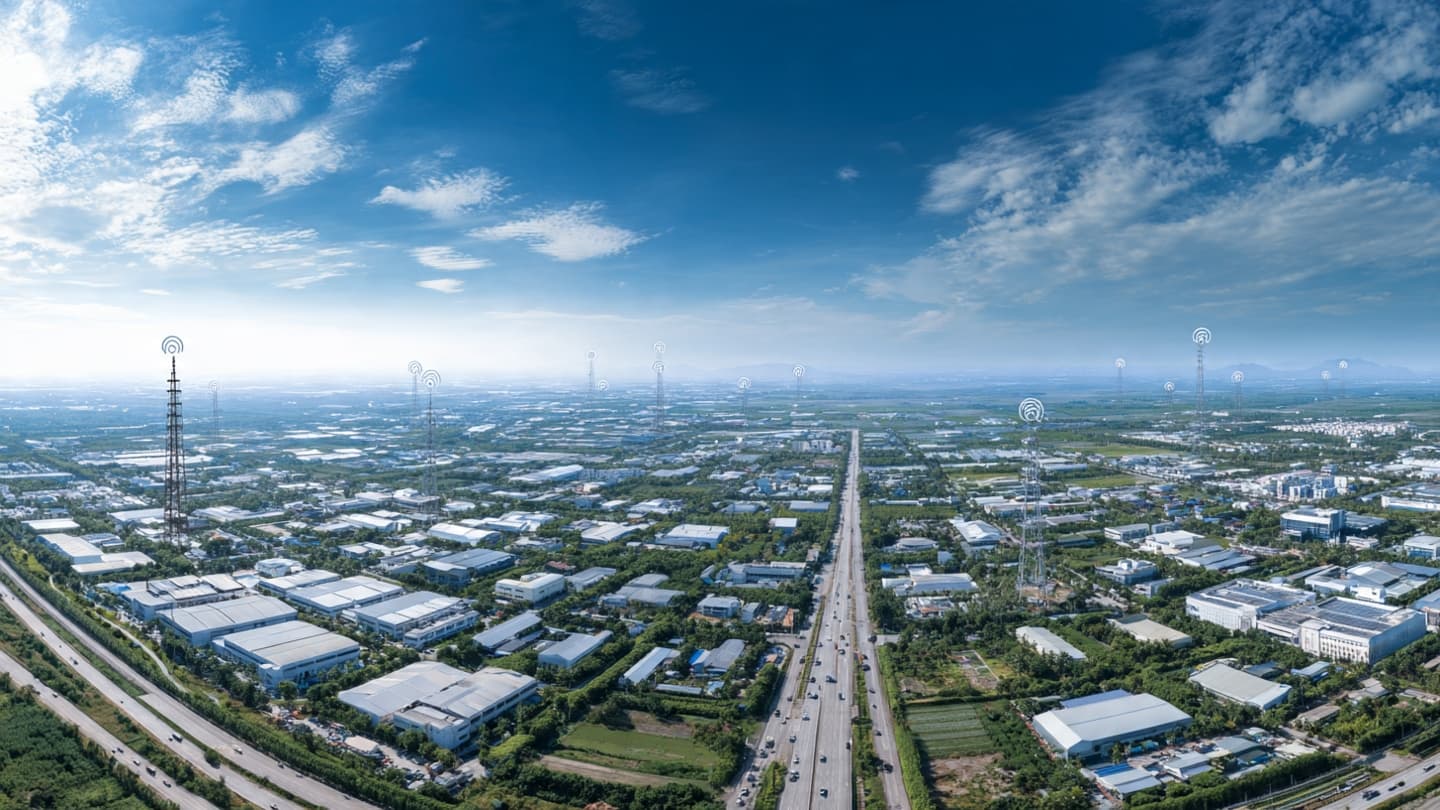
AI Image Disclaimer The visuals are AI-generated conceptual representations of Thailand's broader digital and industrial transformation and are not real photographs.
Sources The Nation Thailand Thailand Board of Investment Amazon Web Services Strand Partners Reuters
Published by Banx Network. This article is part of the Banx decentralized media programme, powered by the BXE token on the XRP Ledger.



