There is a quiet cruelty in sunlight. We feel it as warmth on our skin, as the steady rhythm that governs life on Earth. Yet in the wider theater of the solar system, that same brilliance can erode, strip, and transform. The story of Mars is, in many ways, a story about light—about how the Sun, giver of life here, may have slowly unmade the possibility of life there.
Billions of years ago, Mars did not resemble the cold, rust-colored desert we see today. Ancient river valleys, delta formations, and mineral deposits suggest that liquid water once flowed across its surface. The planet likely possessed a thicker atmosphere, capable of trapping heat and sustaining lakes or perhaps shallow seas. For a time, Mars may have been temperate, even promising.
The turning point lies not merely in distance from the Sun, but in protection. Earth is shielded by a powerful magnetic field generated deep within its core. That magnetic cocoon deflects much of the solar wind—a stream of charged particles constantly flowing outward from the Sun. Mars, by contrast, lost its global magnetic field early in its history. Without that invisible armor, its atmosphere stood exposed.
The solar wind is not a gust in the terrestrial sense; it is a steady plasma current carrying energy and magnetic fields. When it encounters an unprotected planet, it can interact directly with the upper atmosphere. Over time, this interaction transfers energy to atmospheric particles, giving some of them enough velocity to escape Mars’ relatively weak gravity.
NASA’s MAVEN (Mars Atmosphere and Volatile Evolution) mission has been central to understanding this process. Observations show that solar storms—bursts of intensified solar activity—can dramatically increase atmospheric loss. During such events, the rate at which gas escapes into space rises sharply. Multiply this by billions of years, and the cumulative effect becomes transformative.
The mechanism unfolds in layers. Ultraviolet radiation from the Sun breaks apart molecules in the upper atmosphere. Charged particles from the solar wind then sweep some of these fragments away. Lighter elements such as hydrogen are especially vulnerable, escaping more readily into space. As hydrogen is lost, water molecules—composed of hydrogen and oxygen—cannot be replenished in the same way. Slowly, the ingredients for sustained surface water diminish.
Mars’ lower gravity compounds the problem. With only about 38 percent of Earth’s gravitational pull, it holds atmospheric gases less tightly. Once energized by solar interaction, particles require less speed to break free. Over immense spans of time, this escape thins the atmosphere, reducing surface pressure and weakening the greenhouse effect that once helped maintain warmer conditions.
As the atmosphere thinned, liquid water became unstable on the surface. It either froze into subsurface ice or sublimated directly into vapor. Without sufficient pressure, rivers could no longer flow freely. The planet cooled, dried, and oxidized, its iron-rich soil reacting with the sparse oxygen left behind to create the familiar red hue.
The Sun did not act with sudden violence but with persistence. It was not a single flare or catastrophic eruption that transformed Mars, but a steady exposure—an erosion measured not in years but in epochs. The loss of a magnetic field left the planet vulnerable; solar wind and radiation completed the work.
Yet the story is not one of simple destruction. The same solar forces that stripped Mars also reveal clues about planetary evolution elsewhere. By studying how atmospheres respond to stellar activity, scientists refine their understanding of exoplanets orbiting distant stars. The fate of Mars becomes a case study in habitability: how fragile atmospheres can be, how essential magnetic fields may prove.
Today, Mars still bears the imprint of its former self—dry riverbeds etched into rock, minerals formed in water, ice locked beneath dust. The Sun continues to shine upon it, as it does upon Earth. But here, our magnetic shield and thicker atmosphere preserve the balance.
In reflecting on Mars, we are reminded that habitability is not a permanent condition but a dynamic one. A planet’s story is written not only in its beginnings but in its defenses, its gravity, and its relationship with its star. The Sun that sustains life can also reshape worlds, patiently, particle by particle.
Mars stands as a quiet testament to that long dialogue between star and planet—a reminder that even in the brilliance of daylight, there can be a gradual fading.
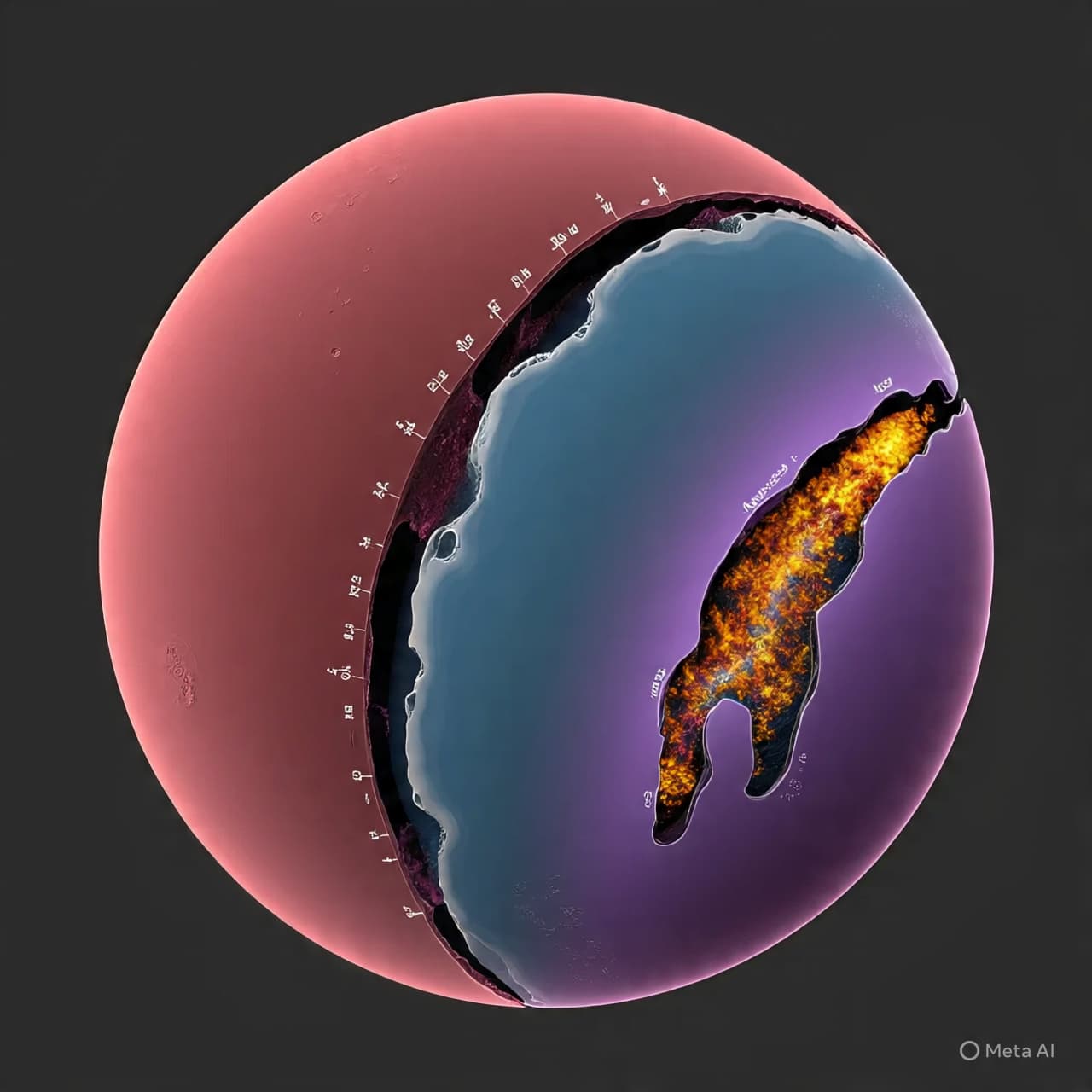
AI Image Disclaimer Graphics are AI-generated and intended for representation, not reality.
SOURCE CHECK
Credible mainstream and specialist sources covering this topic include:
NASA Science Nature Scientific American BBC
Published by Banx Network. This article is part of the Banx decentralized media programme, powered by the BXE token on the XRP Ledger.