Morning often arrives gently over India's great cities. Light settles across railway platforms, market lanes awaken with familiar rhythms, and the first conversations of the day drift between tea stalls before traffic begins to fill the streets. Yet beneath this ordinary cadence, another current has continued to move quietly through universities, public squares, and neighborhoods—a current shaped by voices that refuse to fade even as the days grow longer.
In recent weeks, demonstrations led largely by students and civil society groups have expanded across several Indian cities. What began as protests over government policies has gradually become a broader expression of frustration, drawing participants from different generations and communities. While each gathering carries its own local concerns, together they have formed a movement that reflects deeper debates about governance, accountability, and democratic participation.
The latest chapter unfolded when opposition leader Rahul Gandhi was detained by police while taking part in protest activities. Authorities described the action as part of maintaining public order amid unauthorized demonstrations, while members of the opposition argued that the detention represented an unnecessary restriction on peaceful political expression. Gandhi was later released, but the event quickly became a focal point of national discussion.
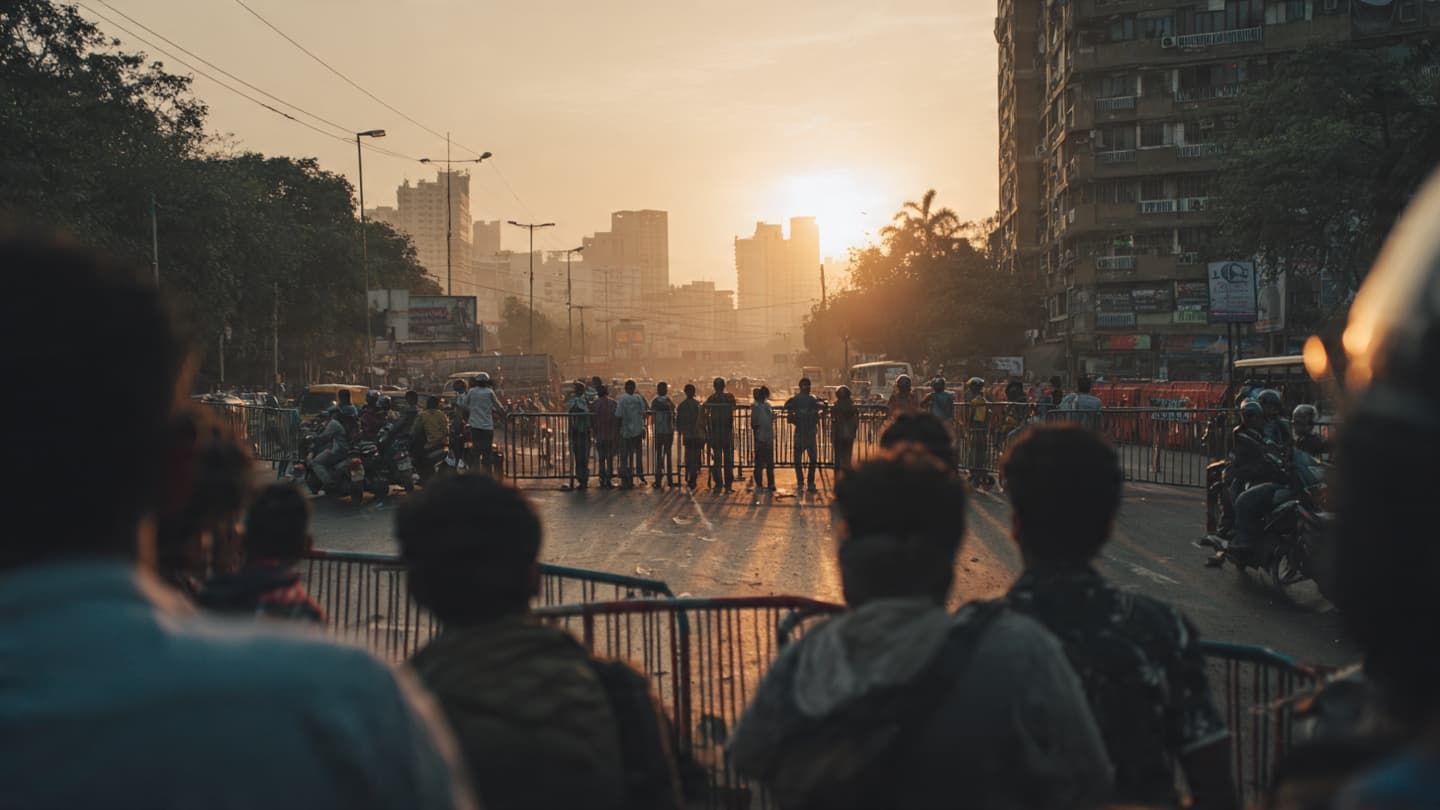
Crowds continued to assemble despite increased police deployments. Demonstrators marched with banners, songs, and speeches that echoed through city streets, while security personnel established barricades intended to prevent large gatherings from spreading into sensitive areas. Although many protests remained peaceful, occasional confrontations occurred as officers dispersed crowds and detained additional participants.
For India's opposition parties, the expanding demonstrations have offered a rare opportunity to present a united public front. Leaders from multiple political organizations have voiced support for protesters, framing the movement as evidence of growing public dissatisfaction. At the same time, the governing Bharatiya Janata Party has maintained that law enforcement actions are intended to preserve stability rather than suppress legitimate political debate.
Universities have emerged as particularly significant spaces within the movement. Campuses, long recognized as places where political ideas are debated openly, have become gathering points where students discuss not only immediate grievances but also broader questions about the country's future. Their participation has given the protests an energy that extends beyond conventional party politics.
Observers note that India has experienced many periods of public mobilization throughout its democratic history. Protest has often served as a visible reminder that civic engagement remains an essential part of the nation's political culture. While today's demonstrations differ in their immediate causes, they continue that long tradition of citizens seeking to shape public conversation through peaceful assembly.
International attention has also grown as images of crowded streets and detained opposition figures circulate globally. Human rights organizations have encouraged restraint from all sides, emphasizing the importance of protecting peaceful protest while maintaining public safety. Meanwhile, government officials continue to defend their response as consistent with existing legal frameworks.
As evening settles once again across India's cities, the streets gradually return to familiar routines, yet the questions carried by the demonstrations remain present. Whether these protests ultimately reshape policy, strengthen opposition cooperation, or simply become another chapter in India's democratic story, they remind observers that the conversation between citizens and their institutions is rarely still. Like the changing light across the country's crowded avenues, public sentiment continues to move—sometimes quietly, sometimes unmistakably—toward whatever tomorrow may bring.
AI Image Disclaimer Illustrations were created using AI tools as conceptual representations and are not authentic photographs.
Sources Reuters Associated Press BBC News The Hindu Al Jazeera
Published by Banx Network. This article is part of the Banx decentralized media programme, powered by the BXE token on the XRP Ledger.