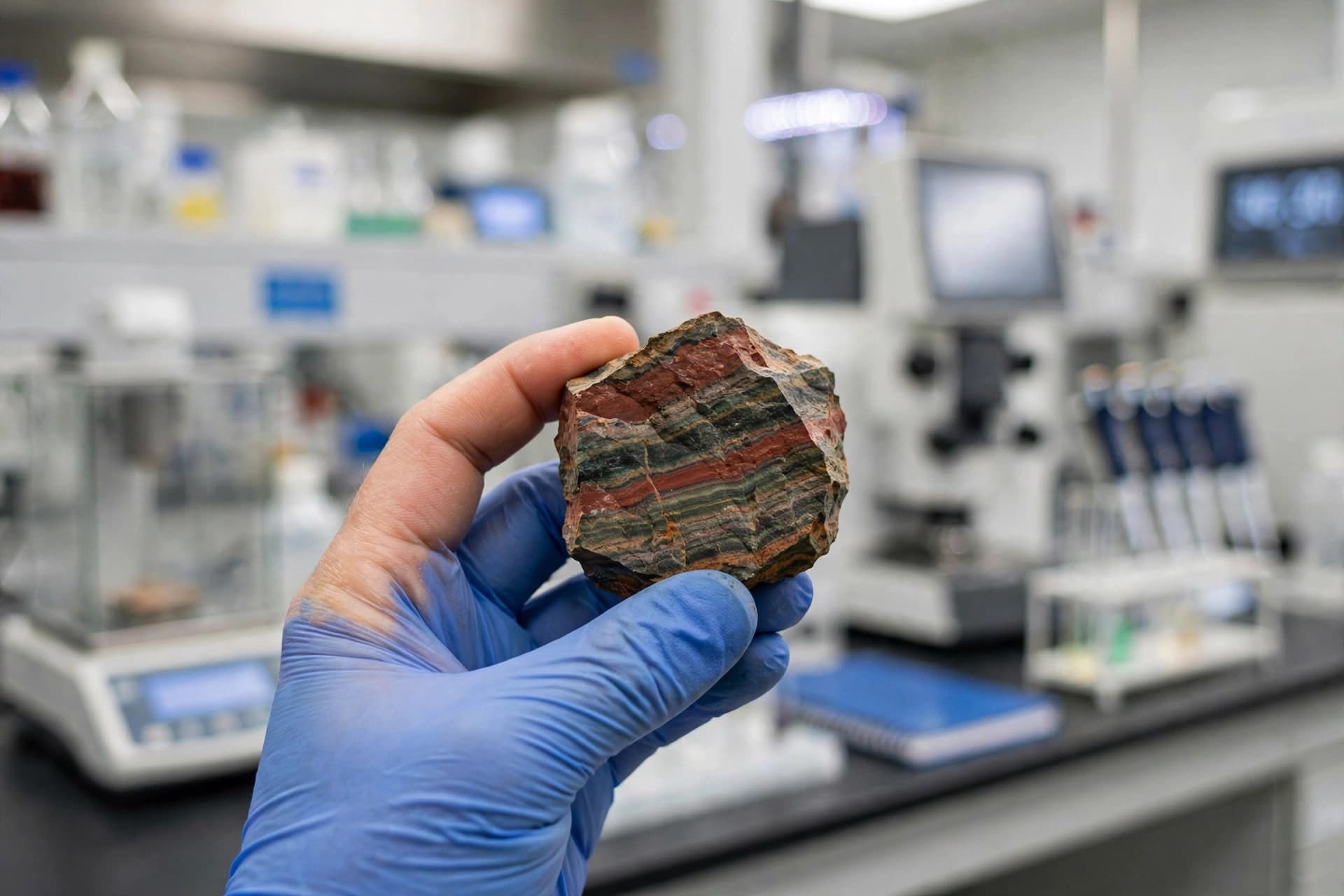
Rock, at first glance, feels like a full stop. A hard period at the end of a geological sentence. It seems to say: nothing further grows here. Yet time has a quieter grammar. Given patience, rain, wind, and the soft insistence of life, even stone begins to loosen its certainty. What appears barren can, in centuries or even decades, soften into something that breathes.
A recent study mapping expanses of bare bedrock in Georgia traces this quiet transformation. Across parts of the state—particularly where granite and other exposed rock surfaces lie open to the sky—researchers followed how sterile stone gradually gives way to lichens, then mosses, then grasses, and eventually to shrubs and trees. The journey is neither dramatic nor hurried. It is incremental, almost whispered. But it is measurable.
Using high-resolution mapping and long-term ecological observation, scientists documented how weathering initiates the process. Rainwater seeps into cracks. Heat expands and contracts the rock. Tiny fractures widen. In those narrow seams, dust gathers. Organic matter—carried by wind or left behind by microscopic life—collects. The surface, once smooth and impermeable, becomes textured. It begins to hold.
Lichens are often the first to arrive. They are modest pioneers, clinging to stone and slowly breaking it down chemically. Mosses follow, adding a thin cushion of green. Their presence traps more moisture, more sediment. Over time, what was once a bare slab becomes a shallow soil bed. It is not rich, not deep—but it is enough.
In Georgia’s granite outcrops, sometimes called monadnocks, this succession unfolds in patches. A single rock face may display multiple stages at once: pale crusts of lichen beside shallow pools of soil where grasses sway, and nearby, young trees rooting carefully in crevices. The study’s mapping reveals that forest expansion across these rocky landscapes is not random. It follows subtle topographic cues—slight depressions, fractures, shaded pockets where moisture lingers a little longer.
Climate, too, plays its part. Georgia’s humid subtropical conditions accelerate certain stages of this transformation. Frequent rainfall aids weathering. Warm temperatures extend growing seasons. Still, the researchers note that the process remains vulnerable. Disturbances—whether from foot traffic, development, or extreme weather—can reset patches of progress. The path from rock to forest is steady, but it is not guaranteed.
What makes the study compelling is not merely that forests can grow on rock. That has long been observed. Rather, it is the clarity with which this progression has now been mapped and quantified. By charting where and how soil accumulates and vegetation establishes itself, scientists can better understand ecosystem resilience. In an era of shifting climates and expanding urban edges, such knowledge feels quietly essential.
The findings also suggest a broader reflection. Landscapes that appear static are often in motion. Change does not always announce itself with spectacle. Sometimes it gathers grain by grain, root by root. Georgia’s bedrock—sun-bleached and enduring—carries within it the beginnings of woodland.
In the end, the study offers a simple but steady truth: life rarely wastes an opportunity. Given time, even stone becomes a cradle. The forests that one day rise from Georgia’s bare rock will not do so in defiance of geology, but in partnership with it—guided by fracture lines, nourished by patience, and sustained by the quiet arithmetic of rain and roots.
AI Image Disclaimer Illustrations were produced with AI and serve as conceptual depictions.
Sources Live Science ScienceDaily Phys.org The Atlanta Journal-Constitution University of Georgia News
Published by Banx Network. This article is part of the Banx decentralized media programme, powered by the BXE token on the XRP Ledger.