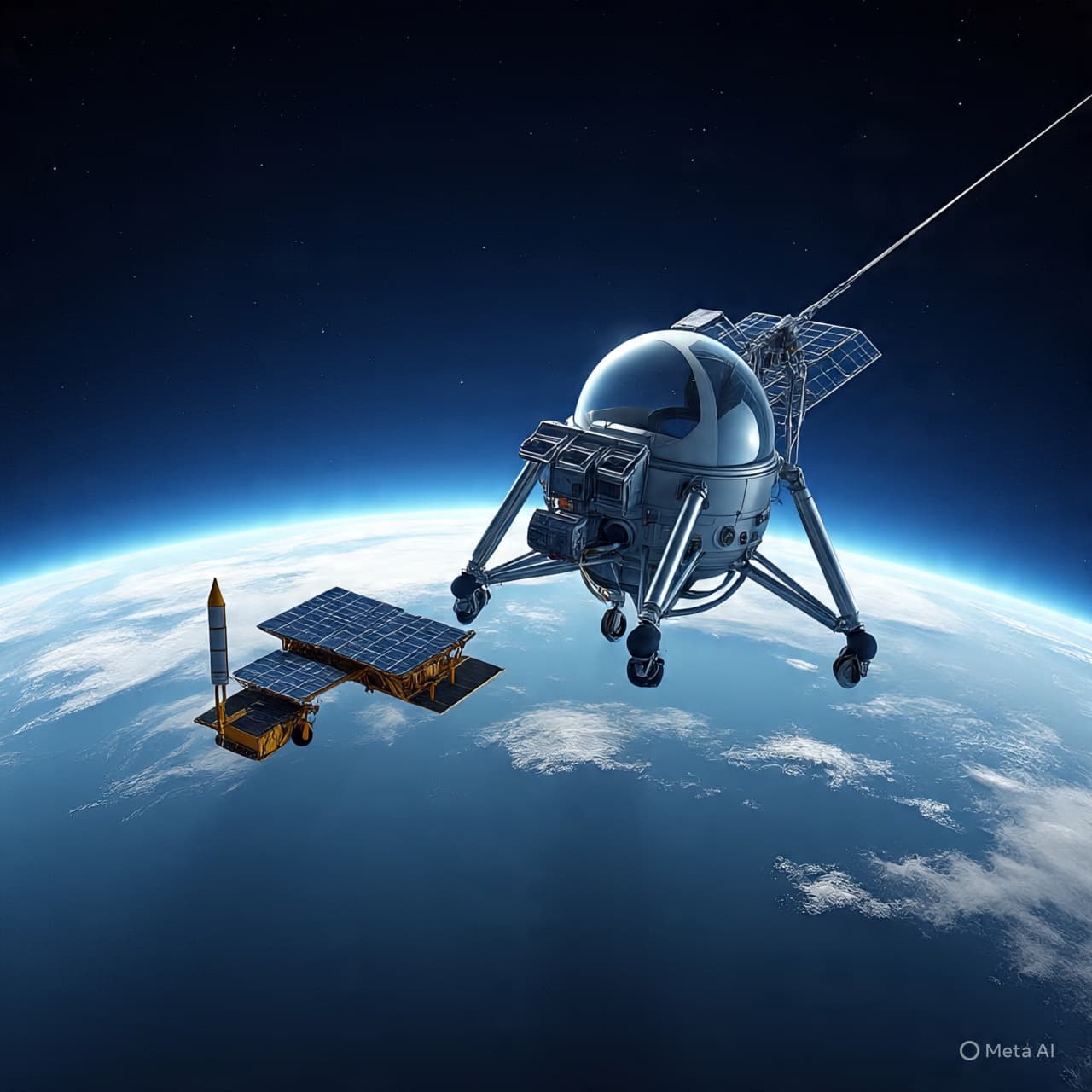
There are days when human ambition feels as gently inevitable as sunrise — not rushed, but determined in its steady arrival. In the world of space exploration, that sense of quiet momentum often shows itself not in a single moment of touchdown or liftoff, but in the subtle shifting of plans, adjustments of trajectory, and the patient work of redesigning a path that stretches far beyond any one sky.
In late February, as winter light brushed the launch towers along Florida’s coast, a new chapter in the Artemis lunar program took form. What began as a defined sequence of missions to return astronauts to the Moon is now evolving into something broader — a more deliberate architecture intended to carry exploration forward with steadier rhythm.
NASA announced that it will add an additional mission to the Artemis campaign, inserting a new flight before the first crewed lunar landing. This intermediate mission is designed to test how the Orion spacecraft interacts with commercial lunar landers in low Earth orbit. Docking procedures, propulsion transfers, and integrated life-support operations will be rehearsed in space before astronauts attempt descent toward the Moon’s surface. The adjustment reflects a preference for incremental verification — a careful layering of confidence before committing to the greater distance.
Alongside this added mission, NASA is refining the broader architecture of the program. Rather than pursuing multiple evolving configurations of the Space Launch System rocket, the agency plans to standardize hardware design where possible. The goal is to reduce technical variation between flights and move toward a more predictable cadence — potentially aiming for one lunar mission per year later in the decade. In practical terms, this means fewer transitional designs and more consistency in launch systems, production timelines, and mission sequencing.
Artemis I, the uncrewed test flight, already demonstrated that the Space Launch System and Orion capsule could travel beyond the Moon and return safely to Earth. Artemis II, planned as the first crewed lunar flyby in this new era, will test human systems and deep-space endurance. The newly inserted mission would serve as a bridge between flyby and landing — an orbiting rehearsal to ensure that surface hardware and crewed spacecraft operate together as intended.
Such refinements are rarely dramatic. They unfold in engineering reviews, in recalculated trajectories, in meetings that stretch into evening light. Yet they shape the future as surely as rockets do. A lunar program is not merely a stack of missions; it is a framework that must balance aspiration with reliability, budget with ambition, and long timelines with public expectation.
Above all, the Moon remains constant in its quiet orbit, indifferent to the schedules below. It has watched earlier footsteps fade into history and now awaits new ones. In strengthening Artemis through added missions and refined structure, NASA signals not a retreat but a recalibration — an effort to make the path forward steadier, more measured, and perhaps more enduring.
NASA’s updated Artemis plan includes an additional test mission before the first crewed lunar landing and a move toward standardized launch hardware. The agency aims to refine mission architecture and support a more regular cadence of lunar exploration later this decade.
AI Image Disclaimer Illustrations were generated using AI and are intended for conceptual visualization only.
Sources (Media Names Only) NASA Space News Reuters Astronomy Magazine Mirage News
Published by Banx Network. This article is part of the Banx decentralized media programme, powered by the BXE token on the XRP Ledger.