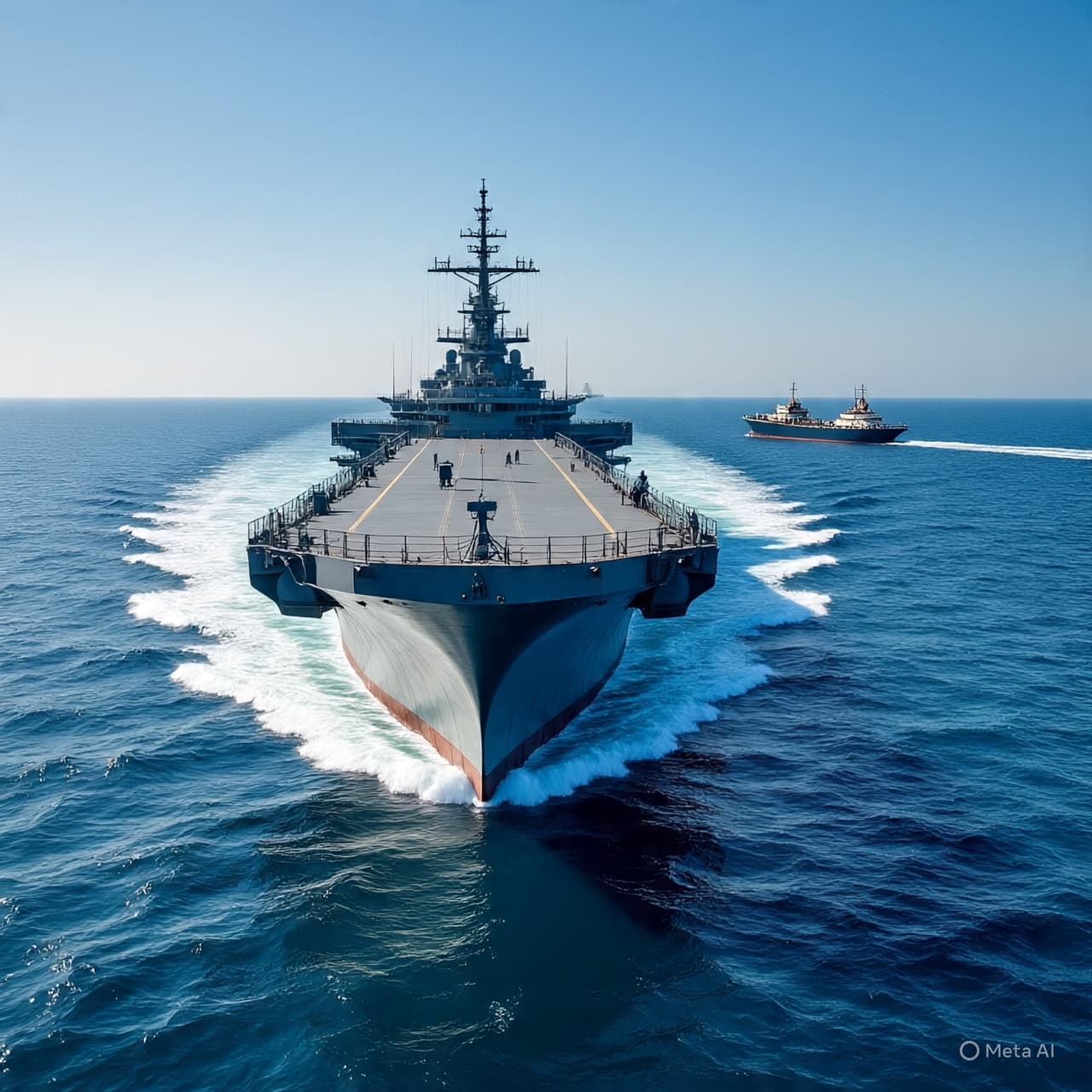
As dawn breaks across distant waters, the silhouette of a great vessel stretches long upon the gentle curve of the Mediterranean Sea — a steel-armored testament to human ingenuity and the far-reaching pulse of global affairs. In the stillness before the day fully awakens, one might see in its ribbon of wake a metaphor for the complex currents beneath: forces unseen yet deeply felt, pushing and pulling nations toward tomorrow. The arrival of the USS Gerald R. Ford, the largest aircraft carrier ever built by the United States, into this historic body of water has stirred more than a navigational marker on a map. It has stirred quiet questions among diplomats, seasoned sailors, and observers alike about what it means when instruments of military might glide peacefully under the sunlit horizon. This is not merely the movement of steel and steel-shod resolve; it is a symbol woven into the intricate tapestry of global geopolitics, reflecting fears and hopes in equal measure. For many, the Mediterranean is more than an expanse of blue — it is a crossroads of civilizations, a cradle of history where the echoes of empires past still whisper across island shores and bustling harbors. Into that layered history now enters a modern behemoth, accompanied by escorts and aircraft capable of projecting strength far beyond their own radar horizons. Such a presence may be seen as a reassurance to allies or a calculated signal in a tense stand-off with Iran, whose own leaders have publicly reminded the world of their capacity to press back against perceived threats. Behind the order for this deployment are discussions in capitals about deterrence, negotiation leverage, and the delicate balance between diplomacy and defense. Washington’s decision to forward deploy these assets echoes conversations in foreign ministries from Europe to the Gulf, where leaders weigh security commitments against the specter of conflict. And while ships glide toward their strategic stations, families of servicemen and women continue their daily rhythms far from the chase of headlines. The gulf between the human and the geopolitical is bridged not by battleships, but by the everyday hopes for peace they are meant to uphold. Yet, even as the carrier’s presence adds to a growing U.S. military footprint near the Middle East, there remains a persistent undercurrent in official rhetoric about keeping diplomatic avenues open and measured. In this interplay of muscle and mind, the sea becomes both stage and mediator — its vastness a reminder that while power may cast long shadows, it also invites reflection on the cost of tension in human terms. In quiet harbors and distant capitals alike, the world watches not just the metal hull cutting through water, but the larger story it helps to tell: one of enduring uncertainty, careful navigation, and the possibility that, even amid military postures, the path of peace might still be charted with patience and resolve.
📷 AI Image Disclaimer (Rotated Wording)
“Visuals are created with AI tools and are not real photographs.”
---
📚 Sources
Detik News reporting on the U.S. carrier entering Mediterranean amid Iran tensions. The Times of Israel on the USS Gerald R. Ford entering the Mediterranean. The Korea Times coverage of U.S. build-up in relation to Iran. Khaleej Times details from Reuters on deployment specifics. Iran International reporting on additional carrier enters Mediterranean.
نُشر بواسطة Banx Network. هذا المقال جزء من برنامج الوسائط اللامركزية من Banx، مدعومًا برمز BXE على شبكة XRP Ledger.