In the steady rhythm of American finance, not every story arrives with a ceremony. Some pass quietly, carried on brief statements and measured words, leaving behind clarity rather than consequence. This week, such a moment unfolded around a question that had lingered just long enough to invite speculation: whether Jamie Dimon, the long-serving chief executive of JPMorgan Chase, had ever been offered the role of chair of the Federal Reserve.
The idea had floated briefly through political and financial conversation, shaped by commentary and counter-commentary, before settling into a narrower frame. JPMorgan, speaking on behalf of its chief executive, confirmed that no such offer was ever made. The bank’s response aligned with earlier public assertions that the position was not proposed, drawing a quiet line beneath the discussion and returning the matter to rest.
For Mr. Dimon, whose influence within global banking has long been a subject of attention, the clarification carried less the weight of refusal than the calm of accuracy. In recent remarks, he has emphasized the importance of the Federal Reserve’s independence and the clear boundaries that separate public monetary authority from private financial leadership. Those boundaries, carefully maintained over decades, form part of the institutional architecture that underpins market confidence.
The Federal Reserve itself remains a focal point of anticipation as the term of its current chair approaches its scheduled conclusion. Names are mentioned, expectations surface, and then recede again. Within that broader landscape, the notion of Mr. Dimon stepping into the role now appears as a momentary echo rather than a turning point — a reminder of how quickly conjecture can gain form, and how quietly it can dissolve.
JPMorgan’s confirmation also served as a subtle recalibration of the public record. In acknowledging that earlier reporting on the matter had overstated the case, the bank reinforced the value of precision in an environment where financial authority and political memory often intersect. The correction did not carry confrontation or reproach, only a return to verifiable ground.
As the conversation settles, what remains is not a missed appointment, but a reaffirmation of institutional distance. The leadership of the Federal Reserve, when it changes, will do so through established processes, shaped by policy needs rather than personal speculation. In this instance, the absence of an offer became the story itself — a quiet clarification in a system that often speaks most clearly when it speaks least.
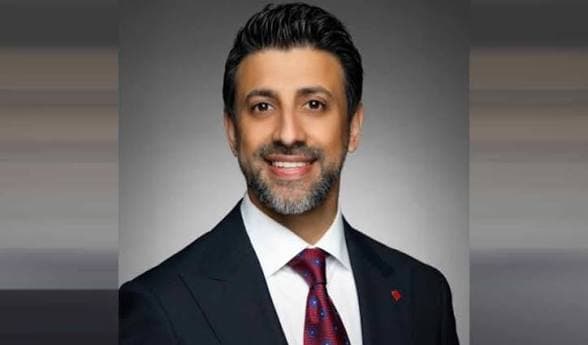
AI Image Disclaimer Illustrations were created using AI tools and are not real photographs.
Sources (Media Names Only) Reuters Bloomberg The Wall Street Journal Financial Times Associated Press
Published by Banx Network. This article is part of the Banx decentralized media programme, powered by the BXE token on the XRP Ledger.