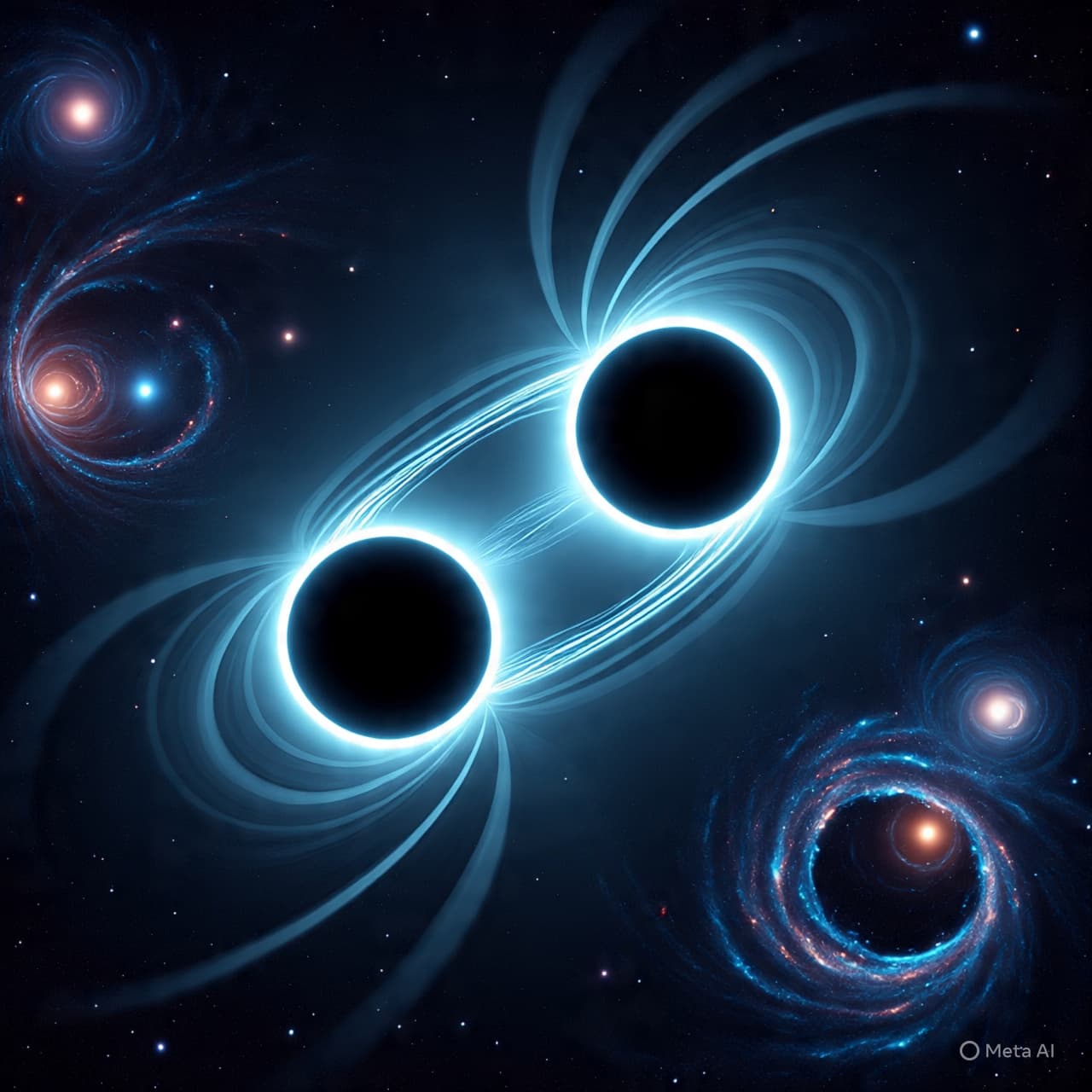
There are moments in science when the universe seems to pause, as if allowing humanity to listen more closely. Not with eyes turned toward distant stars, but with instruments tuned to the faintest tremors of reality itself. A gravitational wave, born from the collision of black holes billions of light-years away, recently reached Earth with remarkable clarity. It was not louder than others. It was not closer. It was simply, in the language of physicists, almost perfect.
More than a century ago, Albert Einstein proposed that gravity is not a force pulling objects together, but a curvature in spacetime itself. In his theory of general relativity, massive objects bend the fabric of the cosmos, and when they accelerate violently—such as when two black holes spiral into one another—they send ripples outward. For decades, these ripples were only equations on paper. Today, they are measurable realities.
This recent detection, observed by the Laser Interferometer Gravitational-Wave Observatory, or , along with its European partner , stood out because of its extraordinary precision. The signal followed the exact mathematical pattern predicted by Einstein’s equations: a gradual rise in frequency and intensity as the black holes drew closer, followed by a sharp peak at merger, and then a fading “ringdown” as the newly formed black hole settled into stability.
In scientific terms, such a clean waveform allows researchers to test general relativity under the most extreme gravitational conditions known. The black holes involved were many times the mass of our Sun, compressing immense energy into a region smaller than a city. In these environments, spacetime is stretched and twisted to its limits. If Einstein’s theory were to falter anywhere, it would likely be here.
Yet the data revealed no unexpected distortions, no additional vibration modes, no measurable delay in propagation speed. The gravitational wave traveled at the speed of light, as predicted. The final black hole’s properties aligned with the so-called “no-hair theorem,” which suggests that black holes can be fully described by just mass, spin, and charge. Once again, the mathematics held firm.
This does not mean the search for new physics has ended. On the contrary, each precise confirmation narrows the range of possible alternatives. Physicists continue to look for subtle discrepancies that might hint at quantum gravity or other extensions beyond general relativity. Future missions such as the space-based observatory are expected to expand the range of detectable gravitational waves, particularly those from supermassive black hole mergers.
For now, however, the recent signal serves as a quiet affirmation. In the deep silence between galaxies, spacetime rang like a struck bell—and its tone matched the one Einstein predicted in 1915. It is not triumph in a dramatic sense, but something steadier: a reminder that even across a century of technological and theoretical change, certain ideas continue to withstand the weight of the cosmos.
The research teams will continue refining their measurements and comparing them against alternative models. As gravitational wave astronomy matures, more events will offer new opportunities to test gravity’s boundaries. This latest observation adds another precise data point to that growing record, reinforcing general relativity while keeping the door open to deeper discoveries.
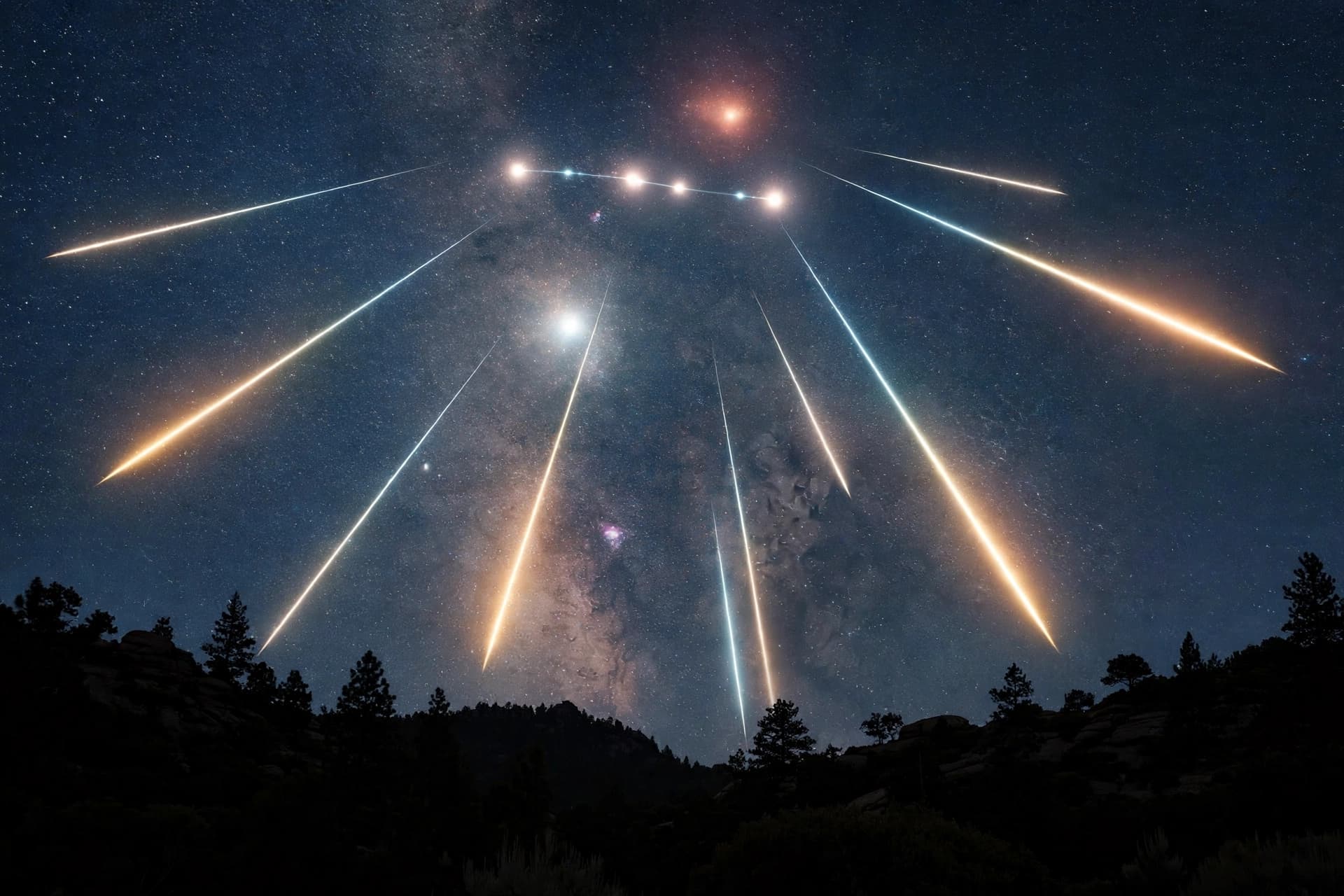
AI Image Disclaimer Illustrations were produced with AI and serve as conceptual depictions.
Source Check Credible mainstream and scientific sources covering this topic:
Reuters BBC News The Guardian Space.com Physical Review Letters
Published by Banx Network. This article is part of the Banx decentralized media programme, powered by the BXE token on the XRP Ledger.