
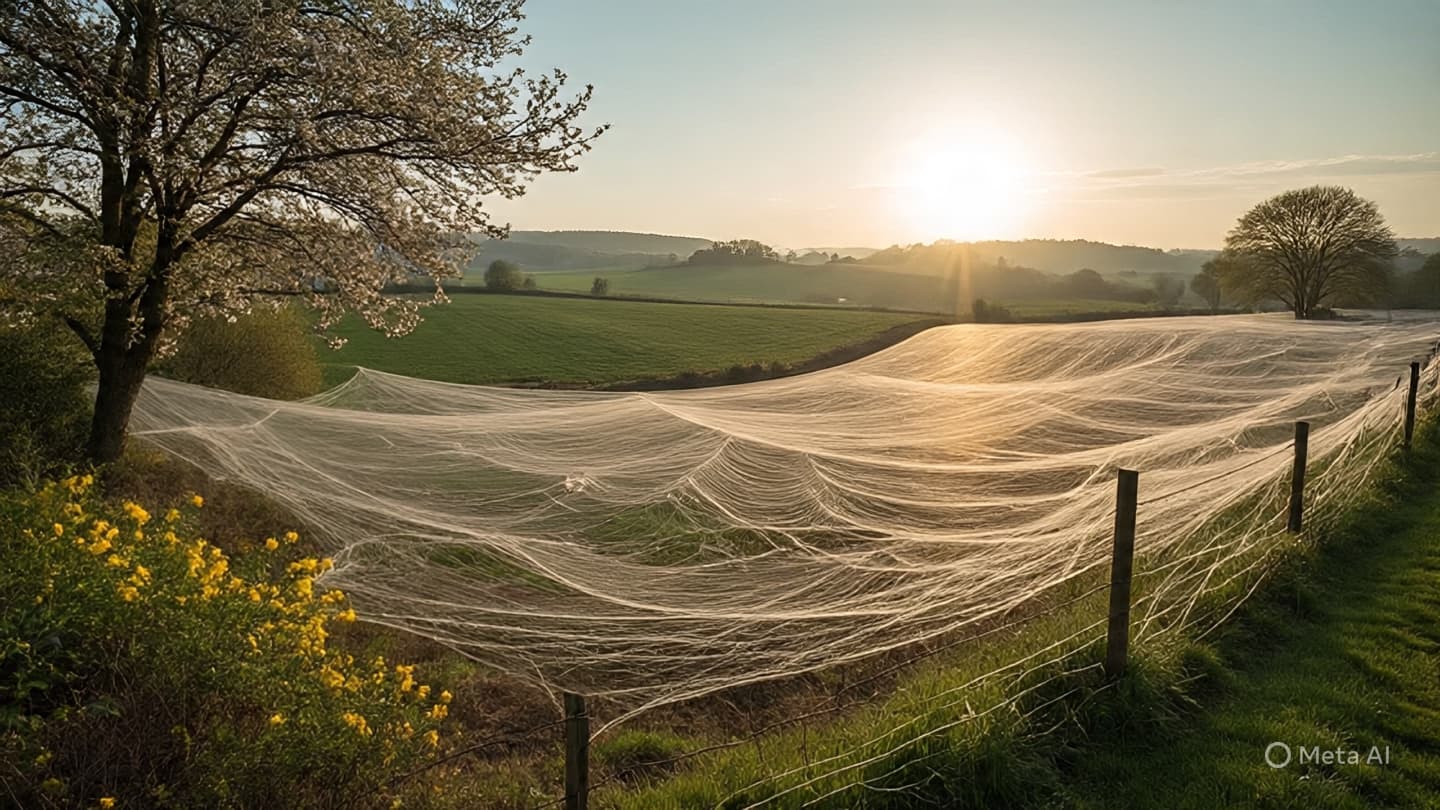
At first glance, it might seem like a delicate snowfall has settled across fields and fences, but a closer look reveals something more intricate. In parts of New Zealand’s North Island, towns have found themselves wrapped in layers of silk, as nature quietly unfolds one of its more curious displays.
Residents across several areas in the North Island have reported seeing large expanses covered in spider webs, creating a striking visual effect across landscapes. The phenomenon, while unusual in scale, is rooted in well-documented spider behavior.
Scientists explain that certain spider species engage in a process known as “ballooning,” where they release strands of silk to catch the wind and travel to new locations. Under the right conditions, large numbers of spiders can disperse simultaneously, leading to widespread web coverage.
Weather patterns play a significant role in this occurrence. Calm winds, mild temperatures, and specific atmospheric conditions can allow the silk threads to drift and settle across wide areas, sometimes creating a blanket-like appearance.
While the sight may be surprising to residents, experts note that it is generally harmless. The spiders involved are typically small and not considered dangerous to humans.
Such events have been observed in various parts of the world, often drawing attention due to their visual impact. In many cases, the webs dissipate naturally over time as environmental conditions change.
Researchers also view these occurrences as opportunities to study spider behavior and environmental factors. The concentration of webs can provide insights into population dynamics and seasonal activity.
Public reactions have ranged from curiosity to discomfort, reflecting the diverse ways people respond to unexpected natural phenomena. Local authorities have reassured communities that there is no cause for alarm.
As the webs gradually fade, the landscape returns to its familiar state, leaving behind a brief but memorable encounter with nature’s quieter processes.
The silken veil across the North Island serves as a reminder that even the smallest creatures can transform a landscape, if only for a moment.
AI Image Disclaimer: Some images accompanying this article are AI-generated and intended to depict general scenes of spider webs in nature.
Sources: BBC, National Geographic, New Zealand Herald, Scientific American
Published by Banx Network. This article is part of the Banx decentralized media programme, powered by the BXE token on the XRP Ledger.



