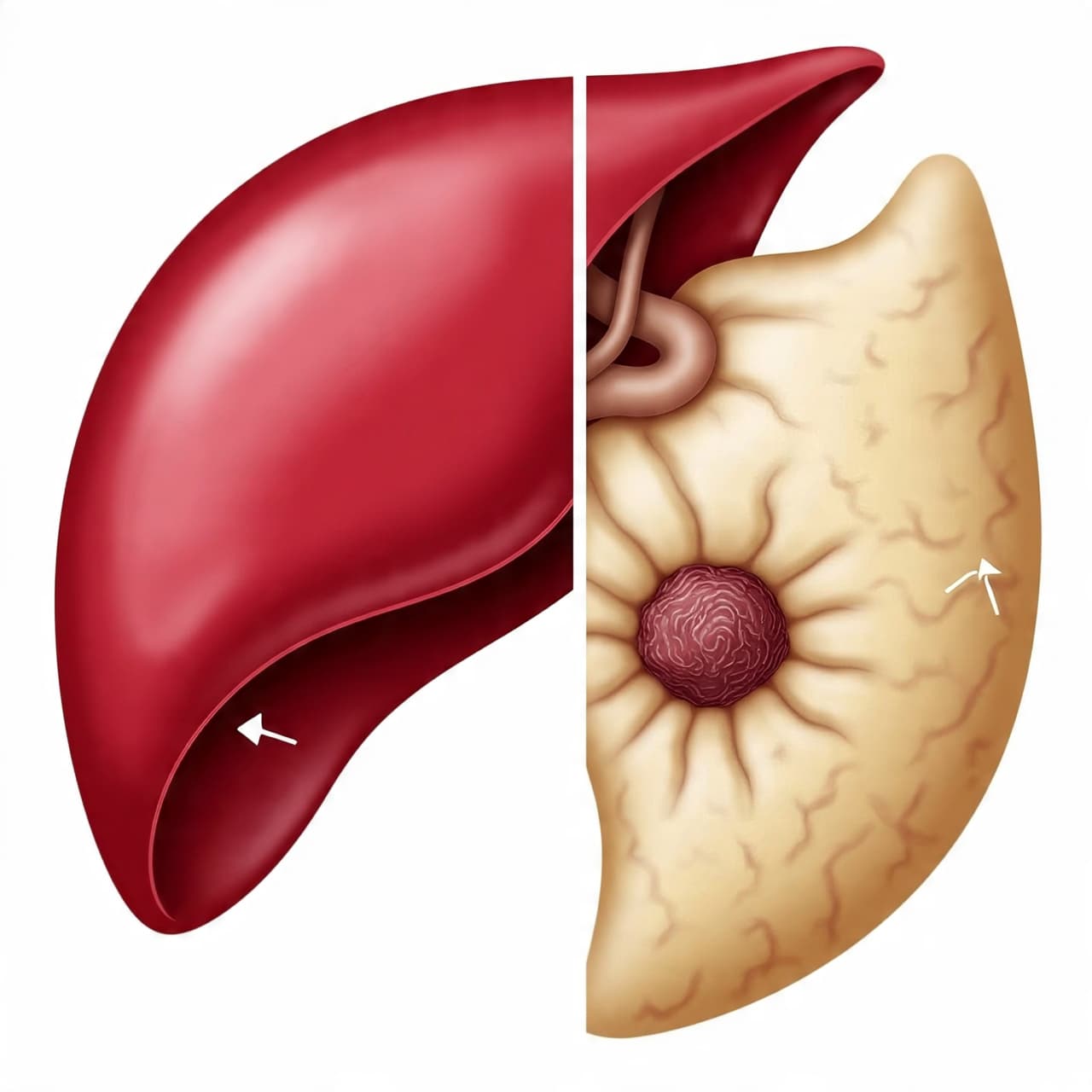
There are illnesses that move quietly, almost politely, through the body. Fatty liver disease often begins this way—without sharp alarms, without visible distress. A gradual accumulation, a subtle shift in balance. Yet in some cases, this stillness deepens into something far more serious, transforming over time into liver cancer. The question that has lingered for years is not only why this happens, but how.
Researchers at have now identified a key biological mechanism that may help explain how fatty liver disease progresses to cancer. Their findings shed light on molecular processes that appear to bridge chronic metabolic stress and malignant transformation, offering a clearer map of a pathway long observed but not fully understood.
Metabolic dysfunction–associated fatty liver disease (commonly linked to obesity and insulin resistance) affects millions worldwide. While many individuals live with fatty liver without severe consequences, a subset develops inflammation and fibrosis. In more advanced stages, this can lead to hepatocellular carcinoma, the most common type of liver cancer. Understanding what drives that transition has been a central focus of liver research.
The team at Hanyang University ERICA examined cellular signaling pathways activated during chronic lipid accumulation in liver tissue. According to the study, persistent metabolic stress appears to trigger inflammatory cascades and alter gene expression patterns within hepatocytes. Over time, these changes may disrupt normal cell cycle regulation and DNA repair mechanisms.
One mechanism highlighted in the research involves the dysregulation of specific proteins that control cellular growth and survival. Under prolonged stress conditions, these regulatory systems may become overactivated or impaired, creating an environment where abnormal cells can proliferate. Rather than a sudden transformation, the process resembles a slow recalibration of cellular priorities—from balance to survival, and eventually to uncontrolled growth.
The researchers also identified interactions between metabolic byproducts and oncogenic signaling pathways. Fat accumulation within liver cells does not merely store energy; it can alter oxidative stress levels and inflammatory mediators. These factors, when sustained, may create a microenvironment conducive to tumor development.
Importantly, the findings suggest potential therapeutic targets. By interrupting the identified signaling pathway before irreversible cellular damage occurs, future treatments might slow or prevent progression from fatty liver disease to cancer. Such interventions would not replace lifestyle modifications or metabolic management, but could complement them.
The study further underscores the interconnected nature of metabolic health and oncology. Conditions once viewed primarily through the lens of endocrinology are increasingly recognized as having implications for cancer biology. The liver, as a metabolic hub, appears especially sensitive to prolonged systemic imbalance.
Researchers caution that while the mechanistic insights are promising, further validation in clinical settings is required. Translational studies and human trials will be necessary to determine how these molecular findings can inform real-world treatment strategies. Still, identifying a clear mechanistic link marks a significant step forward.
Fatty liver disease continues to rise globally alongside obesity and type 2 diabetes rates. With hepatocellular carcinoma ranking among the leading causes of cancer-related mortality, understanding its origins remains urgent. Studies such as this one add clarity to a complex narrative—one in which metabolism, inflammation, and cellular signaling converge.
The research team plans to expand their work, exploring whether targeted inhibitors or genetic modulation can effectively interrupt the progression pathway identified. As investigations continue, the study offers a more detailed understanding of how chronic metabolic stress may evolve into malignancy.
For now, the findings contribute to the broader scientific effort to intercept disease earlier in its course. By illuminating the molecular bridge between fatty liver and cancer, the researchers have provided a foundation for future therapeutic exploration. Clinical applications remain ahead, but the mechanistic insight is now more clearly drawn.
AI IMAGE DISCLAIMER Visuals are created with AI tools and are not real photographs.
SOURCE CHECK
Credible coverage found from:
Nature
Science
The Korea Herald
Medical Xpress
ScienceDaily
Published by Banx Network. This article is part of the Banx decentralized media programme, powered by the BXE token on the XRP Ledger.


.jpg&w=3840&q=75 "Qantas Grounds Plane After Passengers Report Bedbug Bites")