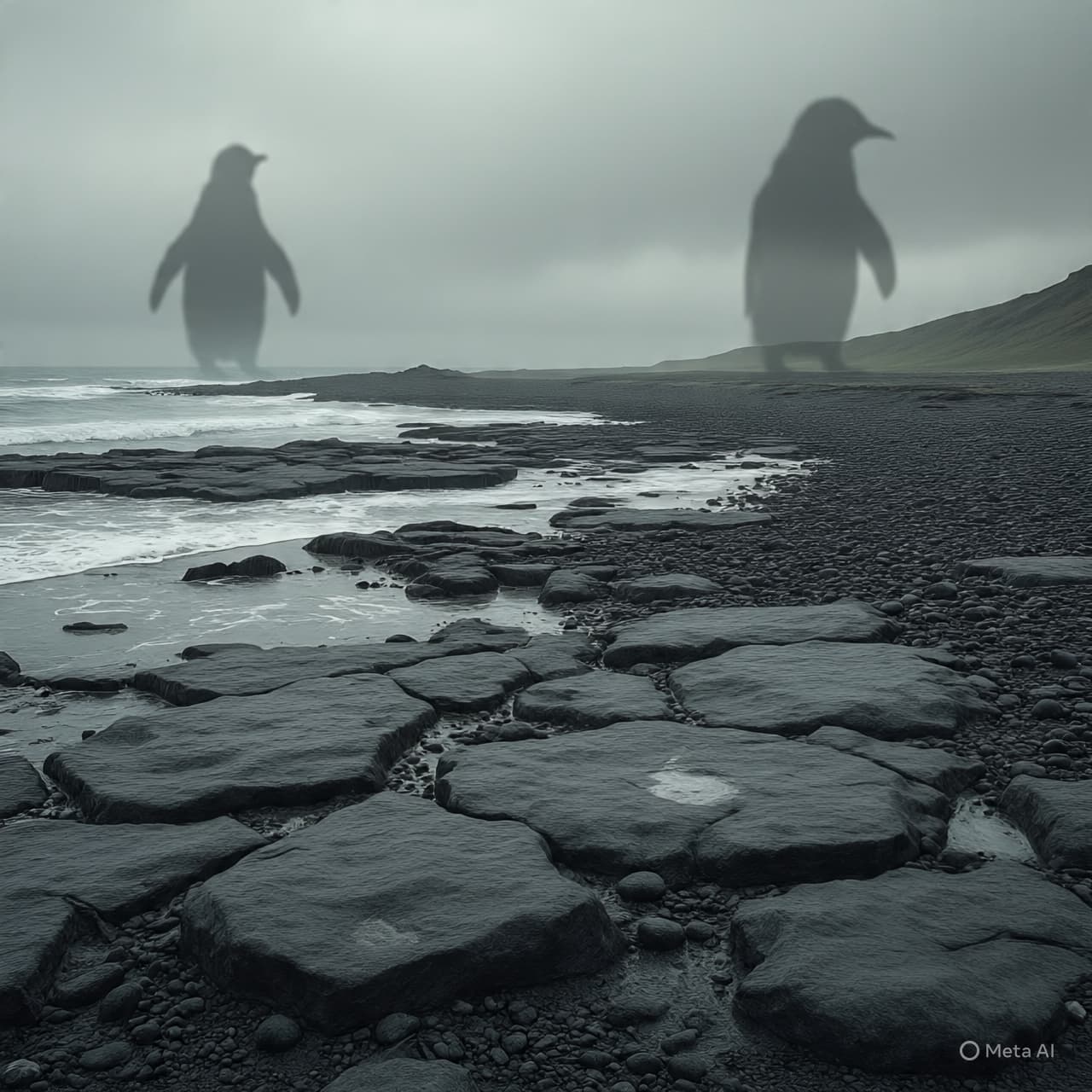
They called to one another across rocks and salt air. Once the coasts of South Africa echoed with the brays and bustle of thriving penguin colonies — but now those sounds are fading into memory. Recent counts suggest that populations may have dropped by as much as ninety-five percent in barely a decade. What was once a chorus of black-and-white life has grown uncomfortably silent.
The cause, scientists warn, seems less dramatic than dramatic disasters — but only more tragic in its gradual theft of life. The decline appears tied to starvation. As ocean currents shift and prey species vanish or migrate, penguins find fewer fish to chase. Attempts to dive, hunt, and feed their young meet emptiness. Adults shrink. Chicks never hatch. Entire nests lie abandoned.
It is a loss not measured in single birds but in generations. Colonies that once supported tens of thousands now struggle to register in headcounts. The sea — for these birds, home and hunting ground — has become a graveyard of absence, where empty rocks mark what once pulsed with life.
For South Africa, the collapse sends ripples beyond ecology. Local communities, economic activities geared toward wildlife tourism, and the fragile balance between human livelihood and nature — all stand threatened. The world watches too: if penguins can vanish from one of Earth’s richest marine zones, what hope remains for other vulnerable species?
Yet this is not just a story of extinction. It is a warning. A call to reconsider how we treat the seas, how we chase short-term profit while neglecting long-term balance, how silence can speak louder than collapse. If the world fails to respond, this coast — once alive with wings and calls — may become an echo of what we lost.
Published by Banx Network. This article is part of the Banx decentralized media programme, powered by the BXE token on the XRP Ledger.

.jpg&w=3840&q=75 "September 2026 Was the Second-Warmest on Record, With Global Temperatures Above 1.5°C for a Second Month")