The marble halls of The Hague, where the International Court of Justice (ICJ) sits in solemn deliberation, often feel distant from the everyday rhythms of life — until the weight of human suffering demands otherwise. On Monday, the world’s highest court opened landmark hearings to determine whether Myanmar committed genocide against the Rohingya, a predominantly Muslim ethnic minority whose plight has stirred international alarm for nearly a decade. This moment — marked by the presence of survivors, legal advocates, and an anxious global audience — is both a test of a century‑old legal framework and a quiet reckoning with violent history.
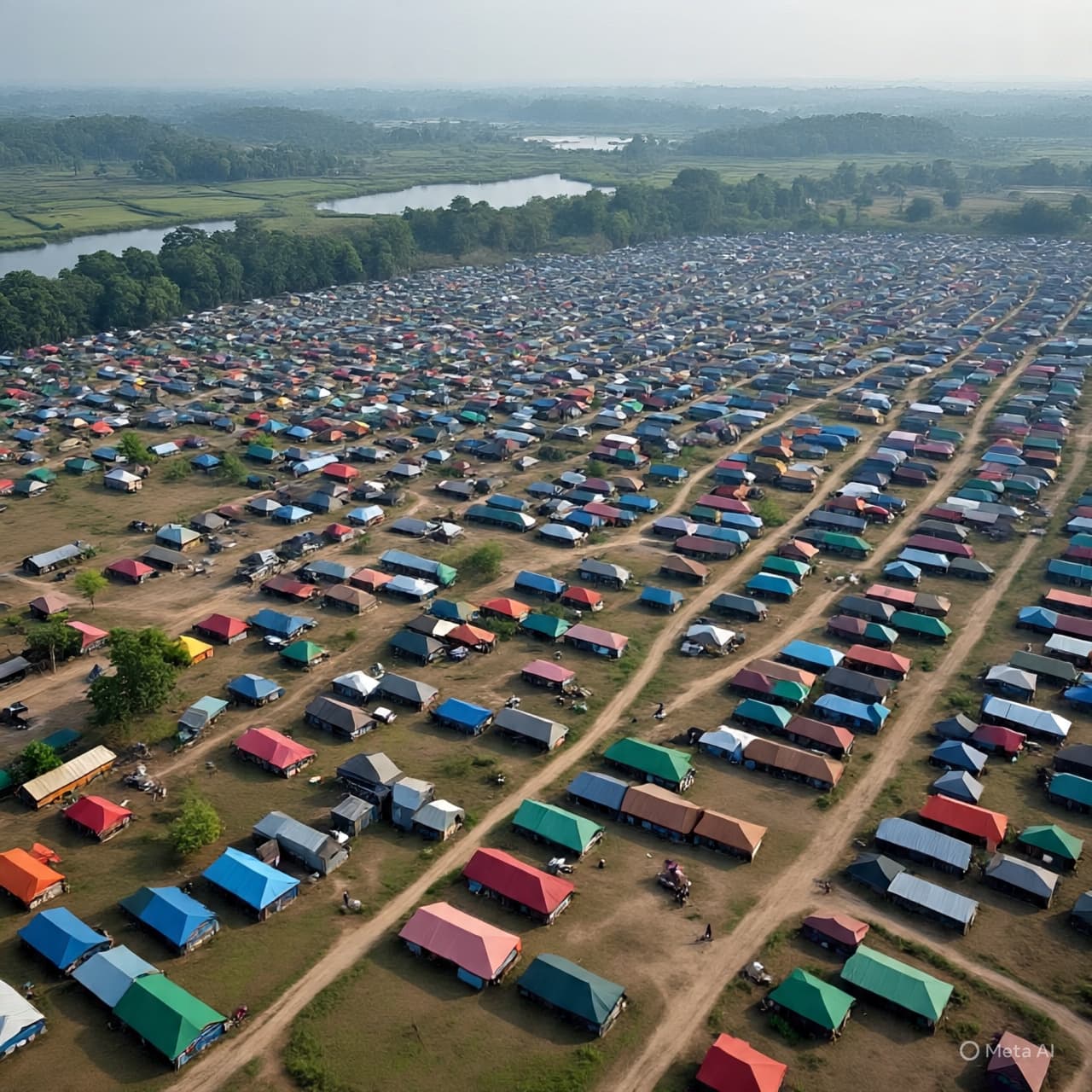
The case before the ICJ was filed in 2019 by The Gambia, a West African nation that invoked the 1948 Genocide Convention on behalf of the Rohingya, whom Myanmar’s military drove from their homes in a brutal 2017 campaign. According to filings and fact‑finding missions, the offensive in Rakhine State involved mass killings, widespread rape, villages set ablaze, and the forced flight of more than 700,000 Rohingya into neighbouring Bangladesh. Many now live in overcrowded camps with limited access to food, shelter, and education.
In opening remarks, Gambia’s Justice Minister framed the case not just as legal argument but as moral obligation — a call to acknowledge suffering and prevent future atrocity. Around a dozen Rohingya survivors, who made the arduous journey from refugee camps in Bangladesh, stood silently in the courtroom as part of a powerful visual testament to lives shaped by displacement and loss. Their presence underscores a profound truth: behind every legal brief and historical report are real people whose villages, families, and futures were forever altered.
Myanmar’s government, now under military control following a 2021 coup, has denied the genocide allegations, maintaining that its 2017 actions were legitimate security operations in response to insurgent attacks. In earlier stages of the case, then‑leader Aung San Suu Kyi — once celebrated for her democratic leadership — stood before the court defending her country against the charges. She denied genocidal intent, framing the mass displacement as a consequence of conflict. Today, she is imprisoned by authorities in Yangon, her earlier defence overshadowed by a markedly harsher political climate at home.
The legal stakes of the hearings are high. If the ICJ concludes that Myanmar breached the Genocide Convention, it would represent a rare and significant affirmation of international law’s power to hold a state accountable for genocide. Such a finding could bolster other proceedings, including separate efforts at the International Criminal Court, where arrest warrant requests have been made targeting top military leaders like Senior General Min Aung Hlaing for crimes against humanity tied to the Rohingya persecution.
The hearings, set to span several weeks with some testimony heard behind closed doors to protect victims’ privacy, may also set legal precedents for how genocide is interpreted and proven in the modern era. Legal experts watching the proceedings note that the definition and burden of proof for genocide under the 1948 Convention — shaped by history and legal tradition — may be further clarified or expanded in the coming months.
Yet, perhaps the most enduring image of this moment is the quiet dignity of the Rohingya who walked into the Great Hall of Justice: survivors of violence whose stories have too often been overlooked or dismissed. Their presence — and the court’s deliberations — remind the world that the pursuit of justice is as much about memory and moral accountability as it is about legal doctrine. As the ICJ undertakes its careful examination of evidence and intent, the eyes of a watching world are fixed on The Hague, hopeful that this chapter of history affirms the promise of international law: that even in the face of profound suffering, there can be a measure of justice and a record of truth.
AI Image Disclaimer Visuals are created with AI tools and serve as conceptual illustrations, not real photographs.
Sources AP News: Hearings on whether Myanmar committed genocide against the Rohingya opens at top UN court Reuters: Landmark Myanmar Rohingya genocide case opens at UN’s top court Al Jazeera: UN top court set to open Myanmar Rohingya genocide case Associated Press / WSLS: UN court to begin hearings on whether Myanmar committed genocide against the Rohingya Channel News Asia: Landmark Myanmar Rohingya genocide case opens at UN’s top court
Published by Banx Network. This article is part of the Banx decentralized media programme, powered by the BXE token on the XRP Ledger.