There are moments when the sky feels close enough to touch, as if the moon that hangs in the night were simply an old friend lingering just over the horizon. For a fleeting time, scientists and sky‑watchers alike wondered if that celestial companion might be visited more roughly than usual — not by a whisper or a shadow, but by a solid visitor from the dark currents of space. In late 2024, an asteroid named 2024 YR4 drew heightened attention for its calculated path through the solar system, a path that once hinted at a possible meeting with Earth’s nearest neighbor.
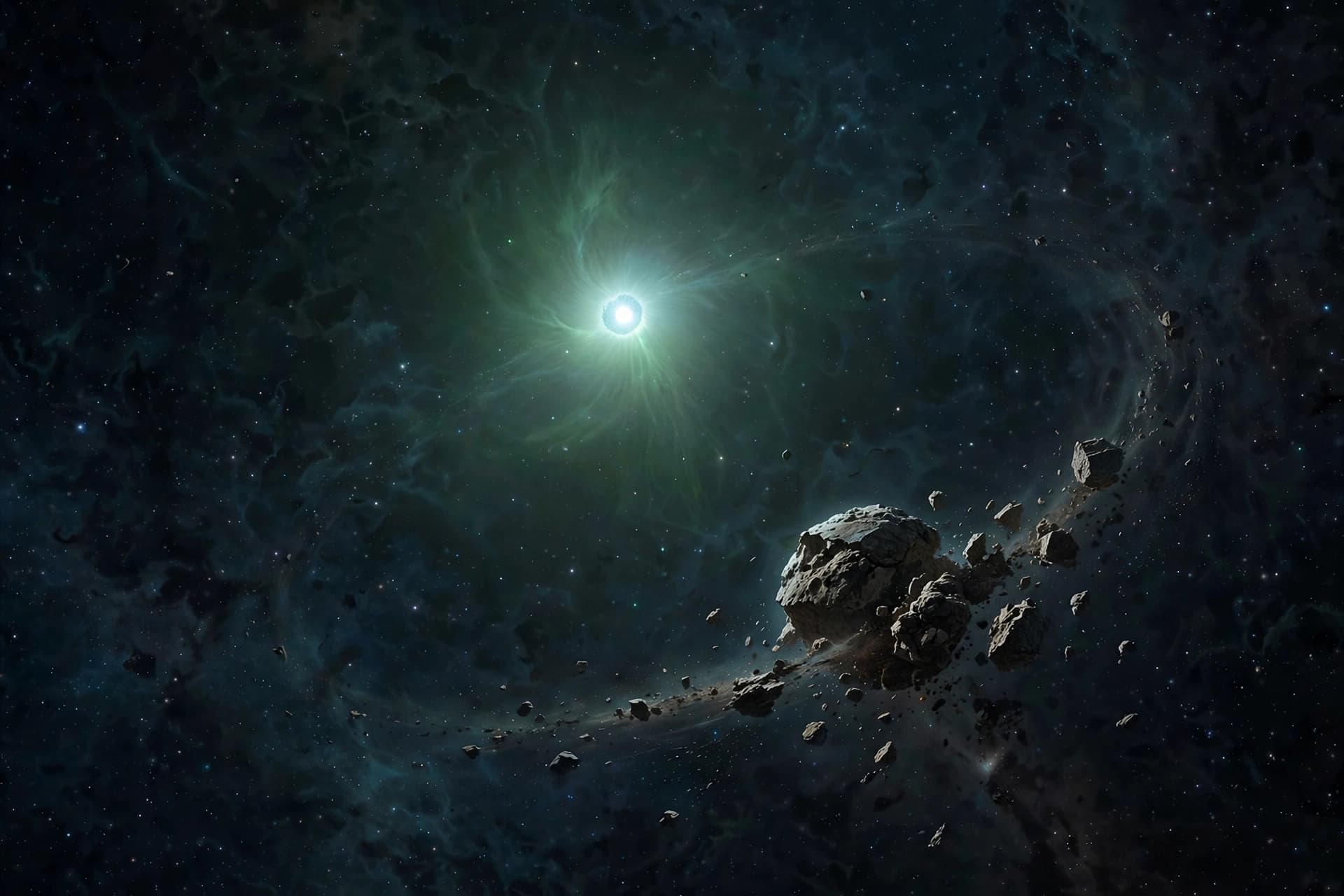
In the quiet expanse where science and imagination meet, predictions are not etched in stone. They are drawn from light, motion, and the unseen pull of gravity. As more observations accumulated, the shape of 2024 YR4’s future flight began to come into clearer focus. Originally discovered by NASA’s Asteroid Terrestrial‑impact Last Alert System (ATLAS), the roughly 60‑meter rock briefly carried a small chance of impacting the Moon in December of 2032 — a possibility that sparked both curiosity and caution among astronomers.
Yet as wise gardeners watch the shifting winds to know when to sow and when to wait, astronomers followed newly gathered light to refine their understanding of the asteroid’s path. In February 2026, the James Webb Space Telescope (JWST) trained its powerful infrared gaze on 2024 YR4, capturing precious observations while the object was still faint and distant. Those measurements, coordinated by teams including NASA’s Jet Propulsion Laboratory and international partners, offered a richer picture of the rock’s trajectory.
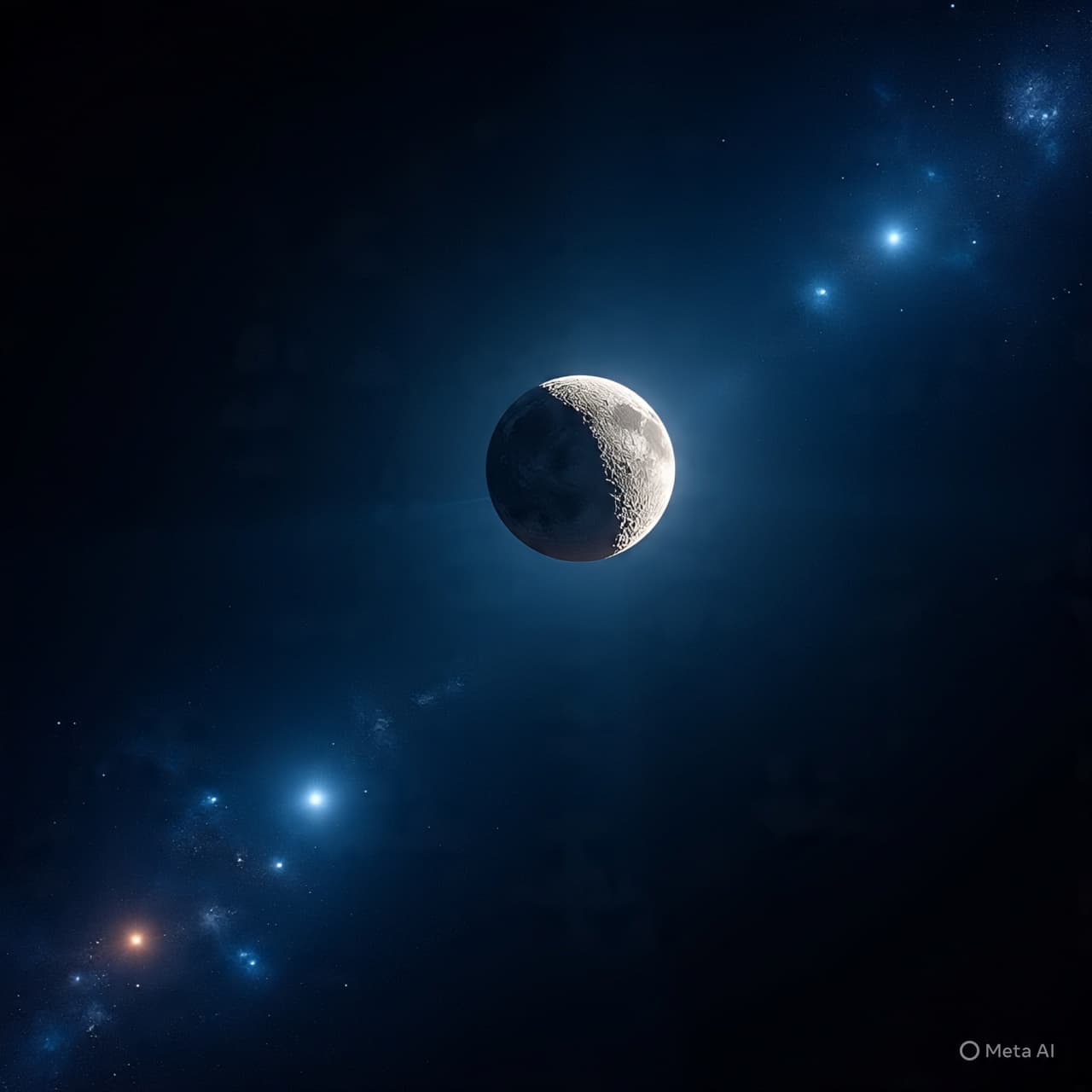
With this refined data in hand, scientists were able to confidently trace the asteroid’s course through space and time. The earlier moment of uncertainty — a roughly 4.3% chance of an impact — gave way to something far more certain. According to updated orbital calculations, 2024 YR4 will safely sail past the Moon on December 22, 2032, at a distance of roughly 13,200 miles (21,200 kilometers) above the lunar surface.
While early estimates and uncertainty are natural parts of tracking distant and dim objects, the latest findings show that neither the Moon nor Earth faces a collision risk from this asteroid in 2032. In simpler terms, what once rested in the realm of hypothetical worry has now been addressed with clearer certainty, thanks to improved observations and steady scientific inquiry.
For many, this news carries a quiet reassurance. The Moon will continue its serene journey in the night sky without the drama of an unexpected visitor, and scientists can shift their focus to monitoring other near‑Earth objects with precision and care. As telescopes and tracking systems grow ever more capable, the cosmic neighborhood — with all its surprises — becomes just a little more known, and a little less mysterious.
AI Image Disclaimer (Reworded) Graphics are AI‑generated and intended for representation, not reality.
Sources (Mainstream/Niche Credible) NASA official statement / NASA Planetary Defense update Space.com (space science news) Live Science (science reporting) AccuWeather (science news section) Smithsonian Magazine (science reporting)
Published by Banx Network. This article is part of the Banx decentralized media programme, powered by the BXE token on the XRP Ledger.