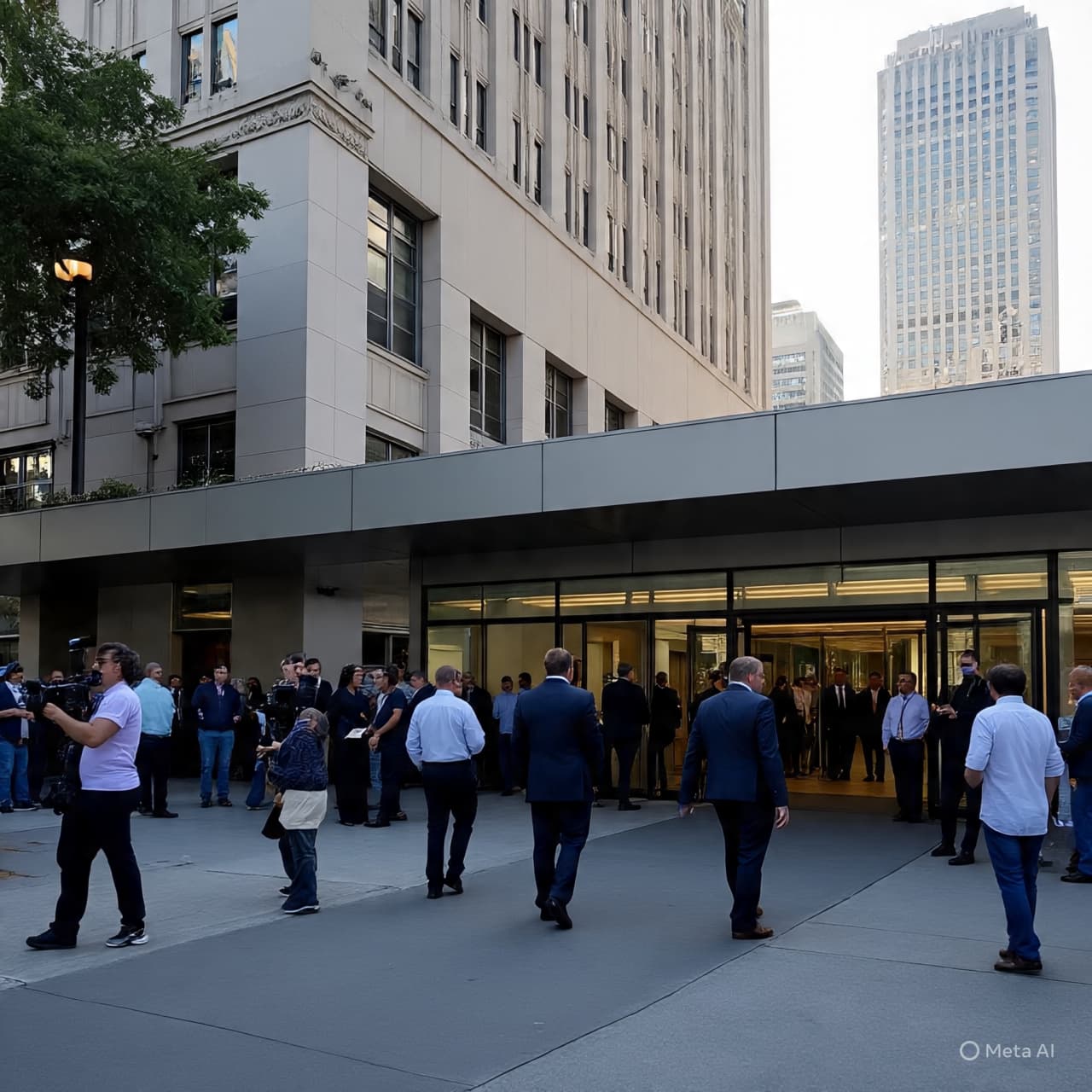
There are occasions when the hum of everyday life — the steady scroll of a thumb across a phone screen — becomes the subject of deeper reflection, casting a quiet spotlight on the unseen currents beneath familiar routines. In a Los Angeles courtroom this week, that everyday rhythm of digital life met a moment of serious scrutiny, gentle yet consequential, as Instagram’s head took the stand to speak not of numbers or strategies, but of human habits and how they are understood.
Adam Mosseri, the chief executive of Instagram, rose before a jury on Wednesday in a landmark civil trial that has captured national attention. The case centers on allegations by a young plaintiff and others that social media platforms were designed to be addictive and have contributed to significant mental health struggles, particularly among young people. As the morning light filtered through the courthouse windows, Mosseri offered a thoughtful distinction between terms that can feel familiar in conversation but hold different weight in medical and legal contexts.
Mosseri said he does not believe people can be clinically addicted to social media, carefully differentiating this from what he called “problematic use” — a type of engagement in which someone might spend more time on an app than they feel good about. He likened the latter to the way many people talk about “bingeing” on a television show, acknowledging that while it can feel excessive, it does not meet the criteria for a clinical diagnosis of addiction. His testimony was delivered with a measured tone, acknowledging the complexities of human behavior while emphasizing precise language.
In testimony that has spanned several hours, Mosseri also acknowledged that Instagram and its parent company, Meta Platforms, do not claim medical expertise when discussing issues of mental health, and that references to “addiction” in casual conversation can differ from clinical usage. Amid questioning by plaintiff attorneys, he noted that the company uses the term “problematic use” to describe situations where individuals feel uneasy about how much time they devote to the platform.
Yet behind these careful distinctions lies a broader tapestry of concern and emotion. Plaintiffs in the case, including bereaved family members, have shared painful testimony about teens and young adults whose struggles they attribute to early and heavy exposure to social media. In open court, moments of visible emotion underscored how deeply personal and sensitive the subject has become for many families who feel affected by the digital world’s reach.
The trial is seen as a potential bellwether for countless similar lawsuits alleging that social media companies engineered features to secure prolonged engagement, particularly among vulnerable users. Lawyers for the plaintiffs have pointed to internal discussions and documents they say illustrate how algorithms and design choices resemble techniques known to capture attention, drawing comparisons to mechanisms found in gambling and other compulsive behaviors.
For his part, Mosseri emphasized that Instagram has introduced a range of safety tools and features aimed at limiting harm, especially among younger users, even as he grappled with acknowledging that such tools are not always perfect. He also countered claims that the company prioritized profit over safety, noting that protecting minors can be beneficial for the long-term health of the platform.
In the gentle flow of this courtroom dialogue, what feels most significant is not merely the legal argument but the careful weighing of human experience, language, and responsibility. When a society pauses to question the nature of its tools and the terms we use to describe their impact, it offers a moment of collective reflection. Here, at the intersection of technology and human well-being, the conversation feels both poignant and enduring.
In straightforward reporting, Instagram CEO Adam Mosseri testified on February 11, 2026, in a landmark civil trial in Los Angeles that he does not believe social media can produce clinical addiction, differentiating it from what he described as “problematic use.” Mosseri’s testimony came as part of a case in which a plaintiff alleges that prolonged use of social media contributed to mental health harm. The trial continues, with further testimonies and legal arguments expected.
AI Image Disclaimer Illustrations were produced with AI and serve as conceptual depictions.
Source Check — Credible Mainstream / Niche Media Associated Press (AP News) — reporting Mosseri’s testimony on social media “addiction.” Reuters — details on courtroom defense and youth mental health accusations. PBS News — explains Mosseri’s differentiation between clinical addiction vs problematic use. The Guardian — context on the landmark trial and emotional testimony from families. Barron’s — summarizing denial of addiction claims.
Published by Banx Network. This article is part of the Banx decentralized media programme, powered by the BXE token on the XRP Ledger.