There are quieter moments in the narrative of space exploration that nonetheless carry significant weight — when the engines cease to roar, and decisions are made not in celebration but in cautious reflection. Such a moment has arrived for the United States’ next‑generation launch vehicle, the Vulcan Centaur, as the U.S. Space Force has elected to pause national security launches on the rocket following a repeat anomaly in one of its solid rocket boosters. The hush at the launch pad speaks to a broader choreography of innovation and risk, where progress and caution must move in tandem.
The Vulcan Centaur, developed by United Launch Alliance (ULA) — a Boeing‑Lockheed Martin joint venture — represents a key component of the U.S. launch infrastructure. Designed to carry national security payloads under the National Security Space Launch (NSSL) program, it has flown four missions since its debut. But on two of those flights, anomalies tied to the vehicle’s solid rocket motors have surfaced. The most recent instance occurred during the USSF‑87 mission in February 2026, when an irregular plume from a solid rocket booster was observed shortly after liftoff, prompting deeper scrutiny. Despite the rocket successfully delivering reconnaissance satellites to orbit, military officials have opted to halt further Vulcan launches until the issue is fully understood and resolved.
This pause reflects a measured balance between mission assurance and technological ambition. The anomaly under review is not merely a transient hiccup; it echoes a similar booster issue on an earlier flight that once drew certification delays. In spaceflight engineering, redundancy and margin are fundamental, yet when a pattern re‑emerges, even if compensated for mid‑flight, it invites careful reevaluation. The Space Force’s priority, as expressed by officials, is to ensure future launches proceed without recurrence of such irregularities — a decision underscored by a recognition that national security payloads often carry irreplaceable strategic value.
The broader context touches on how launch providers and military partners negotiate trust and performance. Vulcan was certified for national security missions only after earlier delays and corrective actions, symbolizing both technological maturation and a competitive landscape that includes alternative vehicles. With dozens of Vulcan launches previously booked, the grounding adds uncertainty to a manifest that ULA has hoped to fill efficiently through 2026.
For ULA, the pause also arrives amid leadership transitions and industrial pressures. High expectations for the Vulcan program — from both national defense planners and commercial stakeholders — underscore the rocket’s strategic importance. Yet when anomalies persist, even amid successful outcomes, the calculus tilts toward verification and conservative risk management. This is a familiar cadence in aerospace: success is measured not only by reaching orbit but by consistency, predictability, and trust built over repeated performance.
The Space Force’s decision may ripple across scheduling for future missions, including those currently slated on the Vulcan manifest. Military and industrial partners are assessing alternative launch options to maintain access to space for defense satellites and infrastructure. In the meantime, investigations into the booster anomaly — likely involving collaboration between ULA, its suppliers, and government engineers — will proceed methodically, aiming to isolate root causes and corrective steps that support safe resumption of flights.
In a discipline that marries aspiration with precision, such pauses are neither unusual nor precipitous. Instead, they reflect a philosophy that values durable reliability over fleeting assurance. The rocket that once soared continues to carry forward the hopes of launch planners and mission architects alike — now alongside a commitment to understanding every whisper from its engines.
The U.S. Space Force has temporarily suspended National Security Space Launch missions on United Launch Alliance’s Vulcan Centaur rocket following a booster anomaly observed during the February USSF‑87 mission. The pause will remain in effect while investigations are conducted and corrective actions are developed, ensuring that future launches will proceed with the highest standards of mission assurance.
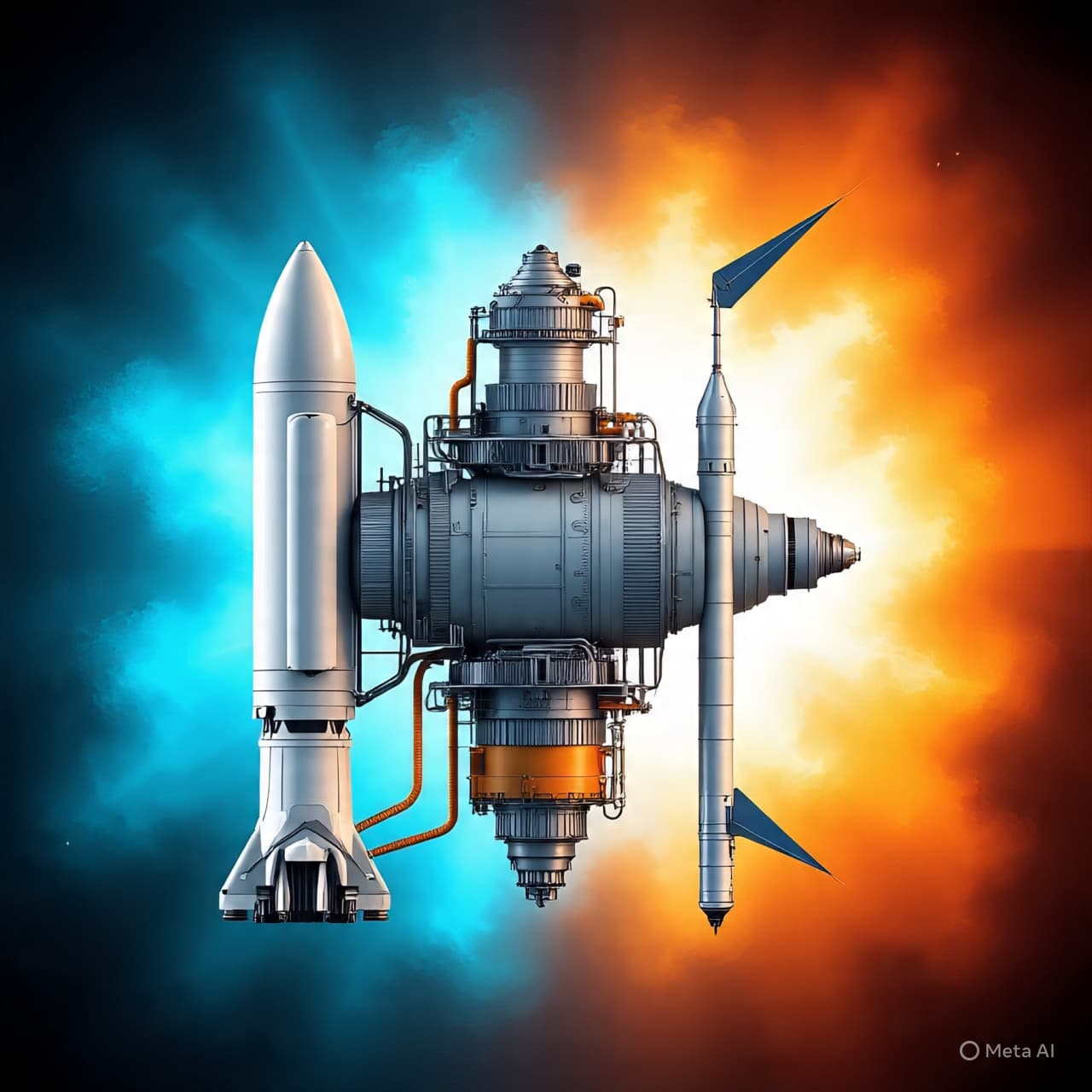
AI Image Disclaimer Graphics are AI‑generated and intended for representation, not reality.
Sources (Media Names Only) Space.com Breaking Defense Aviation Week Network Satellite Today Spaceflight Now
Published by Banx Network. This article is part of the Banx decentralized media programme, powered by the BXE token on the XRP Ledger.