
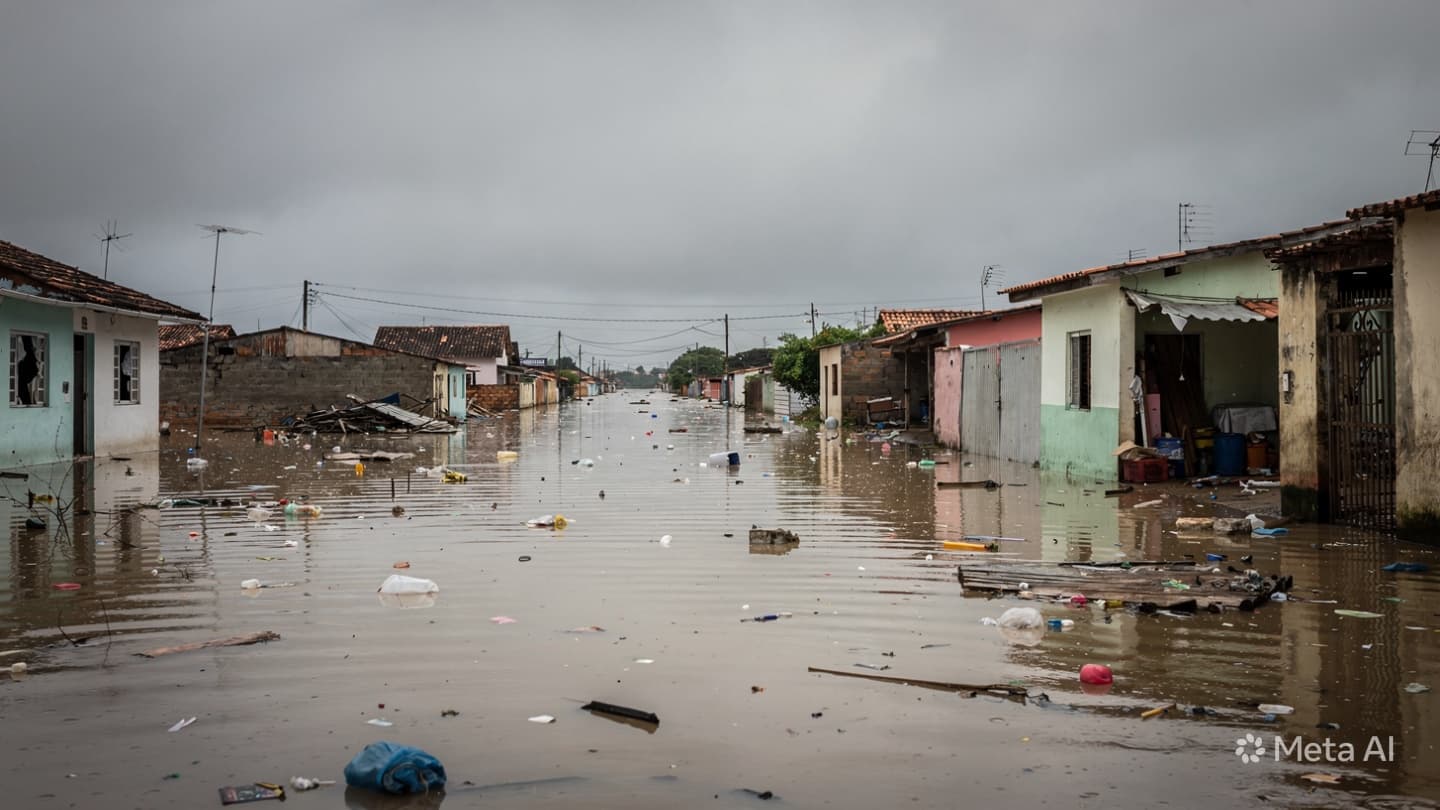
The gray veil of rainfall has settled heavily over the landscape, transforming familiar streets into uncertain channels of shifting water. In the metropolitan heart of Recife, the morning air carries the weight of a saturated earth, where the rhythm of life has been temporarily eclipsed by the relentless persistence of the sky. There is a quiet, profound solemnity in the way water claims its own, moving through neighborhoods with a cold, unyielding momentum that defies the architecture of human design. It is a scene marked by the subtle displacement of time, where the boundaries between the solid ground and the liquid expanse blur under the watchful eye of a weeping horizon.
Within these neighborhoods, the pulse of the community has slowed to a contemplative beat. Families navigate the debris of a sudden upheaval, moving through spaces once defined by comfort but now redefined by the raw force of nature. The atmosphere is thick with the scent of damp earth and the quiet realization of fragility, as the urban landscape bears witness to the elemental power of a shifting climate. Here, every ripple in the water speaks to a deeper vulnerability, a reminder of the delicate balance held between the city and the storm that continues to linger at its edges.
The recent days have been characterized by a pervasive stillness, interrupted only by the rhythmic descent of rain upon the rooftops. Citizens observe the rising marks on their walls with a reflective gaze, documenting the history of a flood that arrived without ceremony. There is no urgency in the movement of the water, only a steady progression that claims alleyways and gardens with equal indifference. The streets, once arteries of daily commerce and routine, have become mirrors for the overcast sky, reflecting a somber, muted light that underscores the gravity of the situation.
Civil Defense teams move through these spaces with a measured caution, their presence a quiet assurance against the encroaching chaos. They navigate the inundated corridors, their actions driven by a necessity that transcends the mundane, tasked with the heavy responsibility of charting the scope of a tragedy that continues to reveal itself in small, heartbreaking increments. Each encounter with the rising water serves as a narrative thread, weaving together the collective experience of those who have lost their footing in the face of such overwhelming natural pressure.
The landscape itself seems to participate in the sorrow, as hillsides once lush with vegetation surrender to the saturation of the soil. This interaction between the land and the sky is a testament to the cycles that govern the region, cycles that have recently tipped toward a destructive intensity. In the quiet moments between the bursts of rain, one can sense the collective holding of breath across the metropolitan area, a community waiting for the clouds to break and the land to finally find its rest.
Data provided by the Pernambuco Civil Defense confirms that the current toll has reached a level of profound tragedy, with two additional fatalities recorded in the wake of the flash flooding. These figures are not merely statistics; they are the lived realities of a city forced to reckon with the limits of its infrastructure and the unpredictability of the weather. As the rescue efforts continue, the focus shifts toward providing shelter for those left displaced, ensuring that the human element remains at the forefront of the recovery process.
The scope of this event extends across multiple municipalities, reflecting a regional struggle that has necessitated a significant mobilization of state resources. The coordination between local authorities and the fire department has been continuous, working to mitigate the risks that persist as the rain continues to fluctuate. While the immediate danger in some sectors has ebbed, the threat of further landslides and structural instability remains a constant companion to those living in high-risk zones, keeping the entire region in a state of vigilant anticipation.
As the skies eventually clear, the focus will undoubtedly transition from the immediacy of the crisis to the long-term work of restoration and reflection. For now, the people of Pernambuco find themselves in the delicate interlude of the aftermath, processing the events that have reshaped their surroundings. The resilience of the population is evident in the quiet support networks that emerge, a human response to an elemental trial that has left an indelible mark on the memory of the metropolitan area.
The Pernambuco Civil Defense confirmed two additional fatalities in the metropolitan region of Recife due to the recent flash flooding. Authorities continue to monitor high-risk areas as rainfall persists.
Published by Banx Network. This article is part of the Banx decentralized media programme, powered by the BXE token on the XRP Ledger.


