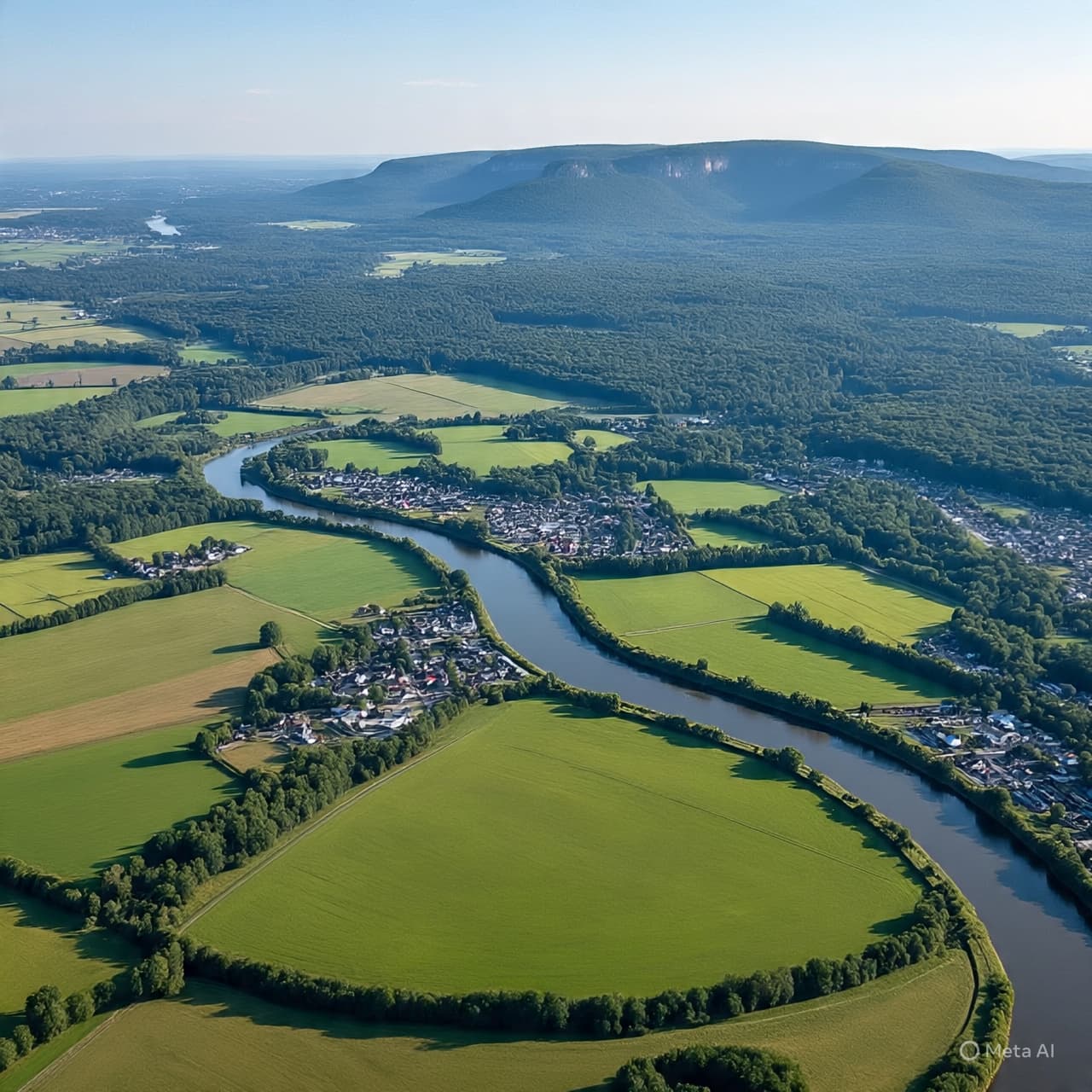
In Ontario, rivers rarely travel in straight lines. They wander across forests and farmland, curve around towns, and slip quietly into lakes that define the province’s landscape. For generations, protecting those waters has been a task shared among many local guardians—organizations that watch over wetlands, floodplains, and the delicate balance between development and nature.
But sometimes the structures meant to protect the land change as well.
The provincial government is now proposing a significant shift in how conservation oversight is organized. Rather than dozens of regional authorities operating independently, Ontario says it wants to redraw the map of environmental governance—consolidating many smaller organizations into a smaller number of larger ones.
The idea has sparked discussion across the province, raising questions about efficiency, local knowledge, and how best to safeguard landscapes that rarely fit neatly within political borders.
Ontario’s government has announced plans to merge the province’s 36 conservation authorities into nine larger regional bodies, adjusting an earlier proposal that had suggested reducing them to just seven.
The change forms part of broader discussions about modernizing conservation governance in the province. Conservation authorities are responsible for a range of environmental responsibilities, including flood management, watershed protection, and the stewardship of natural lands.
Under the government’s proposal, the new structure would group existing authorities into larger regional organizations aligned more closely with major watersheds.
Officials say the revised plan reflects feedback from municipalities and stakeholders who had expressed concern that the earlier proposal—reducing the number to seven—might have been too drastic. By expanding the number to nine, the government says it hopes to maintain stronger regional representation while still simplifying the system.
For supporters of consolidation, the argument often centers on coordination. Larger organizations may have greater resources, the ability to standardize practices, and a broader view of environmental systems that extend beyond municipal boundaries.
In theory, a watershed that stretches across several communities could be managed more consistently under a single authority.
Yet conservation groups and some local leaders have voiced concerns about the potential loss of local expertise. Many conservation authorities have deep ties to the communities they serve, developed through decades of working closely with municipal governments and local environmental groups.
Critics worry that larger organizations might be more distant from the unique ecological features and concerns of specific areas.
The debate reflects a familiar tension in environmental governance: the balance between efficiency and local knowledge.
Rivers, wetlands, and forests rarely follow administrative lines on a map. But at the same time, environmental stewardship often depends on people who know the landscape intimately—who understand how a creek behaves after heavy rain or where wildlife quietly moves through a valley.
For now, the province says it will continue consultations as the restructuring proposal moves forward. The timeline and exact boundaries of the proposed nine authorities are still expected to be refined.
In the end, the discussion is not simply about numbers—whether there should be thirty-six authorities, nine, or something in between.
It is about how a place as geographically complex as Ontario chooses to care for its land and water in the years ahead.
As the proposal evolves, policymakers, municipalities, and environmental organizations will continue examining how best to balance regional coordination with the local knowledge that has long guided conservation work.
For now, the rivers of Ontario continue their quiet journeys through forests, towns, and fields—while the structures meant to protect them slowly reshape themselves above the current.
AI Image Disclaimer Images in this article are AI-generated illustrations, meant for concept only.
Sources CBC News Global News Toronto Star The Narwhal CTV News Toronto
Published by Banx Network. This article is part of the Banx decentralized media programme, powered by the BXE token on the XRP Ledger.