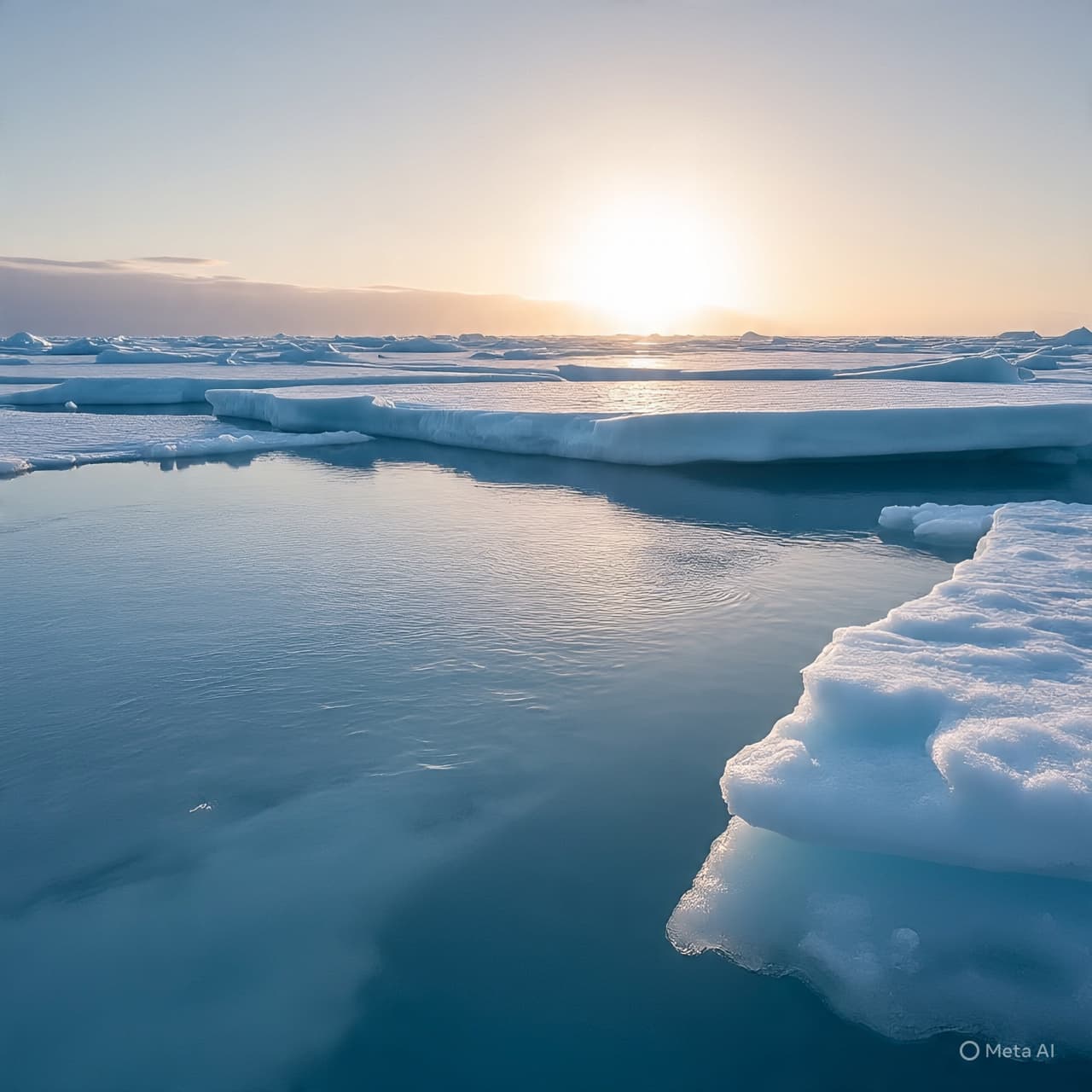
The light in the polar twilight drapes itself slowly across horizons where the ocean meets the edge of ancient ice. In these quiet spaces, where winter never fully relinquishes its hold, there is a soft lament of loss — an icefield thinning, an edge retreating, a weight once immovable now yielding its mass to warmer tides. Scientists and engineers, gazing across this subdued theatre of water and ice, have begun to speak not only of observation and measurement, but of intervention, of devising means to slow a force that feels both slow and relentless.
In the far reaches of West Antarctica lays Thwaites Glacier, a broad river of ice whose steady melt has echoed around the globe not in roar but in the steady whisper of change. Its enormity — wider than many nations — and the sheer volume of frozen water it houses have earned it the sobriquet Doomsday Glacier: a reminder that, if it were to loosen its grip on the land and pour entirely into the sea, coasts around the world might feel its distant weight in higher tides and altered shores. Yet amidst this quiet foreboding, a bold idea has taken shape, one that speaks to human ingenuity as much as it does to human concern.
Some researchers have proposed a vast Seabed Curtain Project, a notion of building an underwater barrier stretching roughly eighty kilometers — a wall of flexible panels anchored to the ocean floor far below the glacial front. Its purpose would be subtle in method but vast in scope: to block or divert the warmer ocean currents that undermine the frozen ice from beneath, slowing the rate at which the glacier’s base melts into the encroaching seas. This curtain would not be a solid wall of stone or steel rising above the waves, but rather a submerged façade of engineered material, reaching an impressive height while blending into the fluid world above and below.
There is, in this conception, a kind of quiet poetry — a structure woven into place to protect something far older and grander than itself. Yet, it is more than metaphor; it is also a testament to the extraordinary scale of effort that climate change now demands of the human imagination. The project’s champions suggest that by slowing the melt of Thwaites, even if only temporarily, the world might gain precious time to address broader climate challenges, time that could make the difference for millions of people living along vulnerable coastlines. But the plan, too, carries the weight of its own uncertainties. It would require extraordinary engineering in one of Earth’s harshest environments, capabilities to withstand seas that are cold, deep, and ever shifting, and the cooperation of international resources and resolve. Critics remind us that even the act of dreaming such a barrier can draw attention away from the causes of warming itself: emissions, heat imbalance, and a climate in change. Others worry about the marine ecosystems that lie unseen in the abyss where such structures might sit, and the subtle balances that exist far from human sight.
There is a gentle tension in all of this — between what is possible and what is wise, between long-term stewardship and short-term expedients, between the delicate weave of ocean currents and the human will to intervene. The question is not merely about building a structure in the deep, but about how societies choose to engage with a world that is changing beneath their feet and beneath the waves. There is a reflective quiet in this debate, a sense that even the grandest engineering must be contemplated amid the greater flow of time, tides, and consequence.
In straight news language: scientists and engineers have proposed a large underwater barrier — part of the Seabed Curtain Project — to slow melting of Antarctica’s Thwaites Glacier, also known as the “Doomsday Glacier.” The curtain would stretch roughly eighty kilometers along the seabed and rise hundreds of feet to block warm ocean currents that accelerate ice melt. Proponents argue it could help delay ice loss and provide time for broader climate mitigation efforts, while critics caution about costs, technical challenges, and potential ecological impacts.
AI Image Disclaimer Illustrations were created using AI tools and serve as conceptual representations.
Sources (Media Names Only) The Week Mongabay IFLScience
Published by Banx Network. This article is part of the Banx decentralized media programme, powered by the BXE token on the XRP Ledger.