Some companies grow quietly, adding scale without spectacle. Others carry their mythology with them, every milestone watched as closely as the work itself. SpaceX belongs firmly in the latter category, and now the company appears to be edging toward a moment it has long resisted: a public debut.
Elon Musk’s space company has lined up four major banks to prepare for what could become one of the most significant initial public offerings in recent years. The move does not yet fix a date, nor does it guarantee a launch. But it signals intent — a willingness to explore what it would mean for a fiercely private enterprise to open its books to the market.
For years, SpaceX has operated in rare territory. It is a contractor to governments, a partner in global communications through its Starlink satellites, and a company pursuing ambitions that extend beyond Earth itself. Its valuation has risen steadily in private markets, supported by repeated funding rounds that allowed it to avoid the scrutiny and constraints of public shareholders.
Bringing in banks marks a shift from that posture. It suggests that scale, capital needs, and long-term planning are beginning to outweigh the advantages of remaining private. Satellite expansion, launch infrastructure, and deep-space projects demand resources that even the most patient private investors may hesitate to supply indefinitely.
The banks involved are expected to help structure the offering, assess investor appetite, and navigate regulatory complexity. Their presence alone has revived speculation about how SpaceX would be valued, how Starlink might be treated within an offering, and how Musk would balance public-market expectations with a company built on long timelines and unconventional risk.
Markets, for their part, have shown a renewed appetite for large, narrative-driven listings after a period of restraint. Yet SpaceX would arrive unlike most IPO candidates. Its mission-driven culture, reliance on government contracts, and exposure to geopolitical and regulatory forces complicate simple comparisons.
Musk has previously expressed reluctance to take SpaceX public, arguing that quarterly reporting pressures could distract from long-term goals. That tension has not disappeared. If anything, it becomes sharper as the possibility of an IPO grows more real.
For now, the move remains preparatory rather than declarative. No prospectus has been filed, no roadshow announced. Still, lining up banks is rarely a casual exercise. It is the financial equivalent of rolling equipment onto the launch pad — visible, deliberate, and difficult to ignore.
Whether SpaceX ultimately goes public or pulls back once more, the moment reflects a company at a crossroads. Between private ambition and public capital, between secrecy and disclosure, SpaceX is testing the gravity of markets it has long orbited from afar.
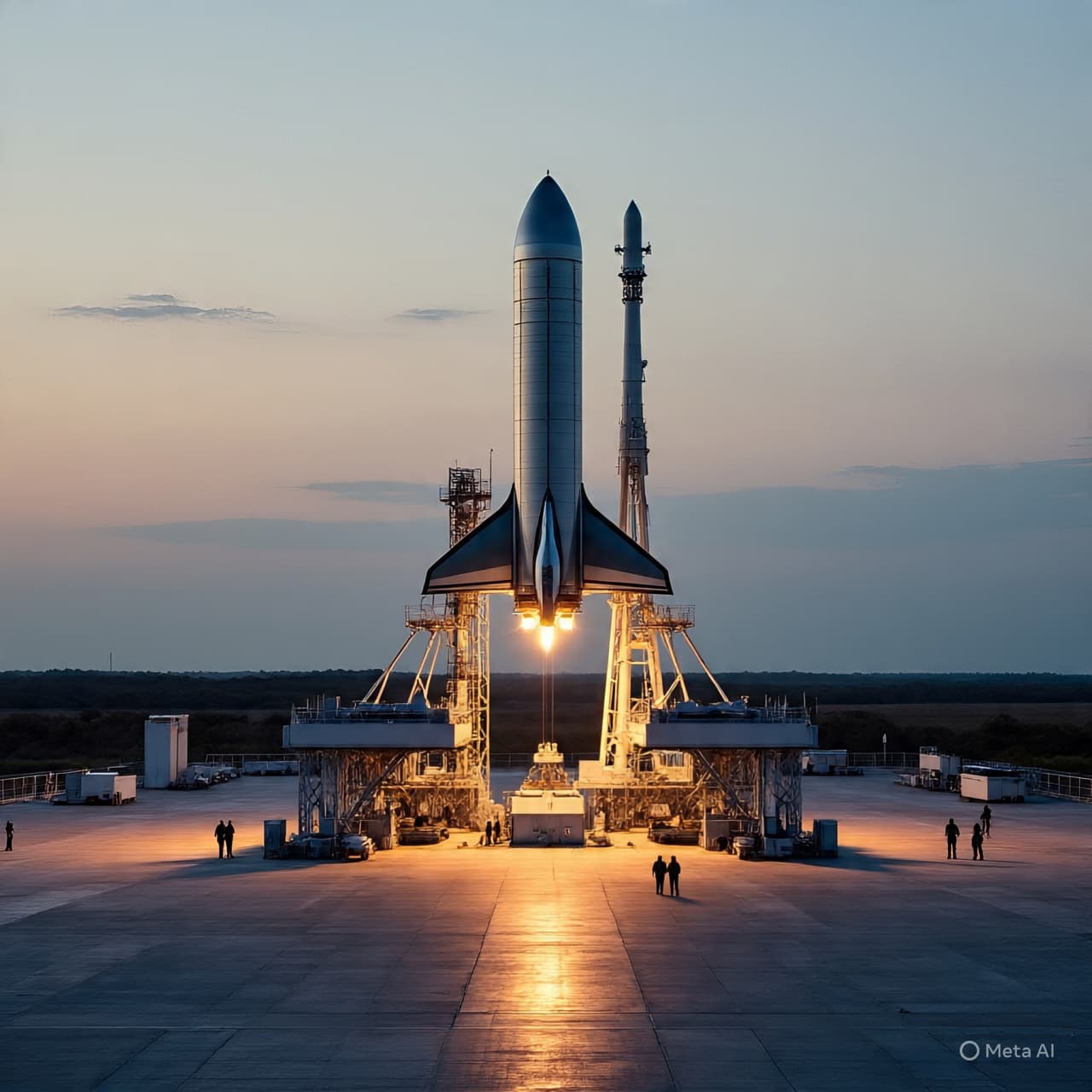
AI Image Disclaimer Visuals are AI-generated and serve as conceptual representations.
Sources (names only) SpaceX Reuters Bloomberg
Published by Banx Network. This article is part of the Banx decentralized media programme, powered by the BXE token on the XRP Ledger.