Power rarely announces itself as appetite. It arrives instead as restlessness, as a sense that borders are provisional and arrangements unfinished. In recent years, that restlessness has returned to the center of global politics, carried less by armies than by words that refuse to stay within their lines.
Donald Trump’s expansionist impulses—sometimes framed as negotiation, sometimes as provocation—have unsettled assumptions that long underpinned global security. From Greenland to trade corridors, from alliances to territory, the language of acquisition has crept back into conversations that once revolved around stability and restraint.
The damage lies not in any single proposal, many of which never advanced beyond rhetoric, but in the cumulative effect. When a major power treats sovereignty as negotiable or conditional, even hypothetically, it weakens the quiet agreements that prevent escalation. Allies begin to hedge. Rivals begin to test. The system absorbs shock.
Security depends as much on predictability as on strength. Trump’s approach has favored leverage over reassurance, pressing advantage where ambiguity exists. This has forced partners to draw lines publicly where trust once made them unnecessary, from European capitals defending territorial integrity to smaller states reaffirming non-negotiable autonomy.
The Arctic offers a clear example. Once governed by cooperation and technical coordination, it has become a stage for symbolic assertion. Greenland’s strategic value is real, but the manner in which interest was expressed shifted the region from shared concern to contested narrative. Even assurances of respect for sovereignty now arrive burdened with memory.
Beyond geography, alliances themselves have felt the strain. NATO, trade partnerships, and multilateral institutions rely on the assumption that power seeks influence, not ownership. When that assumption erodes, deterrence becomes louder and diplomacy more brittle. Security becomes reactive rather than embedded.
Markets, too, register the change. Capital dislikes uncertainty that stems from intent rather than economics. Expansionist rhetoric introduces risk that cannot be hedged with numbers, only with distance. Investment slows. Planning shortens. Global systems become less resilient.
None of this requires tanks at borders. Modern insecurity travels faster, transmitted through statements that normalize the idea that borders can be revised by interest rather than consent. In such an environment, even restraint by others feels temporary, contingent on who speaks next.
The irony is that American power has historically benefited most from a world that did not fear its reach. By treating influence as something to be accumulated rather than stewarded, that advantage narrows. Security becomes transactional, renegotiated endlessly instead of quietly maintained.
Global order is not undone in moments of collapse, but in increments of doubt. Trump’s expansionist itch has not redrawn maps, but it has shaken the belief that maps matter. That belief, once weakened, is difficult to restore.
What remains is a world more alert, more guarded, and less certain that tomorrow will resemble yesterday. In matters of security, that alone is a significant cost.
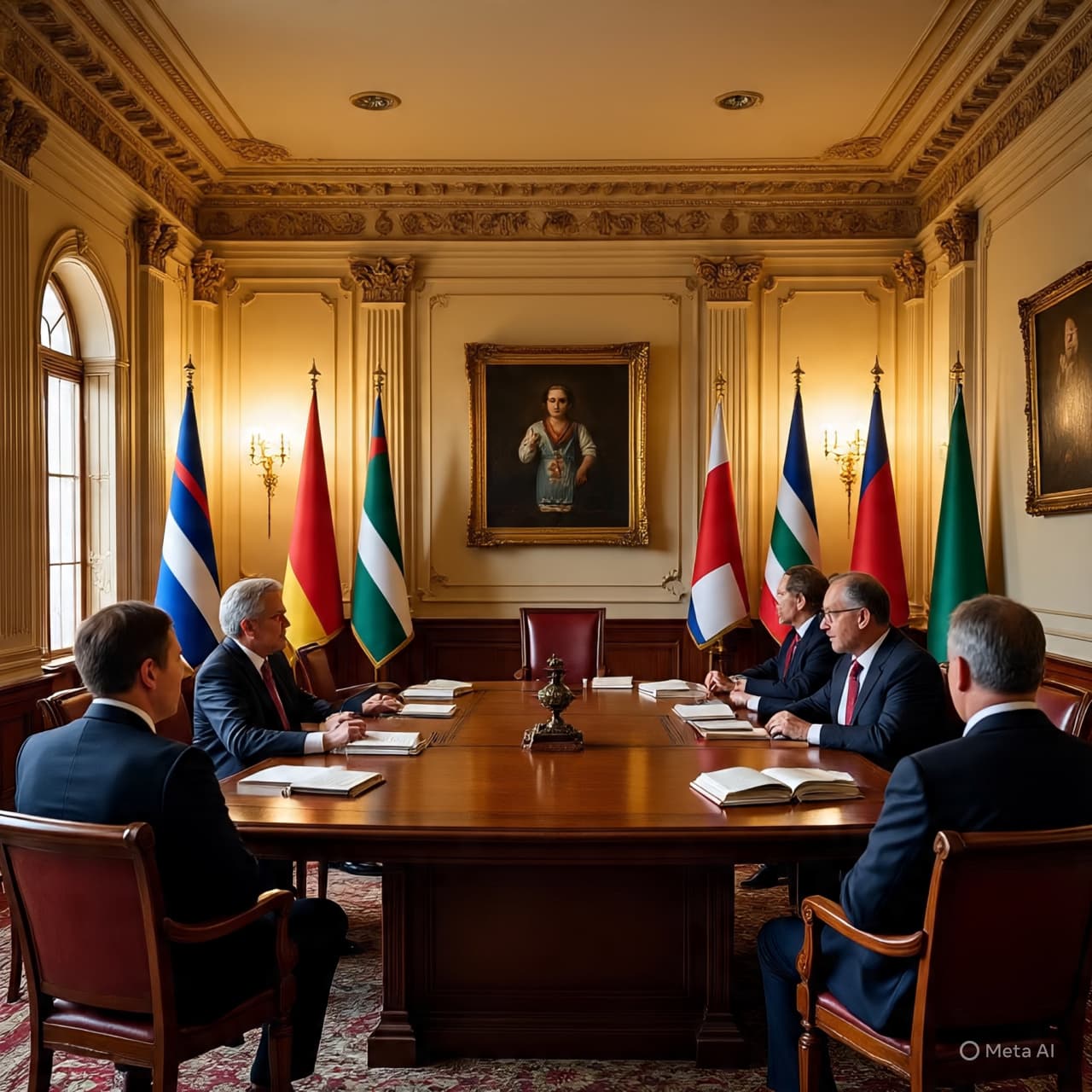
AI Image Disclaimer Visuals are AI-generated and serve as conceptual representations.
Sources (names only) Financial Times Reuters The Economist Foreign Affairs Bloomberg
Published by Banx Network. This article is part of the Banx decentralized media programme, powered by the BXE token on the XRP Ledger.