There are rhythms in national finances that echo like changing seasons — subtle at first, then unmistakably present in data and everyday life. In 2025, one such economic pattern arrived calmly yet persistently when the United States recorded its trade deficit for goods and services at about $901 billion, barely shifting from the prior year even as tariff policy became a centerpiece of economic strategy.
For much of the year, trade policy was at the forefront of U.S. discussions. With the return of sweeping tariff measures on a broad array of imports, the intention was clear: to tilt the scales toward domestic industry and reduce longstanding imbalances. Tariffs — essentially taxes on imported goods — raise costs for foreign producers and, in theory, make domestic alternatives more competitive. Yet, in practice, the overall trade gap moved little, showing resilience in the face of protectionist ambitions.
Measured against the broader backdrop of global commerce, this static headline deficit belies more dynamic underlying movements. Exports of American goods and services increased last year, as did imports, though stronger demand for foreign-made capital equipment and technology partially outweighed that growth. Capital goods such as computer chips and telecommunications hardware — core inputs for expanding sectors like artificial intelligence infrastructure — were among the most significant categories driving import activity even as policymakers sought to curb dependence on certain supply chains.
The story becomes richer when one separates the components. The trade deficit in merchandise — tangible goods like machinery, electronics, and industrial inputs — widened to a new historic high in 2025, surpassing $1.24 trillion. This represented a slight increase from the previous year even though tariffs were widely applied. At the same time, services trade — including sectors such as finance, travel, and professional expertise — delivered a surplus that partially offset the goods imbalance.
These patterns reflect the deeply integrated nature of today’s global economy. Goods often cross multiple borders during production, with components sourced internationally before final assembly. In such a setting, tariffs can shift the geography of supply without necessarily shrinking the broad gap between imports and exports. Indeed, while the deficit with some key trading partners — notably China — narrowed, trade was rerouted toward other markets such as Vietnam and Taiwan, where technology-heavy imports climbed.
Economists also caution against interpreting annual totals as simplistic reflections of policy efficacy. Monthly swings — often driven by timing effects such as businesses importing ahead of tariff changes or seasonal inventory adjustments — can influence headline figures without altering longer-term trajectories. Nonetheless, few dispute that tariffs alone have not produced a dramatic reduction in the overall trade deficit.
The broader economic context is multifaceted: the steady growth of domestic output, shifts in consumption patterns, and evolving global supply chains all play roles in shaping trade balances. While tariffs remain a tool for policymakers, their impact interacts with forces that extend well beyond any single year’s data.
In straight terms, official figures show the U.S. trade deficit — encompassing both goods and services — totaled approximately $901 billion in 2025, a figure that changed only modestly from the previous year despite extensive tariff measures.
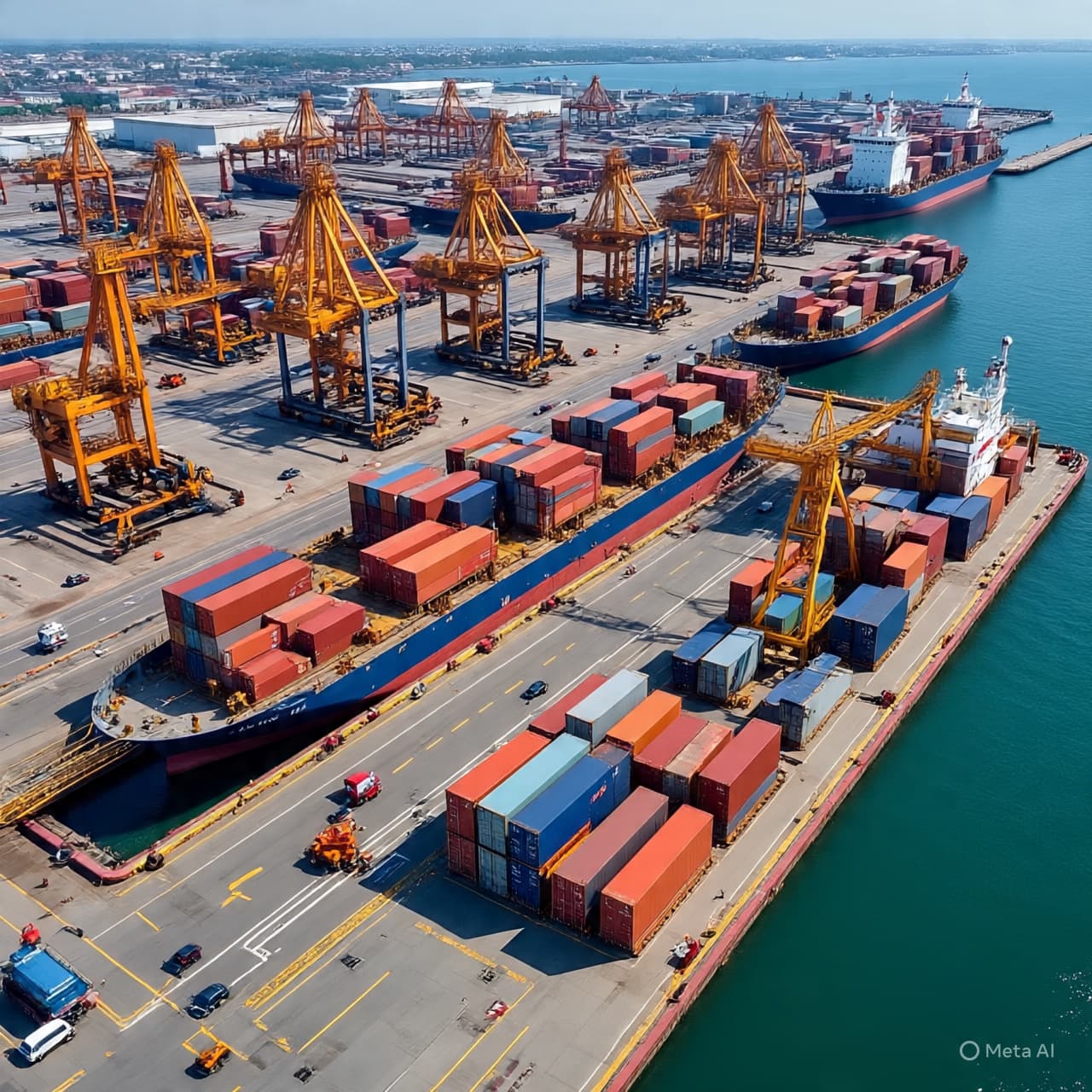
AI IMAGE DISCLAIMER Visuals are created with AI tools and are not real photographs.
Sources: Reuters Associated Press Bloomberg The Wall Street Journal CNBC
Published by Banx Network. This article is part of the Banx decentralized media programme, powered by the BXE token on the XRP Ledger.