There was a time when gaming meant choosing a place and staying there. A desk, a couch, a dedicated corner of the room. Screens were fixed, immovable, certain of their dimensions. Yet technology rarely remains still. It bends — sometimes metaphorically, and now, quite literally.
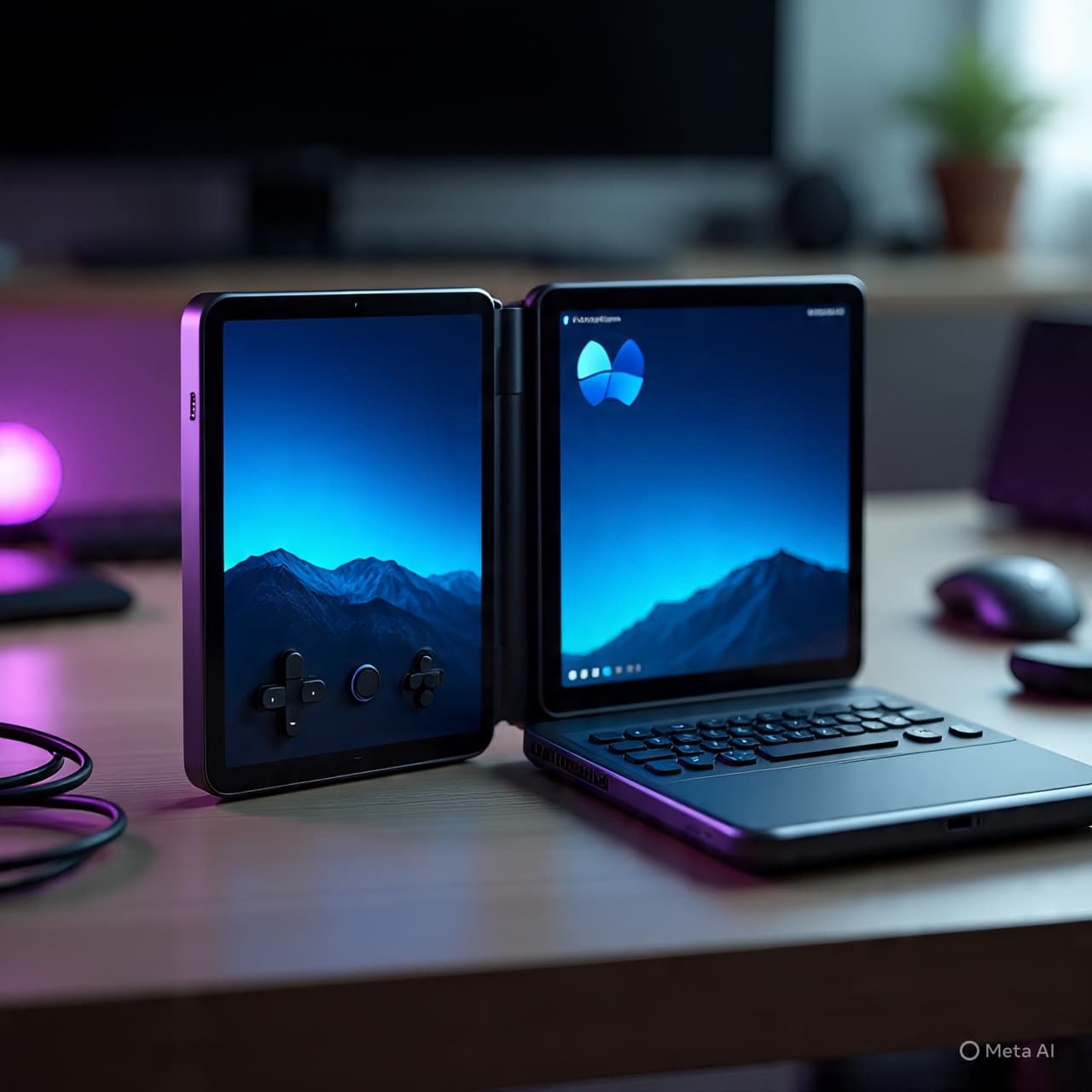
A new Windows gaming handheld with a screen that folds in half suggests that portability is no longer only about size, but about transformation.
At its core, the device runs , aligning it with the expanding ecosystem of PC-based handheld gaming. Over recent years, Windows-powered portables have grown more capable, narrowing the gap between desktop performance and on-the-go convenience. But most have retained a familiar silhouette: a wide display flanked by controls, solid and unchanging.
This folding concept introduces a different idea. The screen, split across a flexible hinge, can close inward, protecting the display when not in use. When opened, it restores the wide format expected of modern games. The result feels less like a shrunken laptop and more like a reinterpretation of the handheld console — one that borrows cues from foldable smartphones and adaptable tablets.
Reports from outlets such as The Verge and Engadget describe the device as both ambitious and exploratory. Folding screens in gaming devices are not yet commonplace. They require durable hinge engineering, flexible display technology, and thoughtful software adaptation to ensure that games render seamlessly across a crease.
That crease, subtle though it may be, raises practical questions. How does it affect immersion? Can fast-paced action remain uninterrupted across a fold line? Manufacturers appear to address these concerns with high-refresh-rate panels and careful display calibration, aiming to preserve smooth gameplay even within unconventional form factors.
Portability stands at the heart of the experiment. A screen that folds effectively halves the device’s footprint during transport. For travelers or commuters, this could mean easier storage in small bags or jacket pockets. The concept reflects a broader industry shift toward devices that adapt to movement rather than demand dedicated space.
Performance expectations remain anchored in the Windows ecosystem. Compatibility with PC game libraries, cloud gaming services, and productivity apps ensures that the handheld is not limited to entertainment alone. It sits at the intersection of console immediacy and PC flexibility.
Yet as with many foldable innovations, the question is not only what is possible, but what is practical. Folding displays have advanced rapidly in recent years, but durability over long-term use remains an ongoing area of refinement. Heat management in compact gaming hardware is another consideration, especially when powerful processors operate within slim enclosures.
The device, at least for now, represents a concept or early-stage design rather than a mass-market staple. It signals intent — a willingness to challenge assumptions about how gaming hardware should look and feel.
As Windows-based handheld gaming continues to mature, experimentation seems inevitable. Whether this folding screen becomes a defining feature or remains a bold detour will depend on user reception, engineering resilience, and cost considerations.
For now, the idea rests gently between imagination and implementation — a reminder that even something as familiar as a screen can learn new shapes.
AI Image Disclaimer Illustrations were produced with AI and serve as conceptual depictions.
Source Check — Credible Media Coverage Found:
The Verge
Engadget
CNET
TechRadar
Windows Central
Published by Banx Network. This article is part of the Banx decentralized media programme, powered by the BXE token on the XRP Ledger.