Over the Pacific, twilight lingers a little longer than expected, as if reluctant to surrender the horizon to night. In San Diego, where ocean light softens the edges of the city, the coming days promise a different kind of illumination — one written not in neon or headlights, but in the geometry of the solar system itself.
Astronomers say the skies above Southern California are poised for a rare pairing: a planetary parade followed closely by a total lunar eclipse. Both events, unusually generous in their visibility, are expected to be observable with the naked eye, weather permitting.
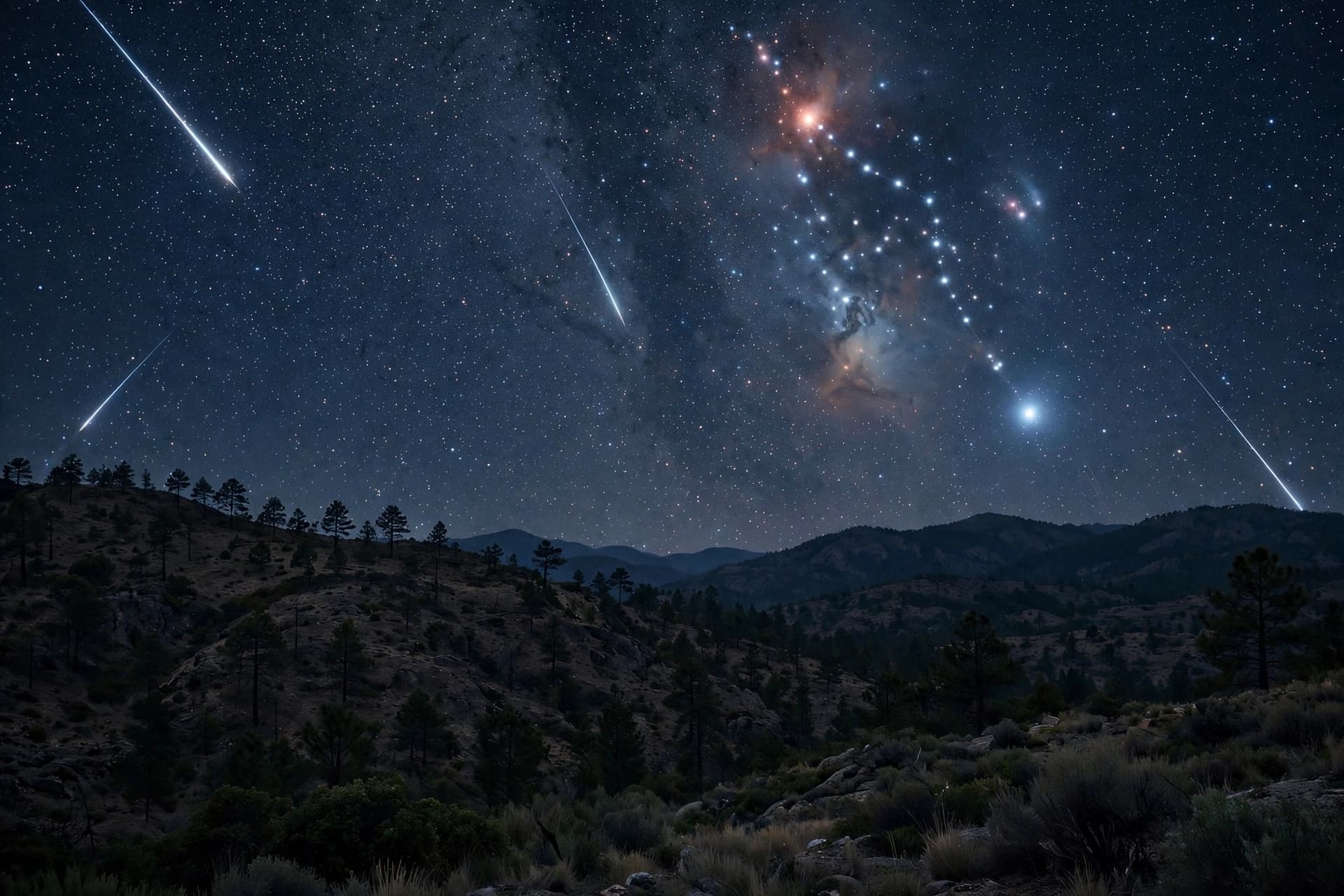
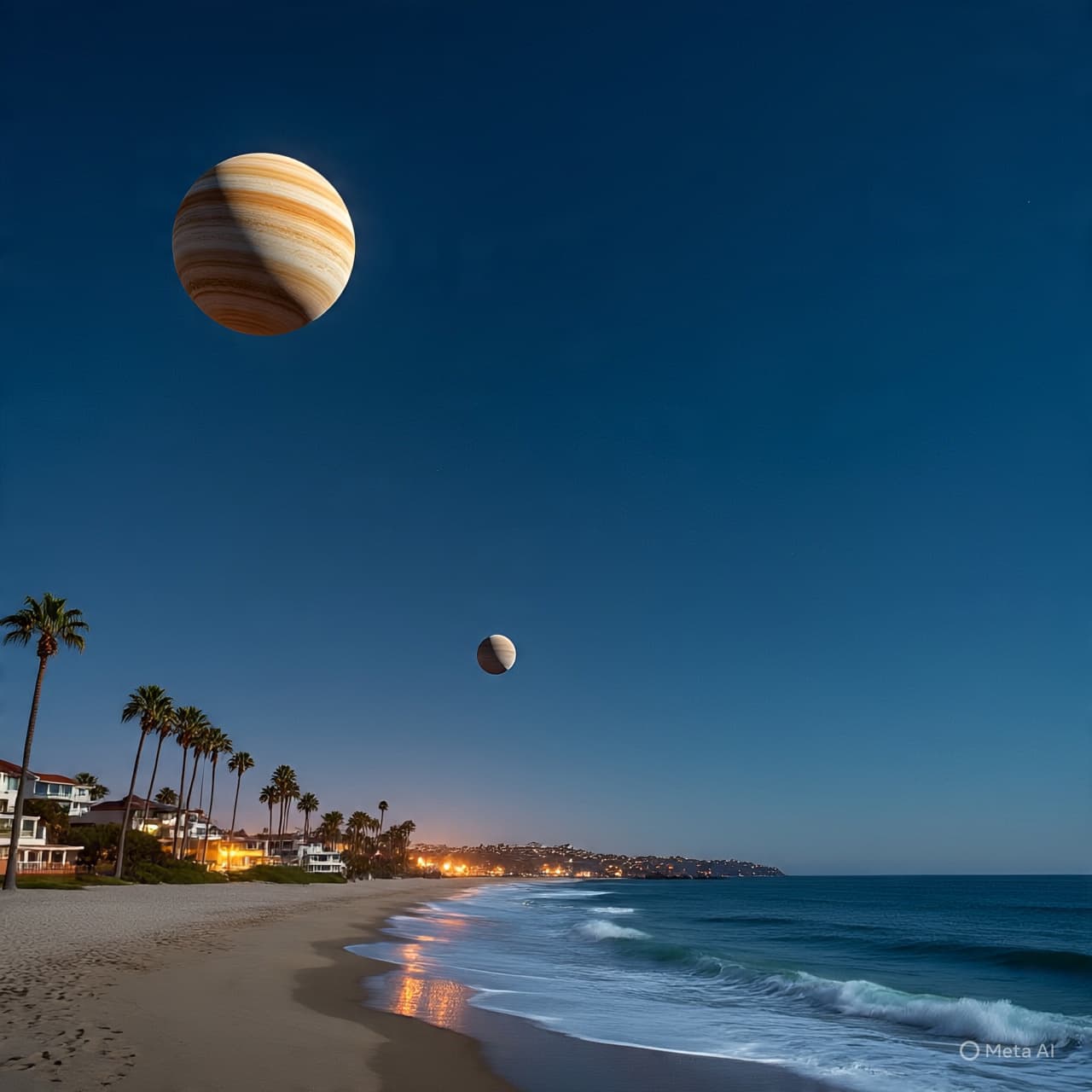
A planetary parade occurs when several planets appear aligned along the same arc of the sky. While the planets are not physically close in space, their positions relative to Earth create the impression of a celestial procession. In the coming alignment, multiple bright planets — including those typically visible without telescopes — are forecast to share the early evening sky, forming a luminous chain stretching above the western horizon shortly after sunset.
For casual observers, the effect can feel theatrical: steady points of light that do not twinkle like stars, each marking a distant world tracing its own orbit around the Sun. No special equipment is required, though binoculars may enhance the view.
Then, as the planetary display fades into routine motion, attention will turn to the Moon.
A total lunar eclipse will follow, transforming the familiar lunar disk into a deep copper or reddish hue. This phenomenon occurs when Earth passes directly between the Sun and the Moon, casting a shadow that gradually engulfs the lunar surface. Unlike solar eclipses, lunar eclipses are safe to view without protective eyewear, making them among the most accessible astronomical events.
The eclipse will unfold in stages — first the penumbral shading, then the darker umbral bite, until totality settles across the Moon. During totality, sunlight filtering through Earth’s atmosphere bends and scatters, bathing the Moon in warm tones often referred to as a “blood moon.” The effect can last for more than an hour, depending on the geometry of the alignment.
San Diego’s coastal vantage points, from hilltops to beaches, may offer particularly striking perspectives if skies remain clear. Local astronomy groups and observatories are expected to host public viewing events, though the spectacle itself requires little more than patience and an unobstructed view.
Such pairings of planetary alignment and total lunar eclipse are uncommon not because either event is individually rare, but because their timing so neatly overlaps. The alignment invites observers to widen their gaze; the eclipse invites them to linger.
For a city accustomed to dramatic sunsets, the coming nights offer something quieter but no less compelling. Planets will hold steady in their places, ancient and distant. The Moon will darken and glow again. Traffic will continue below, waves will meet the shore, and above it all the solar system will perform its patient choreography.
As midnight approaches and the eclipse wanes, the sky will gradually return to its familiar arrangement. Yet for a few hours, San Diego’s horizon will frame a reminder that even in an age of satellites and screens, the most extraordinary displays still require nothing more than looking up.
Published by Banx Network. This article is part of the Banx decentralized media programme, powered by the BXE token on the XRP Ledger.