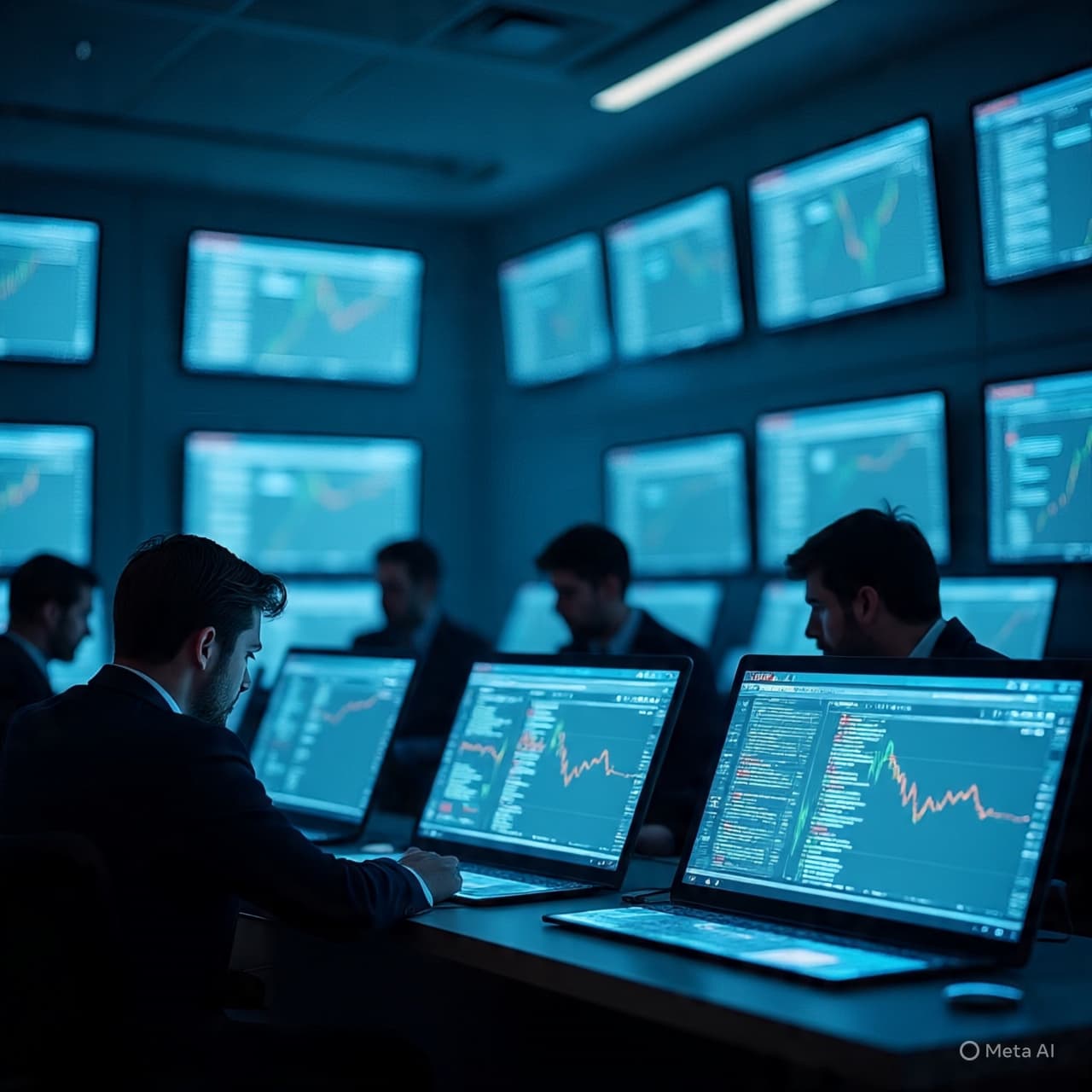
Morning arrives first in the markets long before it reaches the streets. Screens glow in half-lit rooms, numbers shifting gently, as if testing the air before committing to direction. It is in these early hours that relationships reveal their true contours—not through speeches or slogans, but through yields, flows, and the patient movement of capital across borders.
The United States, holder of the world’s most liquid debt market, has long lived with the comfort of familiarity. Its largest creditor, China, has been both a partner and a paradox: a geopolitical rival bound tightly by U.S. Treasury holdings accumulated over decades of trade imbalance. The arrangement has never been warm, but it has been steady, sustained by mutual dependence and the quiet discipline of markets.
That steadiness has begun to fray. Recent U.S. actions, ranging from expanded tariffs and technology restrictions to renewed scrutiny of Chinese financial exposure, have added tension to a relationship already carrying the weight of strategic competition. In response, Beijing has continued a slow but visible reduction of its U.S. Treasury holdings, diversifying reserves and signaling that the old assumptions of permanence no longer apply.
None of this unfolds dramatically. There is no single rupture, no closing bell that announces a break. Instead, the change is felt in subtler ways: a rise in long-term yields, cautious language from central banks, and the growing cost of borrowing for a government accustomed to effortless demand for its debt. Investors, watching from a distance, recalibrate expectations rather than retreat, aware that even strained relationships can persist when alternatives are limited.
The deeper shift lies not in the numbers themselves, but in what they suggest about trust. Debt, at its core, is a promise stretched across time. When the largest holder of that promise begins to loosen its grip, markets listen carefully—not in alarm, but in attention. Other buyers step in, domestic and foreign alike, yet the sense of automatic certainty fades.
This moment does not signal collapse, nor does it herald a sudden decoupling. The dollar remains dominant, U.S. Treasurys remain central to global finance, and China remains deeply invested in stability. But the tone has changed. What was once a quiet coexistence now carries an edge, shaped by policy choices that acknowledge rivalry more openly than interdependence.
In plain terms, rising tensions between Washington and Beijing are influencing global bond markets, as China gradually reduces its U.S. Treasury holdings and investors adjust to a world where America’s largest creditor is no longer a silent one.
AI Image Disclaimer Illustrations were created using AI tools and are not real photographs.
Sources (Media Names Only) Reuters Bloomberg Financial Times The Wall Street Journal
Published by Banx Network. This article is part of the Banx decentralized media programme, powered by the BXE token on the XRP Ledger.