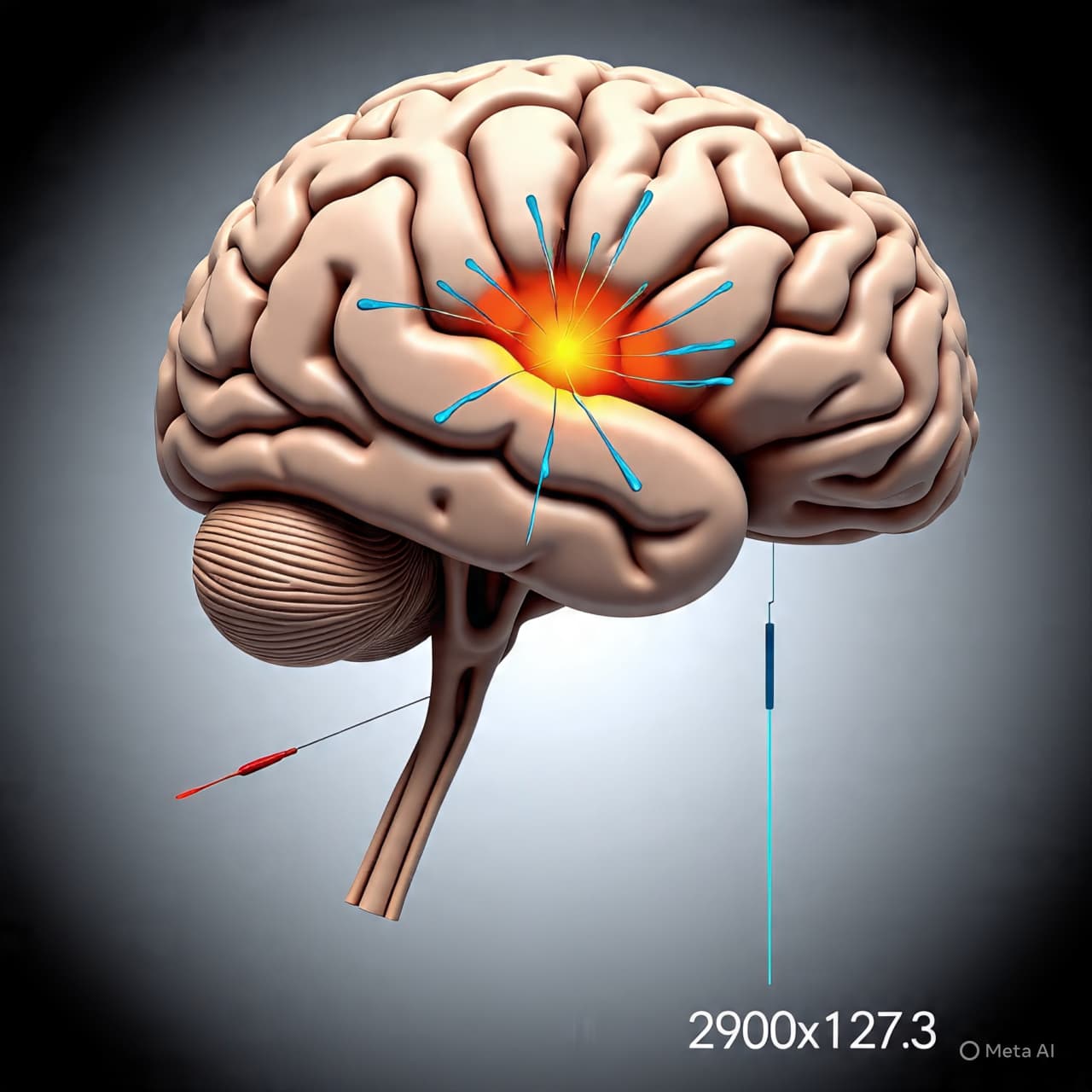
Pain rarely stays where it begins. It radiates outward, shaping mood, attention, and memory, until discomfort becomes something heavier—a quiet, persistent anxiety. A new study suggests that electroacupuncture may ease this emotional burden not by numbing pain alone, but by reshaping how the brain interprets it.
Researchers found that electroacupuncture can relieve pain-induced anxiety by engaging neural circuits in the prefrontal cortex, a region long associated with emotional regulation, decision-making, and cognitive control. Rather than acting only at the site of injury or along spinal pain pathways, the treatment appears to reach upward, influencing the brain’s internal balance between sensation and meaning.
In the study, pain triggered heightened anxiety-like behaviors alongside measurable changes in prefrontal neural activity. These changes reflected a brain caught in a loop—constantly monitoring discomfort, anticipating threat, and amplifying distress. When electroacupuncture was applied, that loop softened. Neural signaling in specific prefrontal pathways shifted, restoring patterns associated with calm and emotional flexibility.
The prefrontal cortex plays a subtle but powerful role in pain. It does not register sharp sensations directly; instead, it evaluates them. Is the pain dangerous? Is it temporary? Can it be ignored? When these evaluations tilt toward threat, anxiety follows. The researchers found that electroacupuncture appeared to recalibrate this process, strengthening inhibitory signals that dampen excessive emotional responses to pain.
What distinguishes this finding is its precision. Rather than broadly suppressing neural activity, electroacupuncture selectively modulated defined circuits linking the prefrontal cortex with deeper brain regions involved in stress and fear. This suggests the therapy may work less like a blunt analgesic and more like a tuning mechanism, nudging neural networks back toward equilibrium.
The results help explain why some patients report emotional relief from acupuncture even when physical pain persists. Anxiety and pain are not separate experiences running in parallel; they are intertwined processes sharing neural infrastructure. By acting on that shared circuitry, electroacupuncture may loosen the grip of both.
There are wider implications as well. Chronic pain often resists conventional treatment precisely because it reshapes the brain over time. Emotional distress becomes embedded in neural patterns, making pain harder to treat the longer it lasts. Interventions that target higher-order brain circuits may offer a way to interrupt this cycle earlier, before anxiety becomes entrenched.
The study does not position electroacupuncture as a replacement for established therapies, but it reframes how its effects are understood. Relief may come not only from reducing sensation, but from restoring the brain’s capacity to interpret pain without fear.
In that sense, the finding speaks to something fundamental about healing. Pain changes the brain. But the brain, given the right signals, can also change how pain is lived—turning alarm into information, and tension into tolerance.
AI Image Disclaimer
Illustrations were created using AI tools and serve as conceptual representations.
Sources
Nature Neuroscience Science Translational Medicine Journal of Neuroscience National Institutes of Health
Published by Banx Network. This article is part of the Banx decentralized media programme, powered by the BXE token on the XRP Ledger.