There are moments when a technology story becomes larger than the company telling it. A processor, a server, or a data center can become a small piece of a much broader movement in the global economy.
Nvidia's latest outlook has provided another such moment. The semiconductor company projected a 70% increase in revenue for 2027, significantly above several analyst expectations and reinforcing the strength of demand surrounding artificial-intelligence infrastructure.
The market responded quickly. Nvidia shares rose 8.7% in Thursday trading, helping push the Nasdaq higher as investors interpreted the forecast as another sign that spending on AI computing remains strong.
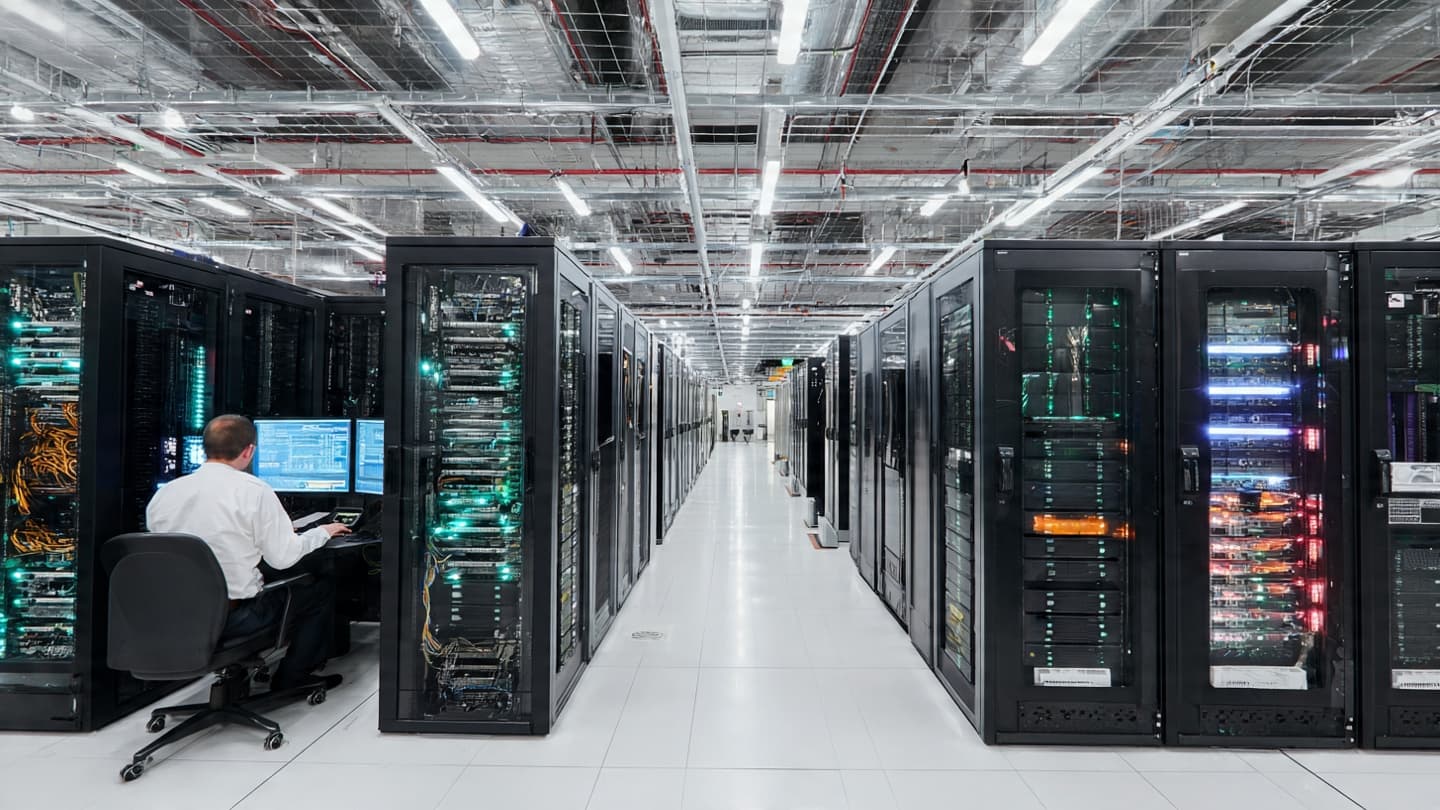
Behind the numbers is a rapidly expanding infrastructure cycle. Companies building AI systems require advanced processors, networking equipment, memory, data centers, and increasingly large amounts of electricity.
Nvidia occupies an important position in that chain because its chips are widely used to train and operate sophisticated AI systems. The company has consequently become one of the clearest market indicators for the pace of AI investment.
Yet demand is not without constraints. Nvidia warned about potential shortages of memory components, illustrating how quickly the expansion of one technology can place pressure on suppliers elsewhere in the production chain.
The impact has spread beyond Nvidia itself. Other semiconductor and software companies have benefited when investors interpret strong AI spending as evidence of broader technology demand.
Salesforce and CrowdStrike also posted strong market performances during the same session, adding to a wider technology rally. The S&P 500 Information Technology sector gained 3.4%.
Still, investors remain aware that large technology valuations can make markets sensitive to even small changes in expectations. Strong growth forecasts need to be matched by actual demand, production capacity, and eventually profitable applications.
The AI investment cycle therefore has two sides. One reflects the enormous potential of artificial intelligence to reshape computing and productivity; the other concerns the practical cost of building the infrastructure required to make that transformation possible.
For now, Nvidia's forecast suggests that companies around the world are continuing to spend heavily on AI systems. As more processors move into data centers and more software is built around them, the semiconductor industry remains closely connected to one of the most important investment themes in the global economy.
AI Image Disclaimer The accompanying visuals were created using AI and are conceptual representations of artificial-intelligence infrastructure rather than photographs of actual Nvidia facilities.
Sources Reuters Nvidia Nasdaq
Published by Banx Network. This article is part of the Banx decentralized media programme, powered by the BXE token on the XRP Ledger.