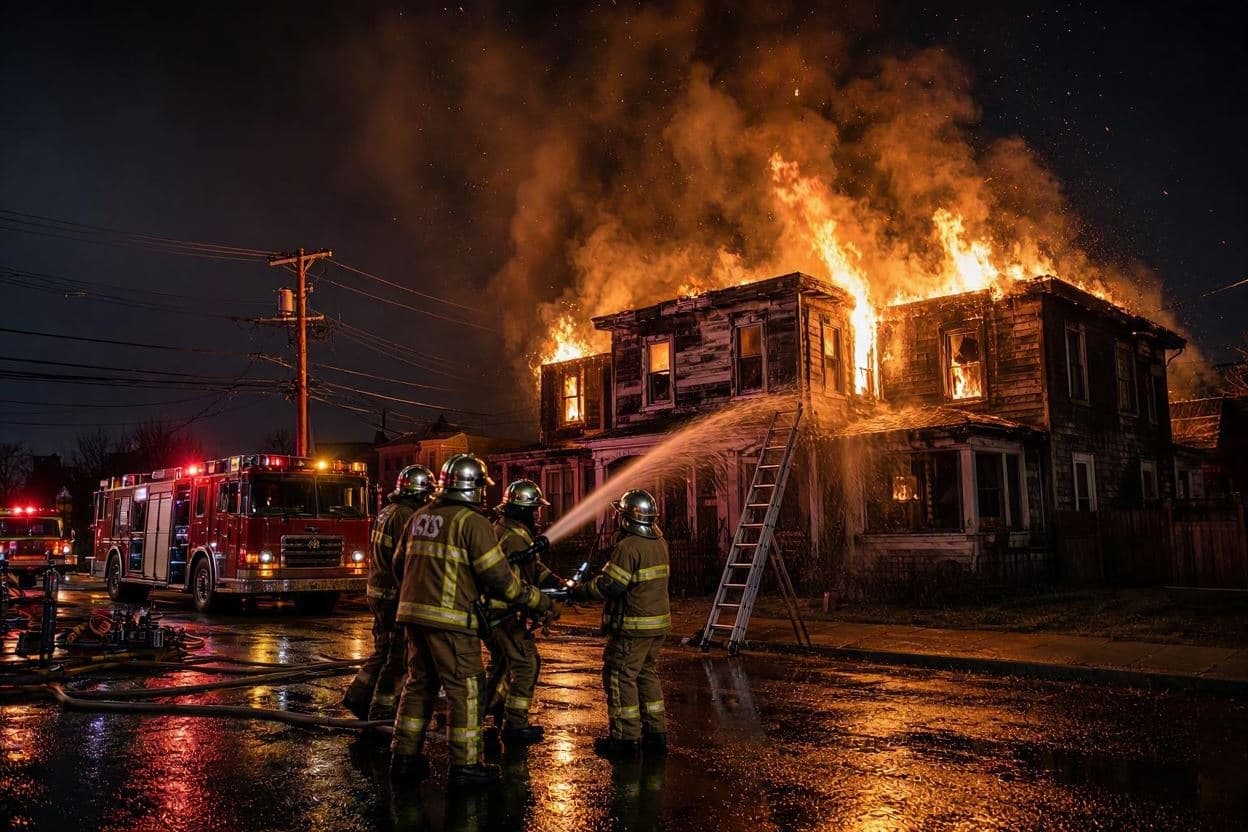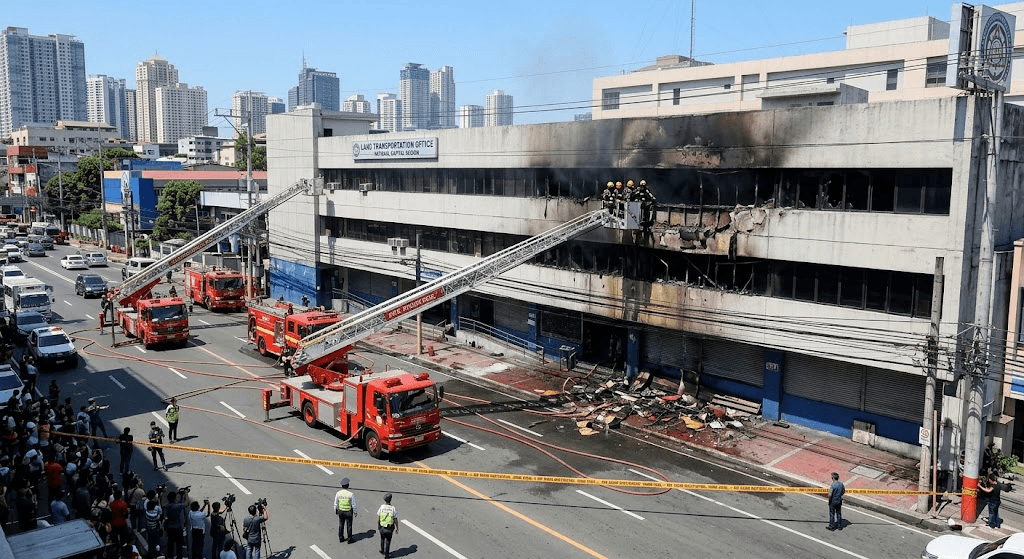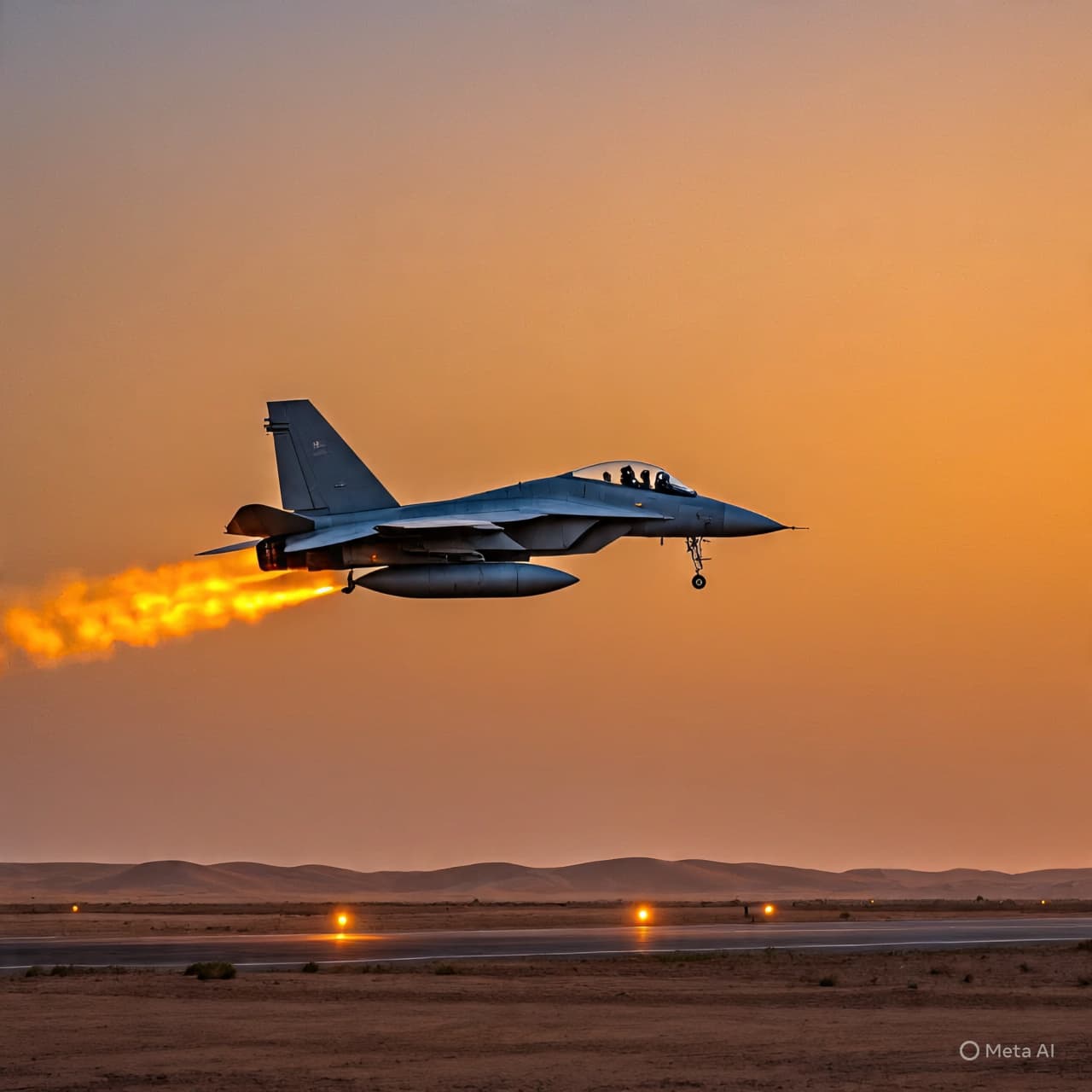
Night in the region often arrives without ceremony. The heat thins, the wind moves low across rooftops, and cities settle into their ordinary rhythms—late traffic, kitchen lights, distant televisions murmuring in apartment towers. Then, at some unmarked hour, the sky fractures. A flash over the horizon, a tremor through glass, and the quiet geometry of night rearranges itself around the sound of impact.
In recent days, the United States and Israel have launched a new wave of coordinated strikes on targets inside Iran, widening a confrontation that has been building in increments. Military officials described the attacks as focused on facilities linked to missile production, drone operations, and command infrastructure—sites they say are tied to Iran’s expanding regional reach. The strikes, carried out by aircraft and long-range munitions, followed earlier exchanges that had already drawn the region into a tense pattern of retaliation and restraint.
Iranian authorities acknowledged damage at several locations and reported casualties, while vowing that responses would come at a time and place of their choosing. State media broadcast images of smoke rising beyond industrial outskirts, and of rescue crews moving deliberately through debris. In Washington, officials emphasized the defensive rationale of the operation, framing it as a measure to deter further attacks on U.S. personnel and allied interests. In Jerusalem, leaders spoke of necessity, pointing to what they describe as a narrowing window to blunt Iran’s military capabilities.
The choreography of such actions is precise, but its consequences are diffuse. Commercial flights have adjusted routes to avoid contested airspace. Shipping insurers are recalculating risk in the waters that funnel energy supplies toward distant markets. Oil prices have flickered in response to each headline, reflecting the fragility of passages like the Strait of Hormuz, where geography compresses global trade into a narrow corridor.
Behind the visible exchanges lies a broader contest measured not only in targets struck but in thresholds tested. Iran’s network of regional allies and proxy groups remains part of the equation, raising concerns that confrontation could ripple outward—to Lebanon’s southern frontier, to bases in Iraq and Syria, to vessels navigating the Gulf. U.S. defense officials have repositioned assets in the region in recent weeks, underscoring both readiness and caution. Each deployment is meant to signal resolve; each signal carries the risk of misreading.
Diplomatic channels, though quieter than the aircraft overhead, continue to hum in the background. European officials have urged de-escalation. The United Nations has called for restraint. Even as statements are drafted and delivered, the tempo on the ground follows its own logic—one shaped by intelligence assessments, deterrence calculations, and the pressure to act before being acted upon.
For civilians in cities across Iran and Israel, and for American service members stationed across the Middle East, the conflict is experienced less as strategy than as interruption. Schools close early. Sirens test their circuits. Families scroll through updates that refresh by the minute. The vocabulary of geopolitics—deterrence, proportionality, red lines—translates into simpler questions asked in living rooms: Will it widen? How long will it last?
Officials in Washington have indicated that the latest strikes are not intended to signal the start of a ground war, but rather to degrade specific capabilities. Israeli leaders have suggested operations could continue if threats persist. Iranian commanders have promised retaliation while stopping short of detailing its form. The language, careful and conditional, suggests that all sides are aware of the slope beneath their feet.
Whether this new wave of attacks marks a contained episode or the prelude to something broader remains uncertain. What is clear is that the region has entered another chapter in a long narrative of shadow and flare, one where military action and diplomatic maneuver unfold in parallel. The night will fall again, as it always does. The question lingering in its quiet is whether the next sound overhead will be the hush of wind—or the echo of another strike.
AI Image Disclaimer Visuals are AI-generated and serve as conceptual representations.
Sources Reuters Associated Press U.S. Department of Defense The New York Times BBC News
Published by Banx Network. This article is part of the Banx decentralized media programme, powered by the BXE token on the XRP Ledger.