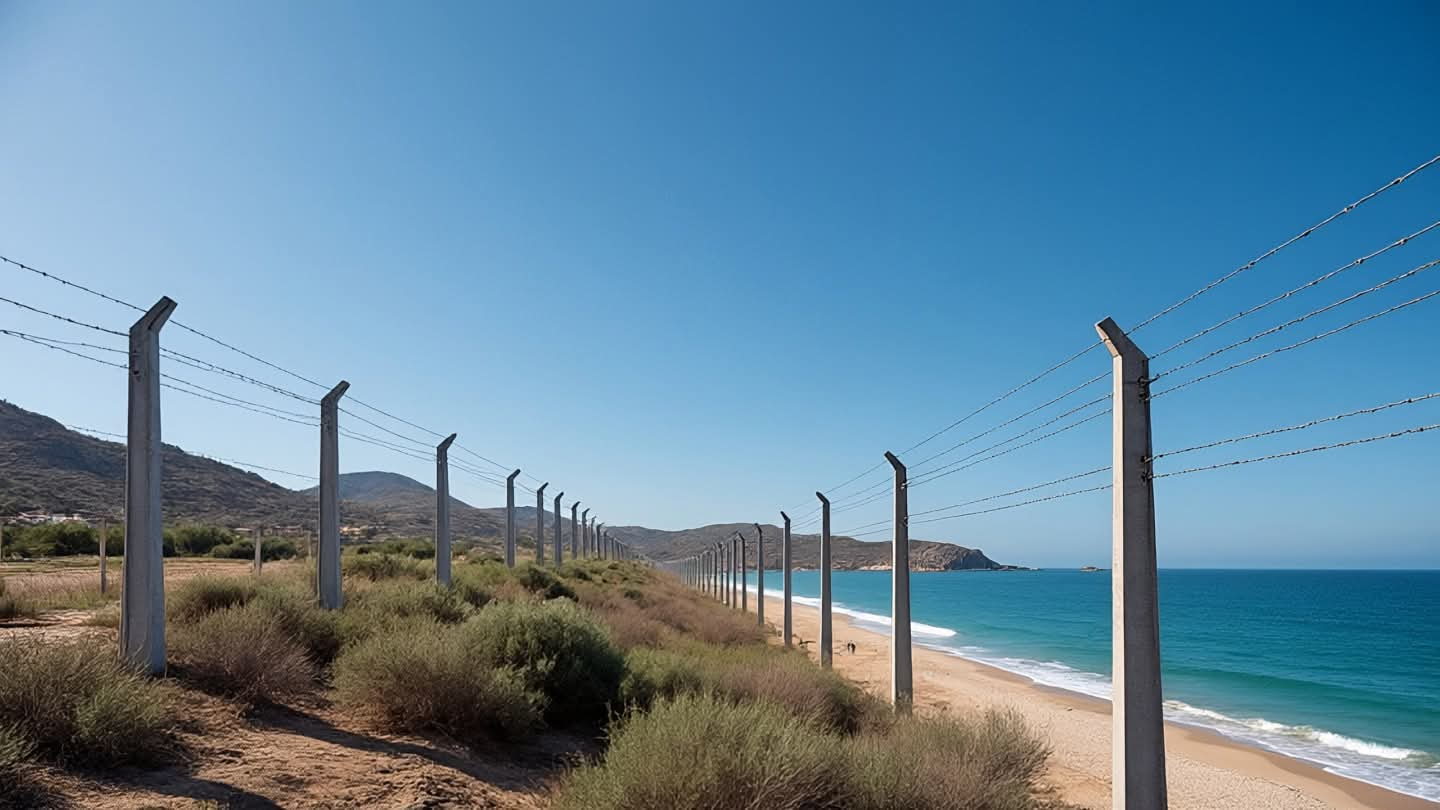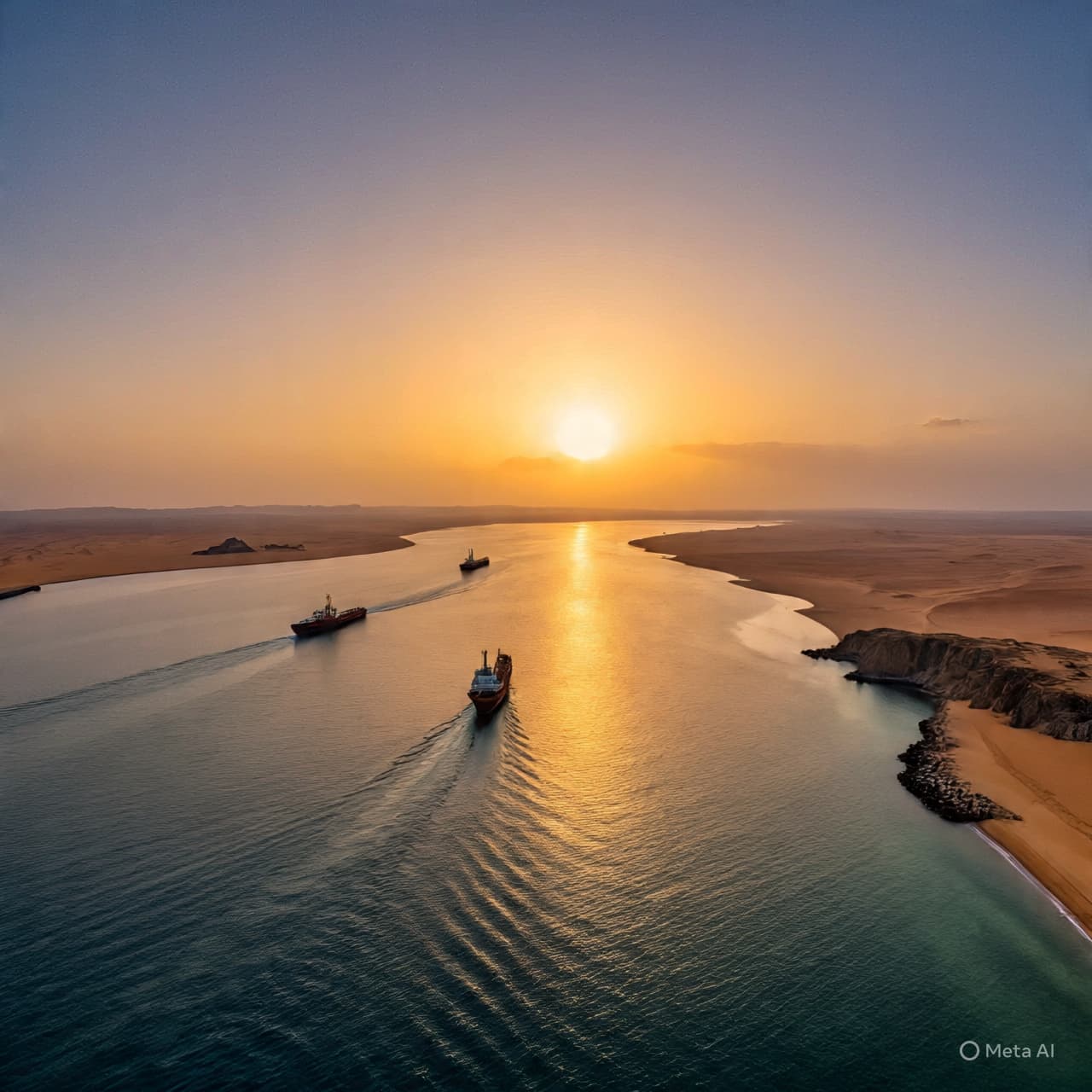
There are certain waters in the world that seem to breathe more heavily when history passes through them. The Strait of Hormuz is one of those narrow corridors where geography feels less like a map and more like a pulse. Ships glide across its surface each day, but beneath them flows not only oil, but anxiety, memory, and the fragile mathematics of global dependence. Lately, the strait has taken on a quieter, more unsettling reputation. Not because it is empty—but because it is watched, calculated, and weighed with caution. For decades, the Strait of Hormuz has served as one of the world’s most vital energy arteries. A significant portion of global oil exports passes through this narrow maritime passage linking the Persian Gulf to the Gulf of Oman. Its width in places is measured in miles, yet its influence stretches across continents. When calm prevails, the strait is simply a shipping route. When tensions rise, it becomes a barometer of global unease. Recent geopolitical frictions involving Iran, the United States, and regional actors have once again placed the strait under a magnifying glass. Military maneuvers, warnings, and diplomatic signals—each subtle on its own—collectively create an atmosphere that shipping companies cannot ignore. Insurance premiums fluctuate. Risk assessments are recalculated. Some tanker operators quietly reconsider routes, while others proceed with heightened security protocols. The word “angker,” often translated as haunted or ominous, does not imply visible turmoil. There are no constant explosions, no permanent blockades. Instead, the unease lies in uncertainty. The possibility of miscalculation, the shadow of past incidents involving seized or attacked vessels, and the memory of drone and missile exchanges in the broader region create an invisible current beneath the surface. Energy markets are especially sensitive to such currents. Even without a full disruption, the perception of risk can nudge oil prices upward. Traders react not only to events, but to expectations. A single statement from Tehran or Washington can ripple through global exchanges within minutes. In this way, the strait functions both as a physical chokepoint and as a psychological one. Countries heavily dependent on Middle Eastern crude watch developments carefully. Asian economies in particular—China, Japan, South Korea, and India—rely on steady flows through these waters. For them, the Strait of Hormuz is not a distant geopolitical theater but a practical concern tied to domestic inflation, industrial output, and energy security. Yet amid heightened rhetoric, full closure of the strait remains unlikely. Such a move would carry profound consequences not only for importing nations but also for exporting countries whose revenues depend on uninterrupted shipments. The interconnectedness of global energy markets creates a form of mutual restraint, even among rivals. Still, caution lingers. Naval patrols increase. Diplomatic channels remain active behind closed doors. Shipping advisories circulate quietly among maritime operators. The strait, once just another line on a nautical chart, now carries the weight of contingency planning and strategic calculation. In the end, the Strait of Hormuz is neither cursed nor condemned. It is a narrow passage carrying an outsized burden. For now, tankers continue to pass through its waters, escorted by vigilance and shaped by caution. The world watches not with panic, but with careful attention—aware that in certain places, even calm seas can speak in whispers.
AI Image Disclaimer
Visuals are created with AI tools and are not real photographs.
SOURCE CHECK
Credible mainstream and niche media covering the issue of rising tension and risks in the Strait of Hormuz: Reuters Bloomberg BBC Al Jazeera The Wall Street Journal
Published by Banx Network. This article is part of the Banx decentralized media programme, powered by the BXE token on the XRP Ledger.