Light arrives on Earth each morning with quiet generosity, spreading across rooftops, leaves, and glass panels alike. To the human eye it appears calm and continuous, yet within the materials that catch its glow, countless microscopic dramas unfold. Electrons stir, molecules vibrate, and energy searches for pathways through matter. For decades, scientists have tried to understand these fleeting motions that lie at the heart of solar technology.
Now, researchers at the University of Cambridge have managed to observe one of these hidden moments with remarkable clarity. In a study published in Nature Communications, scientists captured electrons leaping across solar materials in just 18 femtoseconds—a span so brief that millions of such moments fit within a single blink. In that nearly immeasurable instant, they glimpsed a process that may quietly reshape how scientists think about harvesting sunlight.
To grasp the scale of this discovery, it helps to consider the clock being used. A femtosecond is one quadrillionth of a second. In that realm, atoms are not still objects but restless dancers, vibrating continuously within molecules. Researchers used ultrafast laser spectroscopy to watch how energy moves when light strikes a specially designed molecular system. Their goal was not to create the fastest system possible, but rather the opposite—to build a structure that conventional theories predicted should transfer electrons slowly.
Instead, something surprising happened.
Rather than drifting gradually across the boundary between materials, the electron moved in a single, coherent burst. The motion occurred during a single molecular vibration, as if the molecule itself had gently nudged the electron forward. Scientists described the phenomenon as a kind of “molecular catapult,” where the natural vibration of atoms inside a molecule helps propel the electron across the interface.
For years, many solar energy models assumed that such rapid charge transfer required strong coupling between materials or large differences in energy levels. Those conditions often come with trade-offs, sometimes limiting voltage or increasing energy loss. Yet the Cambridge experiment showed that under certain conditions, electrons can move extraordinarily fast even when those traditional design requirements are minimal.
In the experimental system, researchers paired a polymer donor with a non-fullerene acceptor molecule. The arrangement was intentionally weakly linked, and the energy difference between the two materials was small. According to established design rules, this setup should have slowed the transfer of charge dramatically.
But geometry told a different story.
One configuration allowed a specific vibration along the polymer backbone to align perfectly with the interface between the materials. When light struck the system, that vibration mixed the electronic states and launched the electron across the boundary almost instantly. In a related configuration where the vibration did not align with the interface, the same transfer took hundreds of femtoseconds—far slower by comparison.
The contrast revealed a subtle but powerful principle. Molecular vibrations are not merely background noise in these systems. In some cases, they appear to be active participants, shaping how energy flows through materials.
Once the electron reached the acceptor molecule, it triggered a new coherent vibration there—a signal that served as a fingerprint confirming the speed and clarity of the transfer. Simulations and quantum-level calculations supported the experimental observations, pointing to a specific vibrational mode as the driving force behind the ultrafast motion.
Although the experiment used a simplified model system rather than a working solar cell, the implications may ripple outward across several fields. Organic solar cells, photodetectors, and photocatalytic materials all rely on the ability to separate charges quickly after light absorption. Faster separation often means less wasted energy.
The Cambridge findings suggest that future material design might pay closer attention not only to electronic structure but also to the choreography of molecular motion. Instead of trying to suppress vibrations, scientists may learn to arrange molecules so that the right vibrations assist the journey of electrons.
For now, the research offers a conceptual insight rather than an immediate technological breakthrough. Translating such ultrafast physics into practical solar devices will require further experiments and careful engineering. Yet the observation itself—an electron crossing a molecular boundary in the time it takes atoms to vibrate once—offers a rare window into nature’s most delicate mechanisms.
Sometimes the progress of science comes not from louder machines or larger experiments, but from learning to see what was always happening in silence. In this case, a faint molecular tremor may have revealed a new rhythm in the way sunlight becomes electricity.
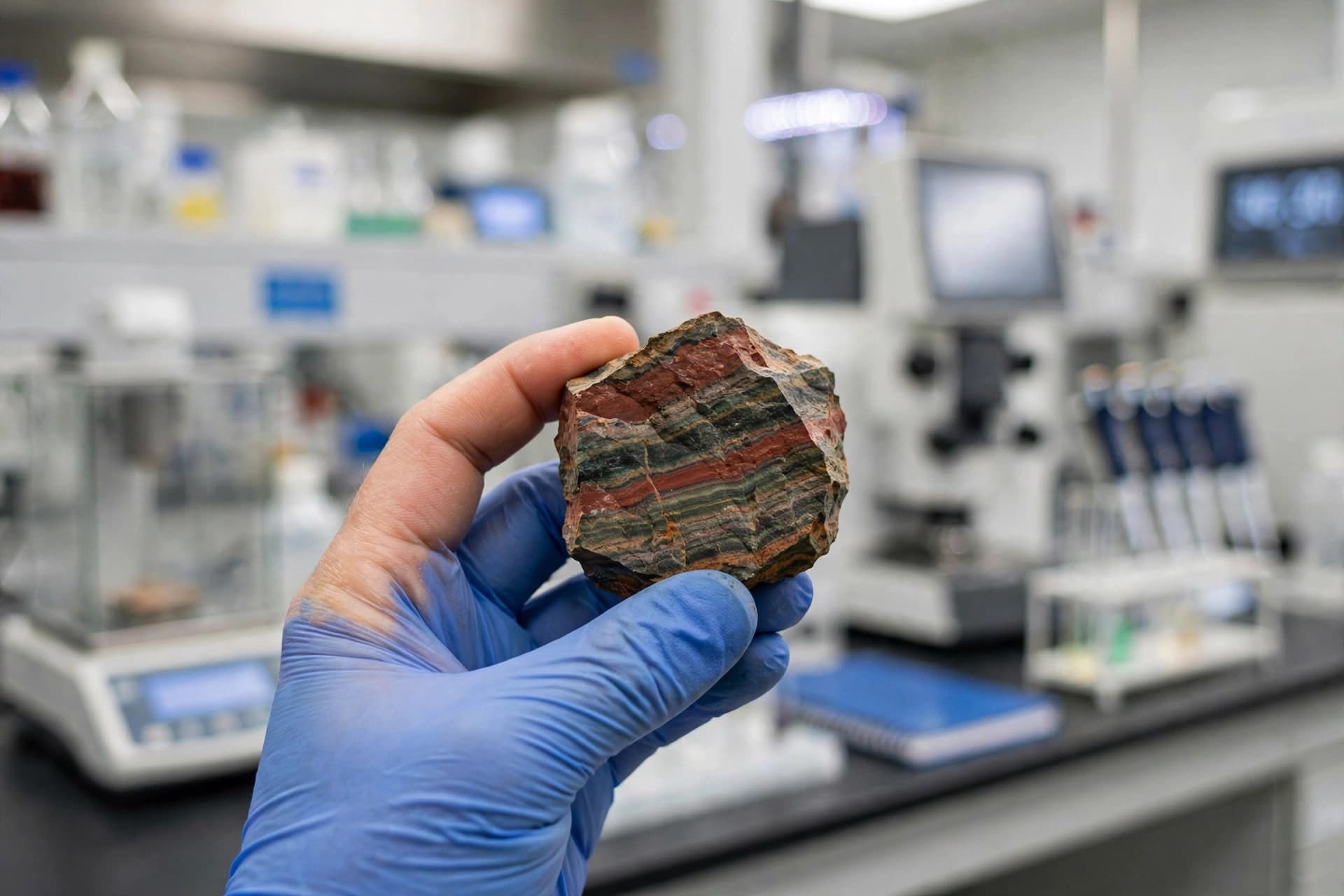
AI Image Disclaimer Visuals are created with AI tools and are not real photographs. They are conceptual representations of the scientific processes described.
Source Check Credible sources covering this research exist. Key media outlets and science publishers include:
ScienceDaily Phys.org Yahoo News St John’s College, University of Cambridge (official research release) Nature Communications (journal where the study was published)
Published by Banx Network. This article is part of the Banx decentralized media programme, powered by the BXE token on the XRP Ledger.