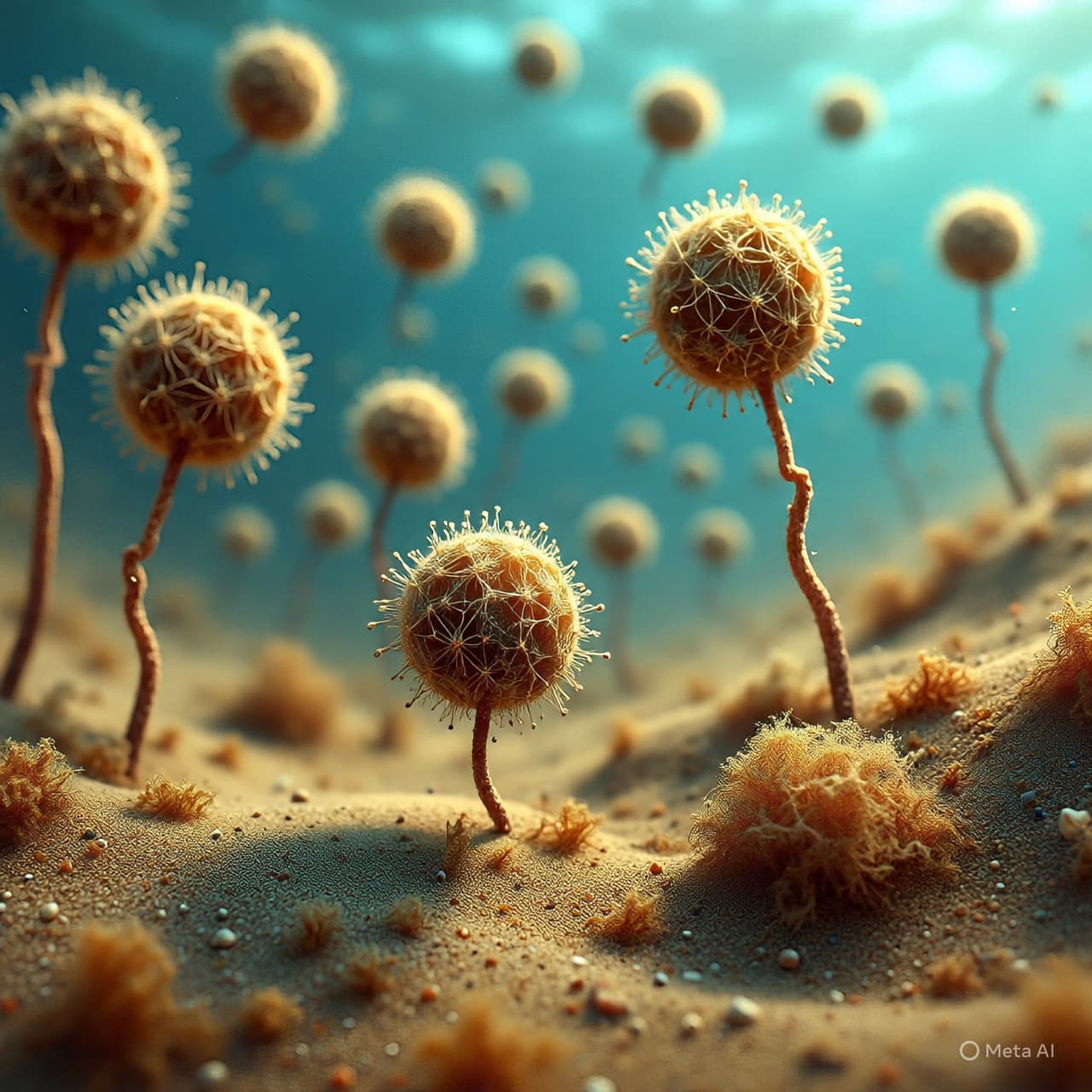
In the quiet depths beneath coastal seafloor mud and ancient sediments lies a chapter of life’s story that has long been hidden from view — a narrative written not in bones or fossils, but in the very genetic code of microscopic life. Recent research has uncovered remarkable evidence that the earliest ancestors of complex life on Earth may have had a surprising relationship with oxygen, offering new insights into how simple archaeal cells evolved into the rich tapestry of organisms we see today.
For decades, scientists have pondered how the first eukaryotic cells — the building blocks of plants, animals, and fungi — emerged from more primitive organisms. Central to this question has been a group of microorganisms known as Asgardarchaeota, tiny single‑celled lifeforms named after mythological realms and thought to be the closest living relatives to the archaeal ancestor of eukaryotes. Among them, a class called Heimdallarchaeia has been singled out as especially close in evolutionary kinship to the lineage that gave rise to all complex life.
In a groundbreaking study published in Nature, researchers analysed hundreds of genomes from marine sediments, nearly doubling the known diversity of Asgard archaea and revealing an unexpected metabolic profile among Heimdallarchaeia. What emerged was a picture of metabolic sophistication that closely resembles traits once thought to be exclusive to later‑evolving eukaryotic cells — including the use of oxygen in energy metabolism.
Unlike many of their archaeal cousins, which thrive in oxygen‑poor or anaerobic environments, these Heimdallarchaeia lineages are found in sediments where oxygen levels can vary — a clue that they had adapted to, and could metabolize, oxygen. Their genomes encode key components of aerobic respiration, such as parts of the electron transport chain (including Complex IV), pathways for synthesizing haem — a molecule crucial for oxygen‑binding enzymes — and systems for protecting against damaging reactive oxygen species generated during oxygen use.
Perhaps even more intriguing, these organisms also harbour unique membrane‑bound hydrogenases with additional subunits reminiscent of Complex I in modern respiratory systems. These complexes are thought to enhance the generation of proton gradients and thus boost the production of ATP, the energy currency of cells. Together, these features suggest that the archaeal ancestor of eukaryotes was not strictly anaerobic — as many traditional models once assumed — but may have been capable of harnessing oxygen for energy, at least to some degree.
This new genomic evidence supports an updated model of eukaryogenesis — the evolutionary process by which simple archaeal cells gave rise to complex eukaryotic life. In this model, the shared ancestor of archaea and eukaryotes already possessed metabolic capabilities that bridged anaerobic and aerobic respiration. Such a bioenergetic toolkit could have provided a significant advantage as Earth’s atmosphere became increasingly oxygenated during events like the Great Oxidation Event more than a billion years ago, which dramatically increased environmental oxygen levels.
In practical terms, this means that the earliest eukaryotes may not have required entirely new mechanisms to use oxygen after symbiotically acquiring bacteria that evolved into mitochondria (the energy‑producing organelles in modern eukaryotic cells). Instead, aspects of oxygen metabolism might already have existed in their archaeal ancestors, later refined and expanded in partnership with these bacterial symbionts.
For evolutionary biologists, these findings offer a more nuanced picture of life’s early evolution, one that acknowledges both the environmental context of Earth’s shifting atmosphere and the genetic potential embedded within some of its most ancient lineages. It highlights how oxygen — once thought to be a challenge that primitive life struggled to tolerate — may instead have played a pivotal role in the very emergence of complexity.
In the coming years, researchers expect to build on this expanded genomic catalogue to further explore how metabolic innovations intersected with ecological and environmental changes on a planetary scale. What these tiny archaeal genomes reveal touches on some of our deepest questions about how life, in all its diversity, first emerged and flourished on Earth.
AI Image Disclaimer Visuals are AI-generated illustrations, meant for concept only.
Sources Nature EurekAlert! ScienceMag NewsMinimalist Bioengineer.org
Published by Banx Network. This article is part of the Banx decentralized media programme, powered by the BXE token on the XRP Ledger.