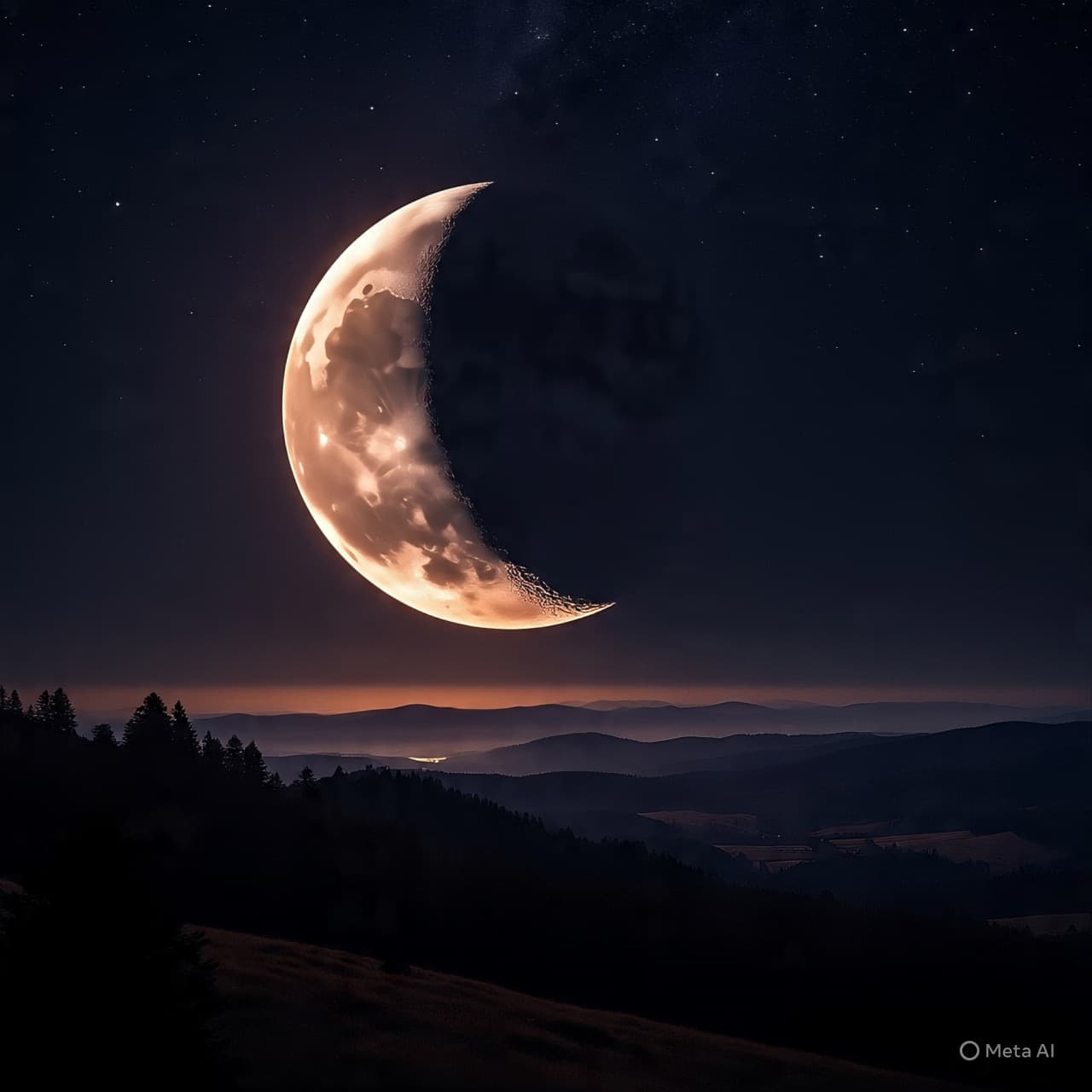
There is something about March that feels transitional — a bridge between winter’s stillness and spring’s quiet awakening. The air shifts, the evenings stretch a little longer, and the night sky seems to offer its own gentle overture. Above us, familiar constellations hold their positions, yet subtle changes invite a second glance. This year, March carries a particular note of anticipation.
Among the month’s celestial highlights is a total lunar eclipse, an event that transforms the familiar face of the full Moon into a deep copper glow. Often called a “Blood Moon,” the phenomenon occurs when Earth moves directly between the Sun and the Moon, casting a shadow that gradually envelops the lunar surface. Unlike a solar eclipse, which demands protective eyewear, a lunar eclipse is safe to observe with the naked eye, unfolding patiently over several hours.
As the Moon enters Earth’s umbra, its brightness softens. The red hue that emerges during totality is the result of sunlight filtering through Earth’s atmosphere. Shorter blue wavelengths scatter, while longer red wavelengths bend and reach the Moon’s surface. The exact shade can vary depending on atmospheric conditions, ranging from muted amber to a deeper rust.
For skywatchers, March offers more than the eclipse alone. Early evenings may feature bright planetary companions in the western sky after sunset, while constellations such as Orion begin their gradual descent toward the horizon. Meanwhile, the arrival of the spring equinox marks a moment when day and night briefly stand in near balance, a reminder of Earth’s steady orbit around the Sun.
Viewing the total lunar eclipse requires little preparation beyond clear skies and awareness of local timing. Observers should check regional schedules to determine when the partial phase begins and when totality is expected. Binoculars or a small telescope can enhance the experience, revealing details in the Moon’s surface as shadow creeps across familiar craters and maria.
Urban observers need not travel far from city lights. The eclipse’s gradual progression allows ample time to step outside and watch the transformation. In rural areas, darker skies may offer a more dramatic contrast, with stars brightening as the Moon dims during totality.
Weather, as always, plays a decisive role. Cloud cover can obscure even the most carefully anticipated events. For those facing overcast conditions, live streams from observatories and educational institutions provide alternative windows into the sky.
Astronomical organizations note that the March eclipse follows predictable orbital mechanics, part of a long cycle of alignments between Earth, Moon, and Sun. Additional details on timing and visibility are available through official space agency updates and astronomy resources. For a few hours this month, the sky will present a quiet spectacle — not loud or fleeting, but steady and shared — reminding us that even in shadow, the Moon continues to shine.
AI Image Disclaimer Graphics are AI-generated and intended for representation, not reality.
Sources
NASA
Space.com
Sky & Telescope
The Associated Press
Time and Date
Published by Banx Network. This article is part of the Banx decentralized media programme, powered by the BXE token on the XRP Ledger.