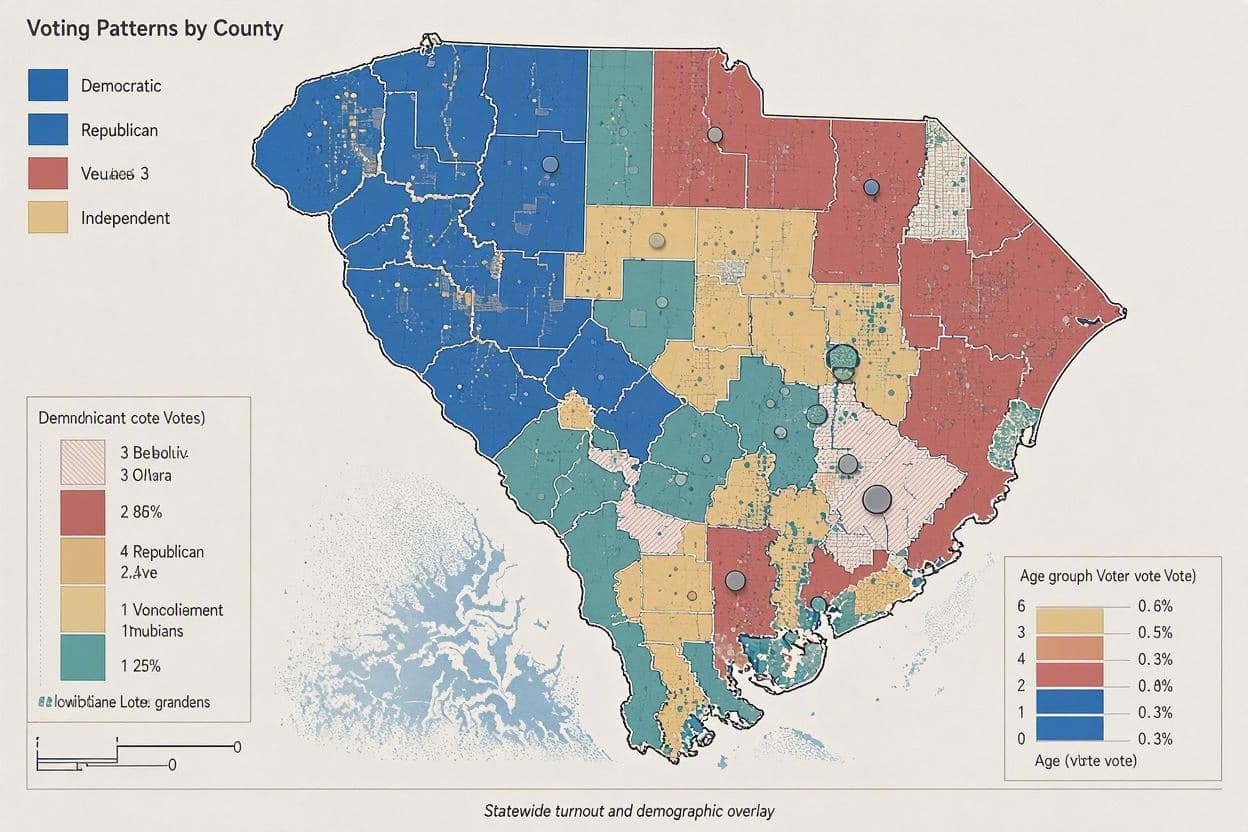
In the intricate theater of American politics, percentages are more than just numbers; they are narratives waiting to be interpreted. A recent observation by a Democratic strategist regarding former President Donald Trump’s performance in South Carolina has sparked a quiet but significant conversation. The comment, noting that securing only 52 percent of the vote might indicate underlying vulnerabilities, invites a deeper look at the dynamics of electoral strength and the subtle shifts in voter allegiance. It is a reminder that even in strongholds, the margin of victory can tell a complex story.
South Carolina has long been considered a reliable base for Republican candidates, particularly in primary elections. However, the strategist’s remark suggests that a 52 percent share, while sufficient for victory, may not reflect the overwhelming dominance often expected in such territories. This perspective challenges the conventional wisdom that high turnout or clear wins equate to unassailable political power. Instead, it points to the possibility of latent dissent or apathy among segments of the traditional base.
For Democrats, this interpretation offers a glimmer of hope in what is often viewed as a challenging electoral map. If the margins are thinner than anticipated, it could signal opportunities for persuasion and mobilization in future general elections. The focus shifts from merely winning primaries to understanding the nuances of voter sentiment, identifying those who may be open to alternative messages or candidates. It is a strategic pivot from despair to cautious optimism.
Critics of this view argue that 52 percent is a solid majority, especially in a multi-candidate field where vote splitting can occur. They contend that reading too much into primary results can be misleading, as these elections often attract the most engaged partisans rather than the broader electorate. From this angle, the strategist’s comment may be seen as an attempt to find silver linings in otherwise robust Republican performances.
Nevertheless, the discussion highlights the importance of granular data analysis in modern campaigning. Pollsters and analysts are increasingly looking beyond top-line numbers to examine demographic shifts, turnout patterns, and issue prioritization. These details can reveal cracks in the foundation of political coalitions, offering insights that broad strokes might miss. It is a testament to the sophistication of contemporary political strategy.
The reaction within the Republican party has been largely dismissive, with many viewing the comment as wishful thinking. However, internal discussions likely acknowledge the need to maintain enthusiasm and address any emerging grievances within the base. Sustaining high levels of support requires constant engagement and responsiveness to voter concerns, regardless of past successes.
As the election cycle progresses, both parties will continue to scrutinize every data point for advantages. The strategist’s observation serves as a prompt for deeper inquiry, encouraging a more nuanced understanding of the electoral landscape. It reminds us that politics is never static, and today’s strengths can become tomorrow’s challenges.
Political analysts will continue to monitor voting trends in South Carolina and other key states. The dialogue around marginal gains and losses remains central to shaping campaign strategies and predicting future outcomes.
AI Image Disclaimer: Please note that the visual accompaniments for this article are AI-generated illustrations created to reflect the thematic elements of political analysis, electoral data, and strategic discourse.
Sources: Politico The Hill Associated Press CNN Local South Carolina News Outlets
Published by Banx Network. This article is part of the Banx decentralized media programme, powered by the BXE token on the XRP Ledger.