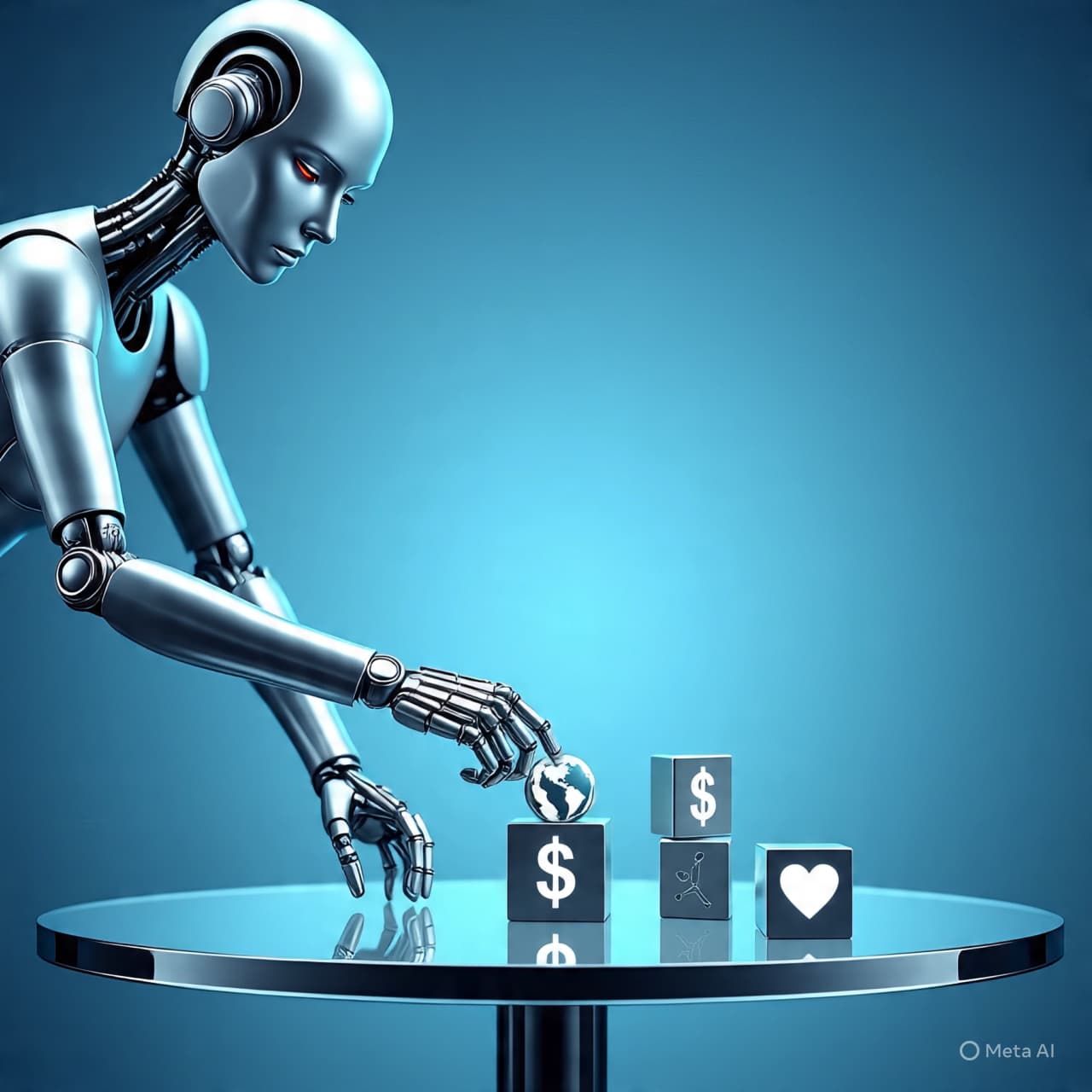
There is a rare kind of optimism that surfaces when technology leaders speak not about devices or markets, but about the human condition itself. Elon Musk’s recent claim — that AI and humanoid robots will eliminate poverty — enters the public conversation with the weight of a promise and the fragility of a prediction. It reflects a belief that the engines of automation, once properly aligned, could lift burdens that have defined societies for generations.
The idea is not new, but its modern framing feels different. For decades, automation has been portrayed as a trade-off: gains in efficiency balanced against fears of displacement. Musk’s view reframes those tensions into possibility. He imagines robots performing labor that is repetitive, hazardous, or simply overwhelming in scale — from manufacturing to logistics to essential services — creating a world where material needs are met with unprecedented reliability.
To some, that vision feels almost utopian. To others, it raises practical questions. Building humanoid robots capable of operating safely and efficiently in real environments is still a frontier effort. Even as prototypes advance, the gap between laboratory demonstrations and real-world deployment remains wide. And yet there is a growing sense that the gap is narrowing faster than expected.
If these machines become affordable at scale, they could reshape the economics of productivity. Nations with limited labor capacity could expand industries. Communities with shrinking workforces could stabilize essential services. Costs of production, transportation, and maintenance could fall. The idea, Musk suggests, is not that robots would replace human aspiration, but that they would shoulder the parts of work that strain societies the most.
But eliminating poverty requires more than technological capability. It requires political will, equitable distribution, and frameworks that ensure the benefits of automation do not concentrate into the hands of a few. Technology can create abundance, but abundance does not automatically create fairness. That balance — between possibility and structure — is the quiet tension running beneath Musk’s statement.
Yet even with those uncertainties, the idea signals a shift in how tech leaders view the future. Humanoid robots are no longer presented merely as industrial tools; they are positioned as instruments of societal transformation. And if AI continues to advance, the pairing of cognitive and physical capability may create systems that redefine what productivity means.
Published by Banx Network. This article is part of the Banx decentralized media programme, powered by the BXE token on the XRP Ledger.