

The idea that the next defining product of the global tech market might not be a screen, a service, or a subscription, but rather a machine shaped like us, arrives with a certain quiet drama. It feels like one of those moments when the future leans forward just enough for people to notice the silhouette. Elon Musk’s latest assertion — that humanoid robots will become the biggest product ever — is not offered as a provocation but as a prediction he believes is already in motion.
Humanoid robotics has long lived on the boundary between science fiction and incremental engineering. But today, the line separating the two grows thinner. Musk’s comments reflect a broader shift happening across tech: the belief that embodied AI, the kind that can walk, lift, perform tasks, and adapt to real-world environments, is nearing commercial reality.
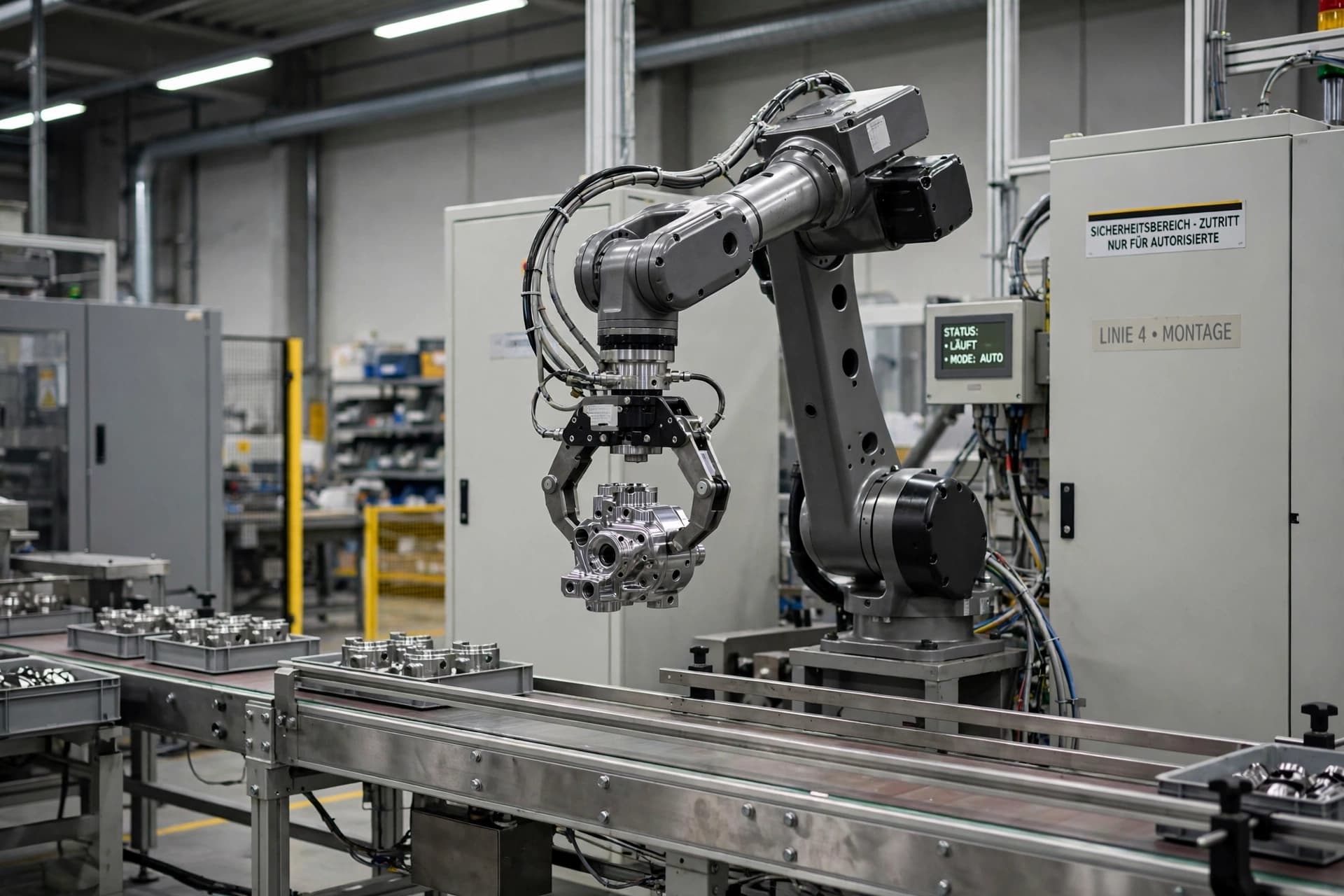
Musk has pointed to Tesla’s Optimus project as evidence of accelerating progress, suggesting that the platform is approaching capabilities that could eventually justify mass deployment. The claim is bold, but what stands out is not the size of the ambition — Silicon Valley has never lacked that — but the seriousness with which investors, engineers, and competitors are beginning to take the entire category.
Humanoid robots are no longer treated as curiosities built for demonstration stages. They are being positioned as potential multipliers of global productivity, systems that could take on repetitive, dangerous, or labor-intensive work with reliability that traditional automation cannot match. If industrial robotics reshaped factories, proponents argue, then humanoids could reshape everything else.
But embedded within the excitement is a broader tension: societies are still defining what coexistence with general-purpose robots should look like. Questions about safety, employment, autonomy, and long-term governance remain unanswered. And yet the momentum continues because the potential gain — the ability to extend labor capacity in ways no prior technology has achieved — is too large to ignore.
Whether humanoid robots truly become “the biggest product ever” will depend on breakthroughs still out of reach today: durability, affordability, intuitive control systems, and AI models capable of reliably navigating physical unpredictability. But the notion that a market could form at unprecedented scale no longer feels speculative. It feels like a path that the industry is quietly preparing to walk.
For now, the prototypes continue their slow, careful steps inside laboratories and test facilities. But their presence signals a turning point: technology is beginning to build machines not just to compute or communicate, but to participate. And if that movement continues, the shape of the world’s next great product may indeed look strangely familiar — something that moves like us, works like us, and stands at the intersection of imagination and industry.
Published by Banx Network. This article is part of the Banx decentralized media programme, powered by the BXE token on the XRP Ledger.

.jpg&w=3840&q=75 "The Artemis Revolution: How NASA Plans to Build Humanity's Future on the Moon")