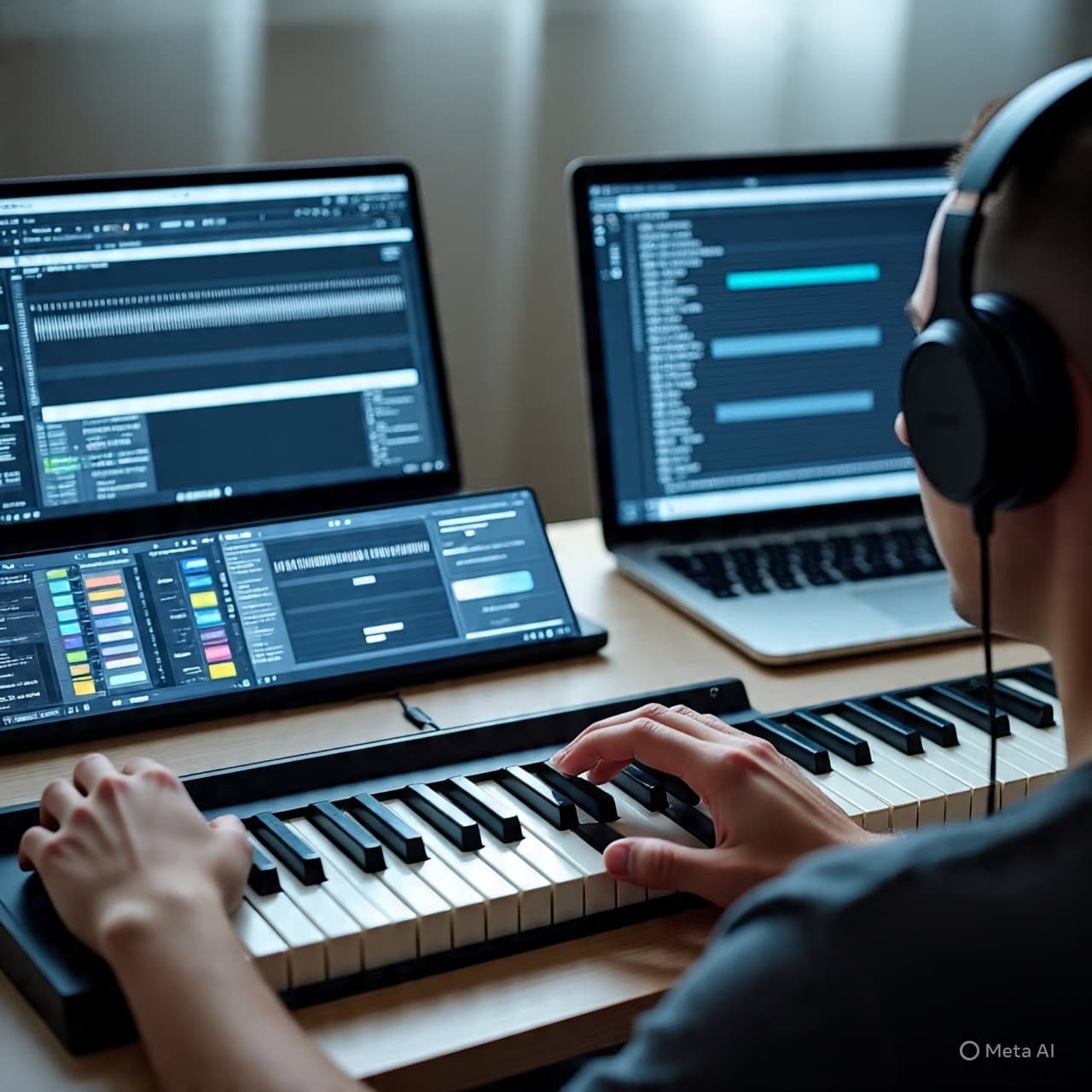
In a world where innovation moves at the speed of light, the intersection of technology and creativity is increasingly becoming a landscape where boundaries blur. What was once the realm of specialized professionals, from musicians to sound engineers, is now open to anyone with a smartphone and an imagination. Enter the era of AI music creation. With Google and Apple stepping into this transformative space, the digital giants are offering the tools to turn anyone into a potential composer. What does it mean when a simple algorithm can create music that resonates with the human soul? Perhaps it’s not just about automation; it’s about the democratization of creativity. What was once a distant dream now feels like an undeniable reality.
Google and Apple, two titans in the tech industry, have each introduced AI-driven tools to bring music creation to the masses, effectively lowering the barrier for those who may not have traditional musical training. Google’s AI music tool, in particular, has gained attention for its ability to generate original compositions based on user prompts, from genre to mood. The platform, which allows users to shape the music as they see fit, is a remarkable evolution in AI’s ability to understand human emotional expression through sound.
Similarly, Apple’s push into AI-driven music creation is integrated into its flagship devices, such as the iPhone and iPad. Their tools are designed to help even novice musicians harness the power of AI to compose, arrange, and produce music. By offering such intuitive technology, both companies are not just creating music—they’re cultivating an environment where anyone, regardless of background, can tap into the creative process. In many ways, these advancements are redefining the very notion of who can be a musician.
The appeal lies not just in the ease of access, but in the potential for innovation. AI tools enable creators to experiment, iterate, and explore sonic landscapes that might have once been out of reach. They also offer a new form of collaboration between human creativity and machine intelligence. But the question remains: can AI truly create music that resonates on the same level as a piece composed by a human? The answer may be less about the technology itself and more about how it can inspire human creators to push boundaries and experiment with new forms of expression.
For some, the idea of an AI-generated composition may seem impersonal. Yet, as we stand at the crossroads of creativity and automation, it is impossible to ignore the ways in which AI can augment the artistic process. It doesn’t replace musicians—it empowers them. And as these tools evolve, they may become indispensable companions to traditional musicianship, offering a new medium for the artist to explore.
The entrance of Google and Apple into the AI music creation sphere signifies a profound shift in the world of music and technology. While some may see it as a passing trend, others view it as a step toward a future where technology and creativity are inextricably linked. For now, AI tools offer both a challenge and an opportunity to musicians, casual creators, and consumers alike. As the lines between human artistry and artificial intelligence continue to blur, it’s clear that the future of music will be shaped by these new collaborations—where the algorithms may play the notes, but the humans will still decide the rhythm of the future.
AI Image Disclaimer: "Images in this article are AI-generated illustrations, meant for concept only." "Visuals are created with AI tools and are not real photographs." "Illustrations were produced with AI and serve as conceptual depictions." "Graphics are AI-generated and intended for representation, not reality." Sources: The Verge TechCrunch Wired Bloomberg CNET
Published by Banx Network. This article is part of the Banx decentralized media programme, powered by the BXE token on the XRP Ledger.