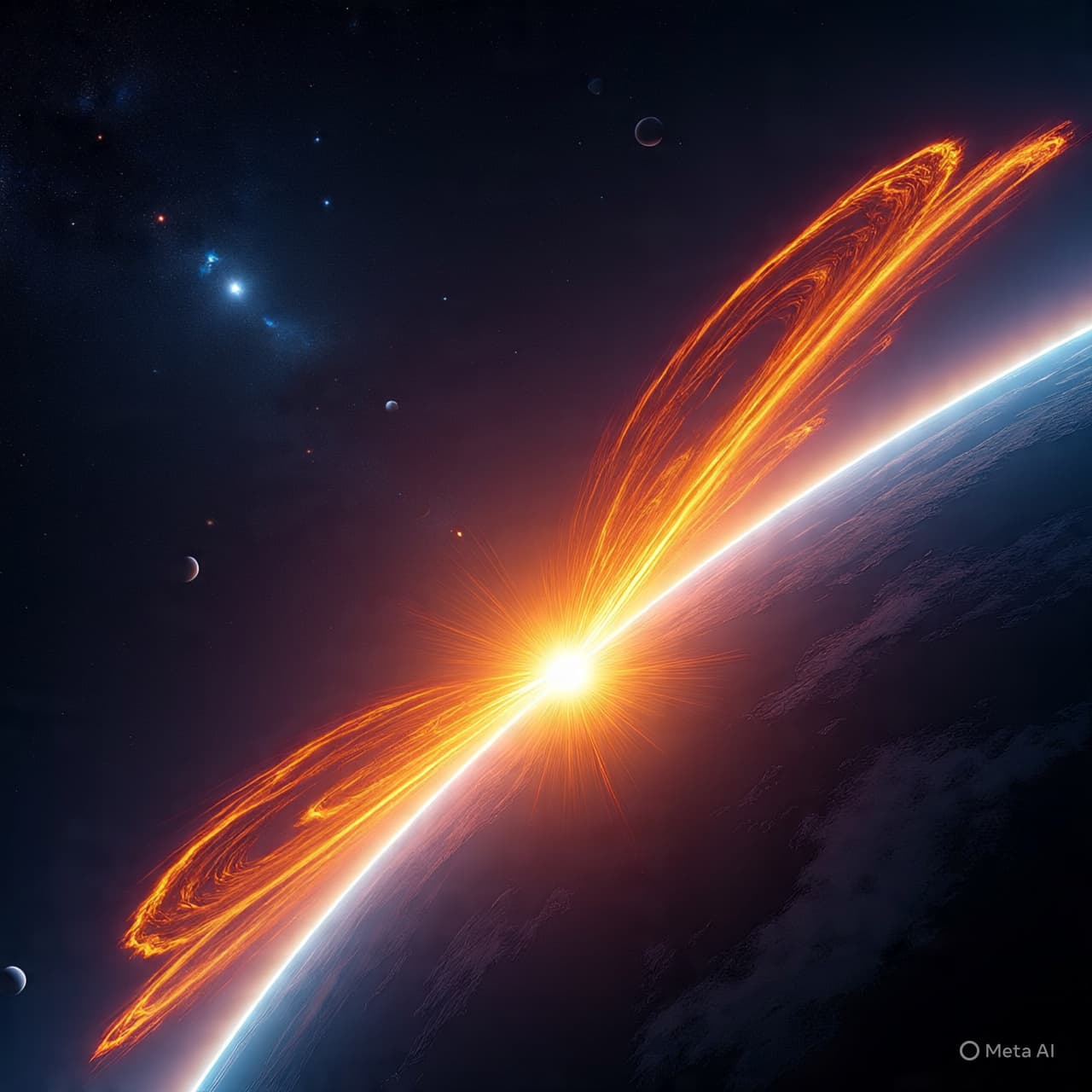
On the surface of the Sun, the quiet is deceptive. A sudden eruption of plasma, twisting magnetic fields, and incandescent energy can ripple across its surface in moments, sending a solar flare hurtling toward the vastness of space. Like an avalanche cascading down a mountainside, these flares release pent-up tension built over hours, days, or even weeks, a violent liberation of forces invisible yet immense.
Recent observations have captured the drama in unprecedented detail. High-resolution solar telescopes and space-based observatories reveal the delicate choreography behind these flares: magnetic lines snapping and reconnecting, plasma arcs dancing and bursting, and shockwaves radiating outward with a force that belies the Sun’s serene appearance from Earth. It is a violent ballet, a cosmic reminder that even in the apparent calm of the heavens, energy is never at rest.
Understanding the trigger of a solar flare is more than academic curiosity. These bursts can interact with Earth’s magnetic field, sparking geomagnetic storms that disrupt satellites, power grids, and communications. The video evidence provides a window into the mechanics of such eruptions, showing that small instabilities in magnetic structures can cascade into immense outbursts, a chain reaction reminiscent of avalanches in high mountain ranges. Each flare is both unique and part of a larger, dynamic system, revealing the Sun as a living, breathing entity of motion and tension.
Watching these solar flares unfold is a meditation on scale, fragility, and power. Tiny magnetic shifts, invisible to the human eye until magnified through instruments, can unleash energy equivalent to billions of atomic bombs. Yet in their beauty, in the arcs of light and the spiraling motion of plasma, there is also a quiet poetry, a reminder that the universe moves in rhythms both destructive and awe-inspiring, shaping the space that cradles our fragile planet.
AI Image Disclaimer Illustrations were created using AI tools and are not real photographs.
Sources NASA Solar Dynamics Observatory; European Space Agency solar studies; Astrophysical Journal publications on solar flares.
Published by Banx Network. This article is part of the Banx decentralized media programme, powered by the BXE token on the XRP Ledger.