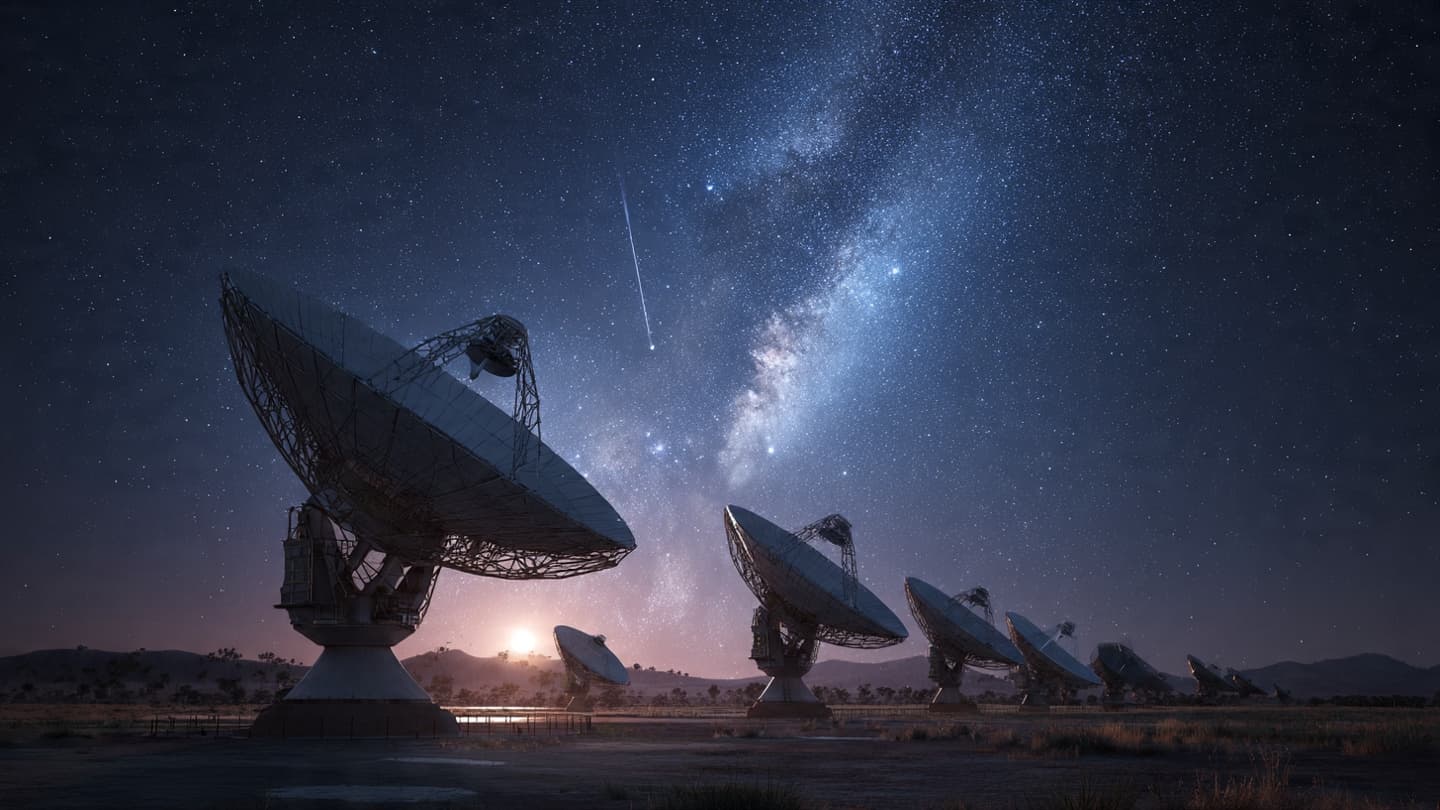
There are moments in science when the universe seems to unfold like an ancient manuscript, revealing patterns written long before human existence. With every advancement in observational technology, researchers gain new ways of reading this cosmic record, tracing structures that stretch across unimaginable distances.
Astronomers working with the Square Kilometre Array (SKA) pathfinder projects have produced the most detailed map of cosmic magnetic fields ever created. This breakthrough offers an unprecedented view of how invisible magnetic forces shape galaxies and influence the evolution of the universe.
The study combines radio astronomy data collected from highly sensitive telescope arrays located in Australia and South Africa. By analyzing how radio waves are affected as they travel through space, scientists can infer the presence and structure of magnetic fields that cannot be observed directly.
Researchers explain that cosmic magnetic fields play a crucial role in shaping galaxies, influencing star formation, and guiding the movement of charged particles across vast interstellar distances. However, these fields have remained one of the least understood components of astrophysics due to their subtle and complex nature.
The new map reveals large-scale patterns that span millions of light-years, offering clues about how magnetic fields formed and evolved over billions of years. Scientists believe these findings may help bridge gaps in current models of galaxy formation and cosmic evolution.
Australia plays a key role in the SKA project, hosting some of the world’s most advanced radio astronomy facilities in remote regions with minimal radio interference. These locations allow researchers to observe faint cosmic signals with exceptional clarity.
The SKA initiative represents one of the largest international collaborations in scientific history, involving researchers from multiple continents working together to construct next-generation radio telescopes capable of exploring deeper into the universe than ever before.
As analysis continues, astronomers hope that the new magnetic field map will lead to further discoveries about dark matter interactions, cosmic radiation behavior, and the fundamental structure of the universe, gradually bringing humanity closer to understanding its place in the cosmos.
AI Image Disclaimer: The illustrations accompanying this article are AI-generated editorial visualizations created for scientific storytelling.
Sources (Source Verification Check): SKA Observatory, CSIRO, Nature Astronomy
Published by Banx Network. This article is part of the Banx decentralized media programme, powered by the BXE token on the XRP Ledger.